
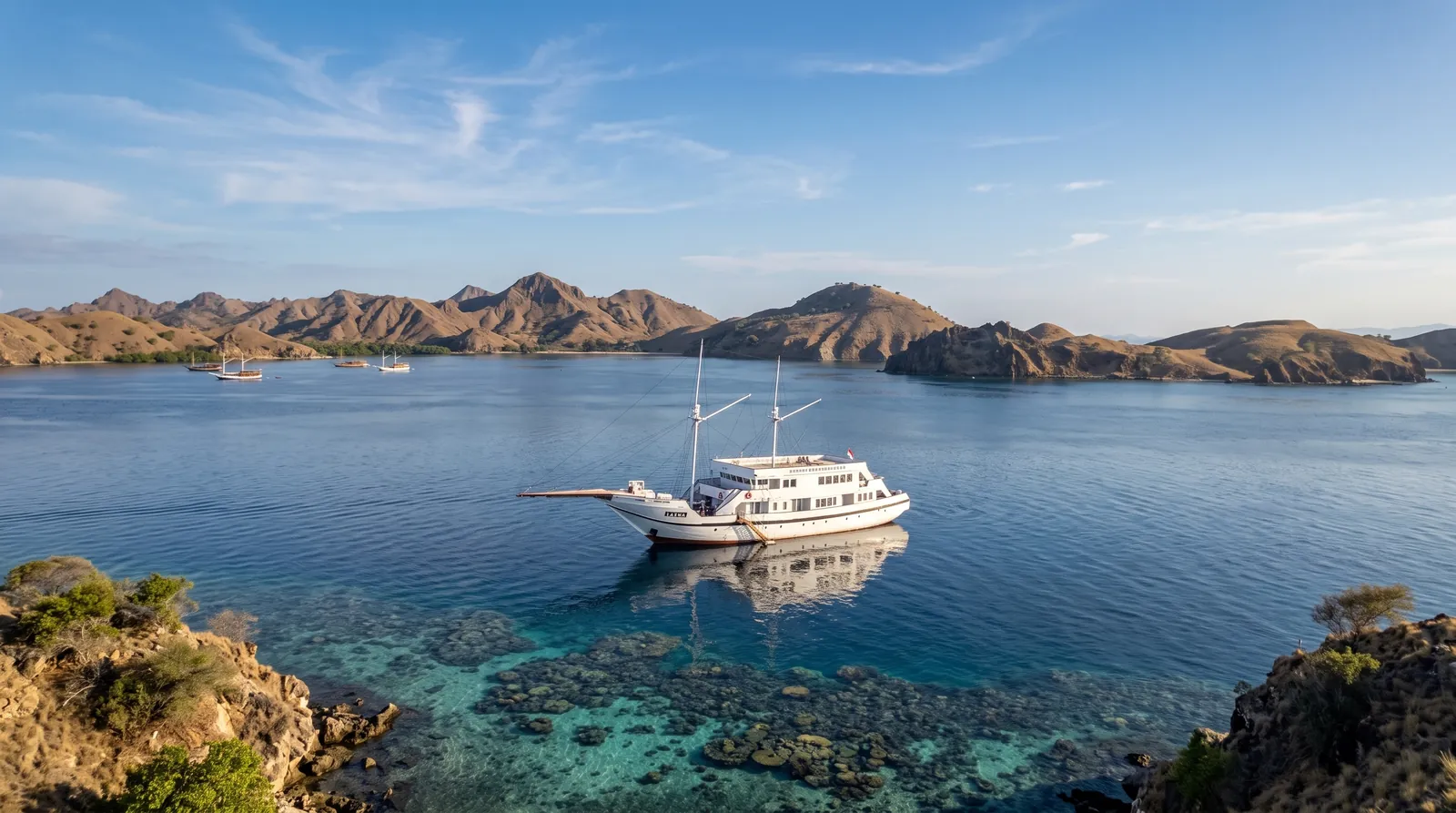
Siaba Besar, a sheltered bay off Komodo's east coast, is the most reliable place to see green sea turtles in Komodo National Park. Its calm, current-free shallows and seagrass-fringed coral gardens make sightings near-routine for snorkelers of every level, and Pink Beach adds a second chance on most LASHA itineraries.
Komodo National Park is famous for two things: its dragons and its currents. The channels that funnel nutrient-rich water past Batu Bolong and Manta Point are exactly what make the diving world-class, and exactly what makes some guests hesitate before putting on a mask for the first time. Siaba Besar is the answer to that hesitation. Divers who work these waters call it the park's turtle capital, and it has earned the name honestly: green turtles graze its seagrass beds in numbers that make an encounter the expectation rather than the exception.
This guide explains why Siaba Bay works so well for turtle encounters, which other stops on a Komodo charter add sightings, how to behave around the animals, and where the bay sits inside LASHA's 3D2N itinerary.
Why Is Siaba Besar Called Komodo's Turtle Capital?
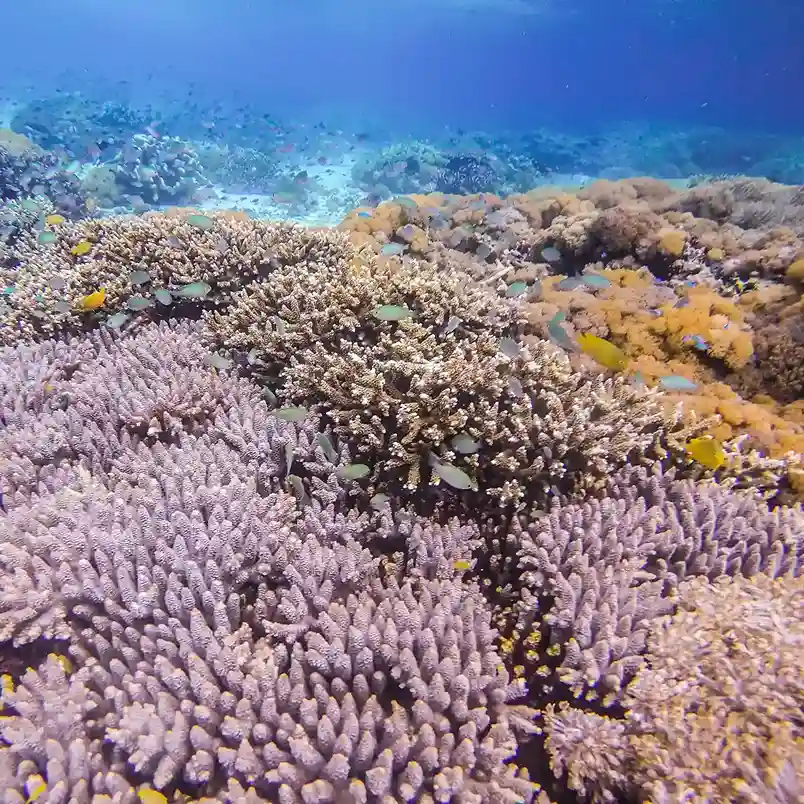
Siaba Besar sits off the northeast coast of Komodo Island, shielded by the island's mass on one side and its smaller neighbour Siaba Kecil on the other. That geography does two things. First, it blocks the swell and deflects the strong tidal flows that define most of the park, leaving the bay itself calm through most conditions. Second, the protected shallows have allowed extensive seagrass meadows to establish alongside a gently sloping coral garden that starts at two to three meters of depth.
Seagrass is the staple diet of the green sea turtle, so the bay functions as a feeding station. Turtles are resident here, not passing through. On a typical morning snorkel, guests drift over individuals grazing on the bottom, resting under coral heads, or rising unhurried to the surface to breathe. Hawksbill turtles appear as well, usually picking at sponges along the reef slope. No operator can promise a wild-animal sighting, but Siaba is as close as Komodo National Park comes to a sure thing.
Why Do Sheltered Bays Suit First-Time Snorkelers?
The qualities that keep turtles in Siaba Bay are the same qualities that make it the friendliest water in the park for beginners:
- Minimal current. The bay is protected from the tidal streams that run through the park's channels. Guests snorkel without fighting the water or drifting off the reef.
- Shallow, visible reef. The coral garden tops out at two to three meters. Turtles, reef fish, and coral are all clearly visible from the surface, so nobody needs to duck-dive to see the show.
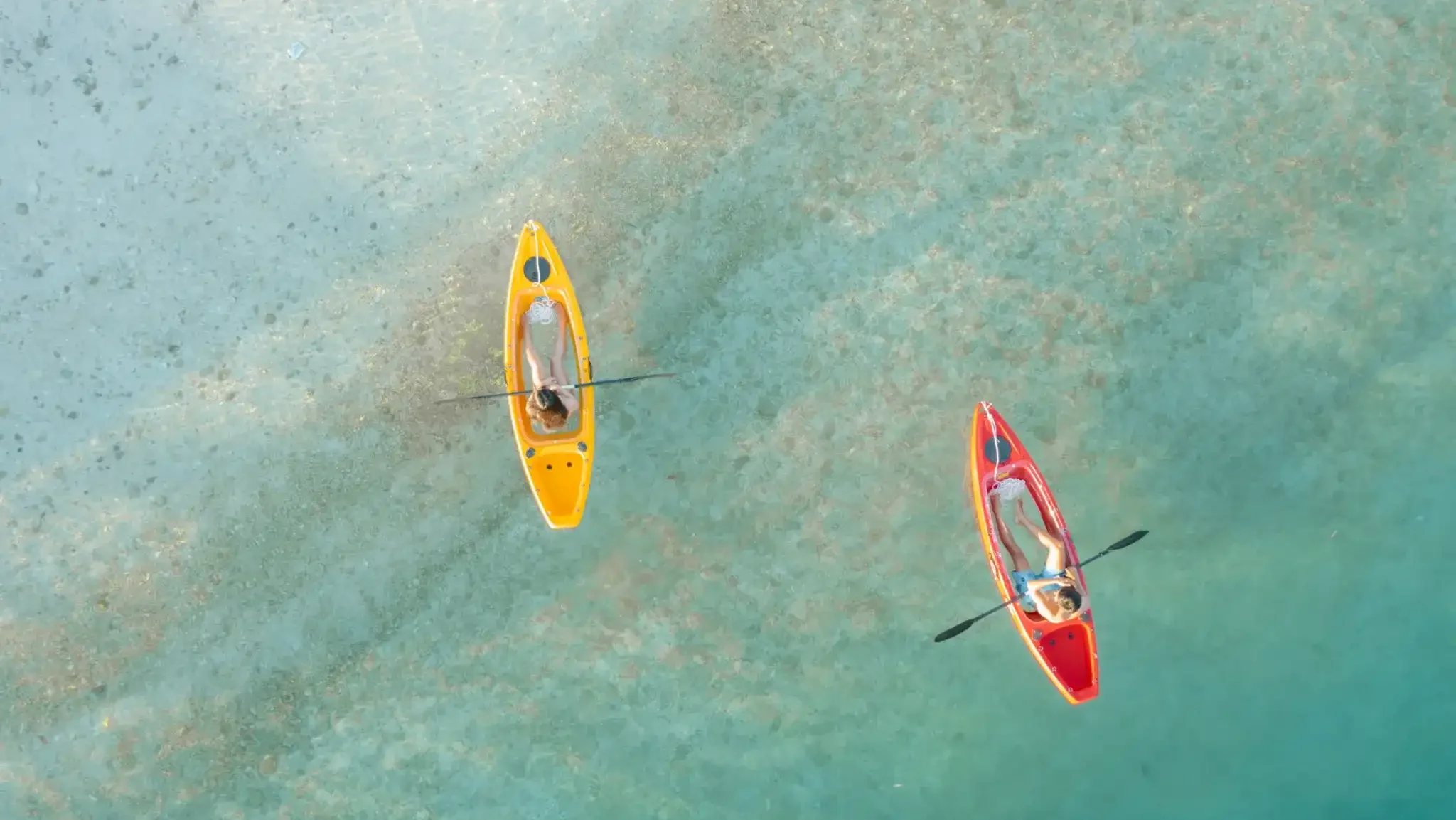
- Easy entries. LASHA anchors inside the bay and runs guests to the reef by tender, with crew in the water alongside anyone who wants company. Flotation vests are always available.
- Calm surface. With the swell blocked, the bay stays flat enough for children, hesitant swimmers, and anyone trying a mask and snorkel for the first time.
This is the reason Siaba anchors the snorkeling program on LASHA's Komodo routes. Confidence built in Siaba's still water carries over to the more exposed sites later in the trip, and non-divers get a marquee wildlife encounter without ever needing a tank. Guests who do dive will find the same site works as a relaxed check dive; details are on the diving charter page.
Where Else Can You See Turtles in Komodo National Park?
Siaba Besar is the headline act, but a well-planned route adds several supporting stops. These are the turtle sites LASHA's cruise directors plan around:
| Site | Conditions | Turtle encounters | Best for |
|---|---|---|---|
| Siaba Besar | Sheltered bay, minimal current, reef from 2–3 m | Near-routine; resident green turtles, some hawksbills | First-time snorkelers, families, non-divers |
| Pink Beach shallows | Calm inshore coral heads off the famous pink-sand beach | Frequent; turtles forage among the bommies | Combining a beach visit with an easy snorkel |
| Manjarite | Gentle house-reef slope near Labuan Bajo | Occasional sightings on a long reef wall | Day-one warm-up snorkel |
| Taka Makassar area | Sandbar and surrounding shallows, conditions vary | Occasional; turtles transit the flats | Scenic stop paired with Manta Point |
The pattern is consistent: turtles concentrate where seagrass and calm shallows meet. Pink Beach deserves special mention because most guests come for the sand and stay for the reef. The coral heads a short swim offshore hold feeding turtles often enough that crews treat it as a second turtle stop on the standard route.
How Should You Behave Around Sea Turtles?
Komodo's turtles tolerate swimmers because generations of them have never been harassed here. Keeping it that way is part of the job. LASHA's guides brief every guest before the first entry, and the rules are simple:
- Never touch or hold a turtle. Contact stresses the animal and can remove the protective film on its shell and skin.
- Do not chase. Stay still or move slowly at the surface and let the turtle set the distance. A relaxed turtle will often carry on feeding a few meters away.
- Keep roughly three meters of space and never position yourself between a turtle and the surface. Turtles breathe air; blocking their path to it is the one genuinely harmful mistake a snorkeler can make.
- No flash photography and no feeding. Natural light works fine in two meters of water.
- Choose reef-safe sunscreen, or better, cover up with a rash guard.
None of this reduces the experience. The calmest encounters happen when guests float quietly and let a grazing turtle simply ignore them.
Where Does Siaba Bay Sit in LASHA's 3D2N Itinerary?
On LASHA's classic 3D2N Komodo routing, day one covers embarkation in Labuan Bajo and a warm-up snorkel on a nearby house reef. Day two is the full Komodo day: a sunrise hike on Padar, the dragon trek, Pink Beach with its shallow coral heads, and Siaba Besar as the dedicated turtle session, timed for calm light and slack water. Day three is reserved for Manta Point before the return. Private charters set their own pace, so guests who want a second Siaba session simply ask; the full route options are on the itineraries page.
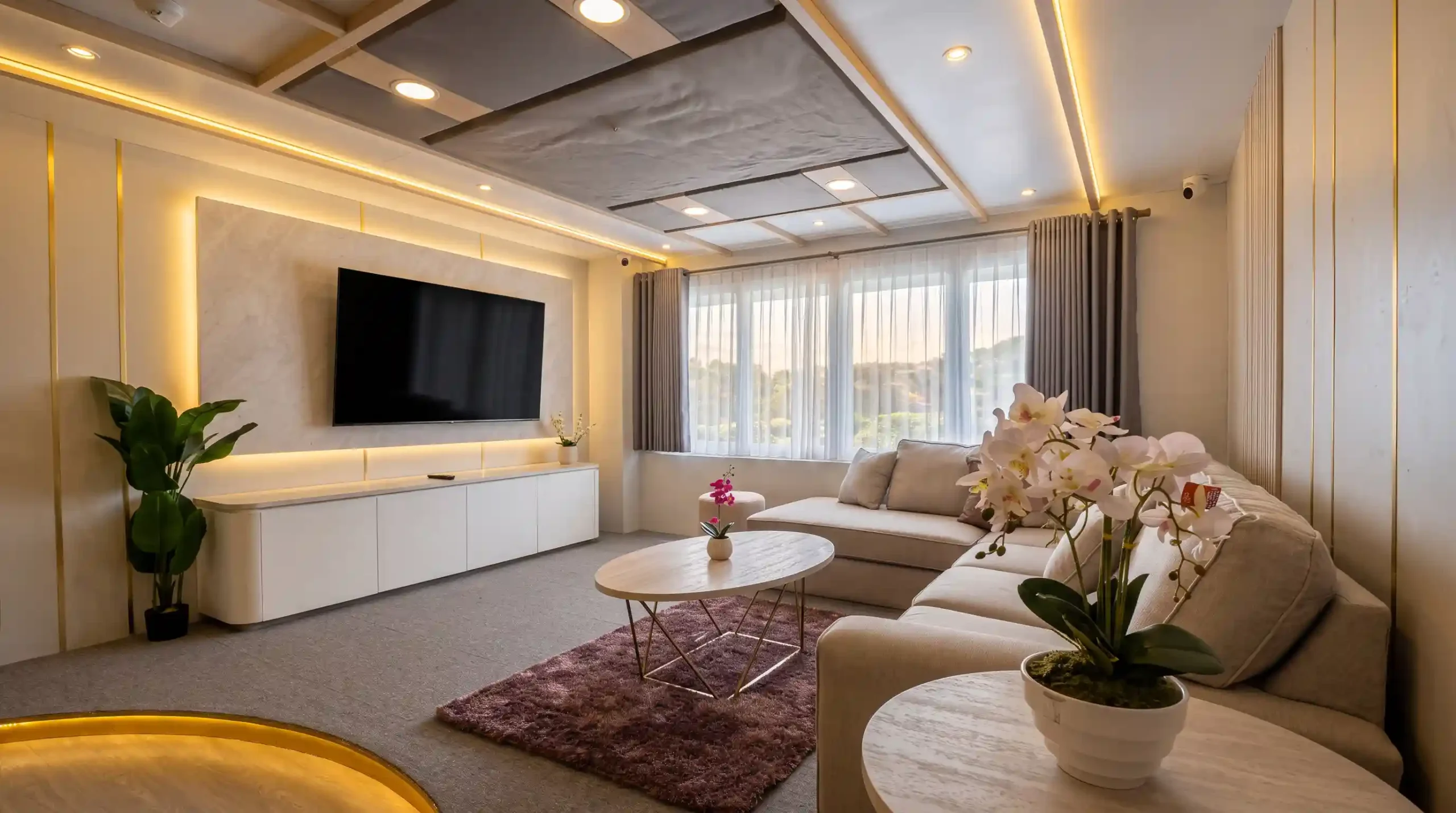
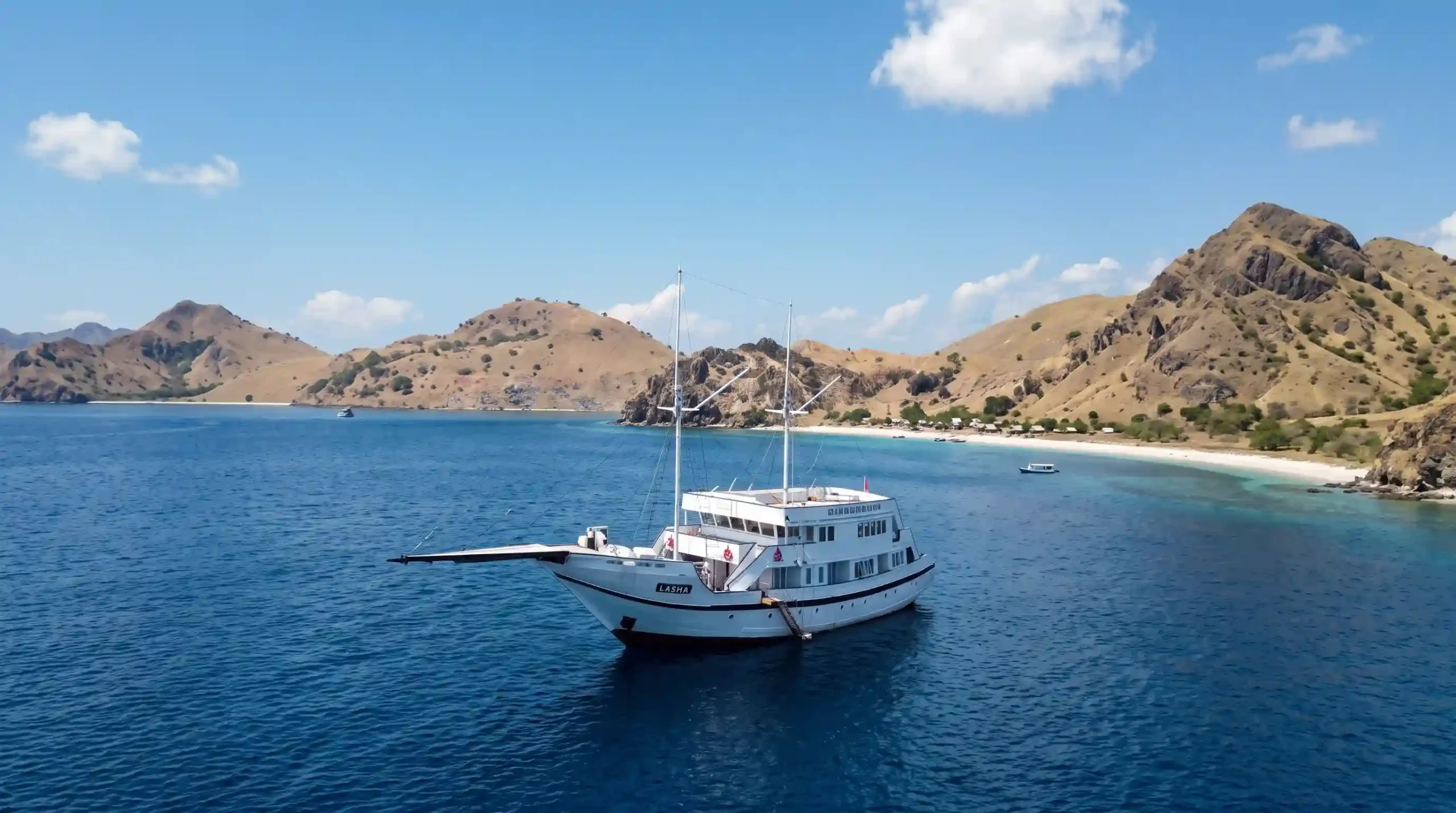
The ship itself suits the mission. LASHA is a 52.5-meter, four-deck Buginese phinisi launched in 2023, carrying up to 26 guests in 10 ensuite cabins, with a dedicated dive deck that doubles as a staging area for snorkel sessions. One honest note: like every traditional wooden phinisi, LASHA carries no active fin stabilizers, which is one more argument for anchorages as protected as Siaba. Full specifications are on the yacht page.
How Much Does a Turtle-Focused Komodo Charter Cost?
LASHA operates as a whole-boat private charter with a two-night minimum. Leisure and diving rates for groups of 1–14 guests are priced by trip length — see the rates page. Komodo National Park charges an entrance fee of US$25 per guest per night on top of the charter rate.
| Duration | Leisure charter (1–14 guests) | Diving charter (1–14 guests) |
|---|---|---|
| 3D2N | US$21,600 | US$23,200 |
| 4D3N | US$32,400 | US$34,800 |
| 5D4N | US$43,200 | US$46,400 |
Larger groups move through tiered nightly rates up to 22 paying guests, with complimentary places added at each tier to a maximum of 26 guests on board. The full tier table and seasonal notes are on the rates page, and availability can be confirmed directly through the booking page.
⚓ This guide is part of the journal of LASHA Cruise — official site — the 52.5-metre luxury phinisi sailing Komodo National Park and Raja Ampat. Official booking only via lashacruise.com · WhatsApp +62 811-3823-875 (Komodo Luxury).