THE VESSEL
One of the Largest Luxury Phinisi in the Komodo Fleet
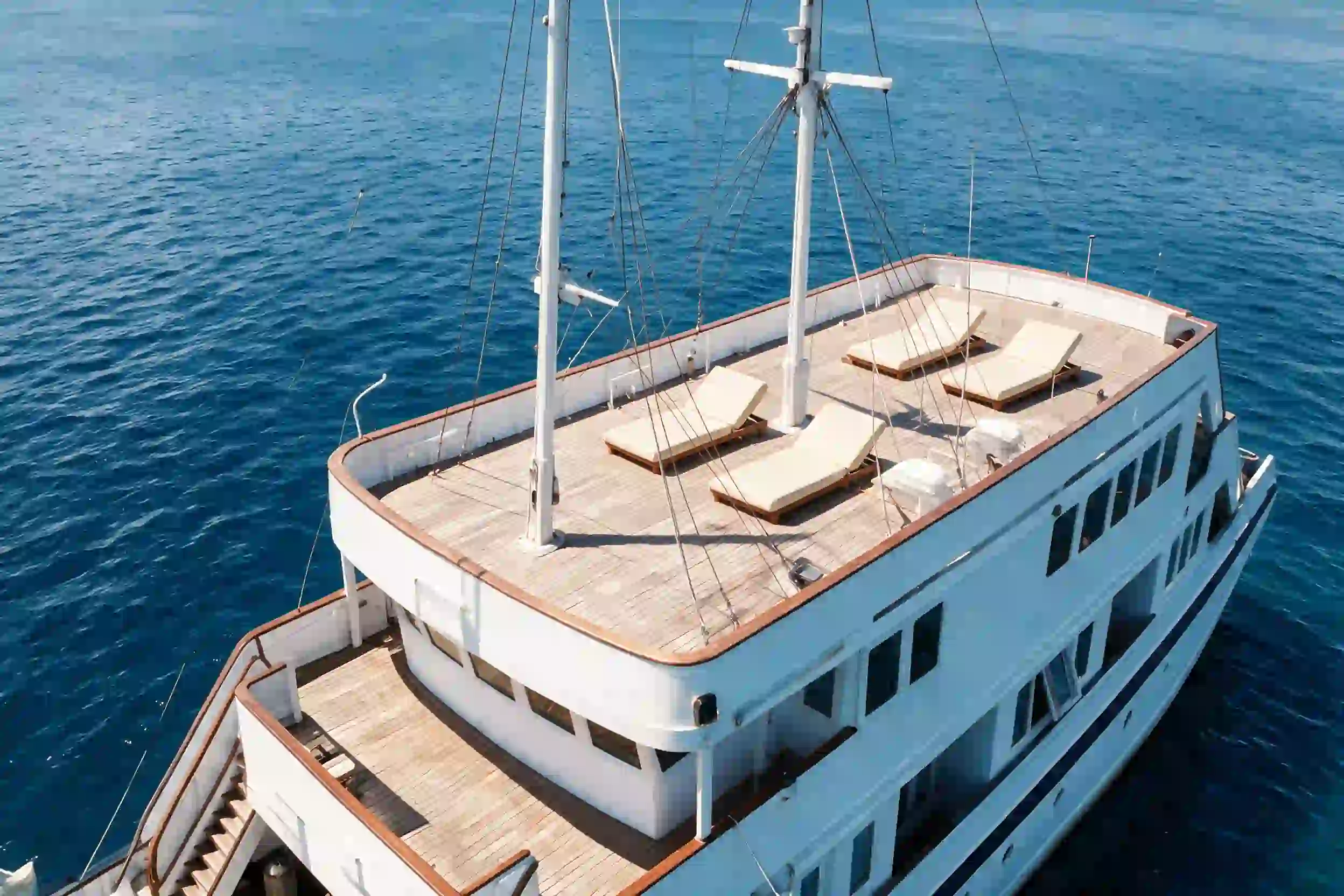
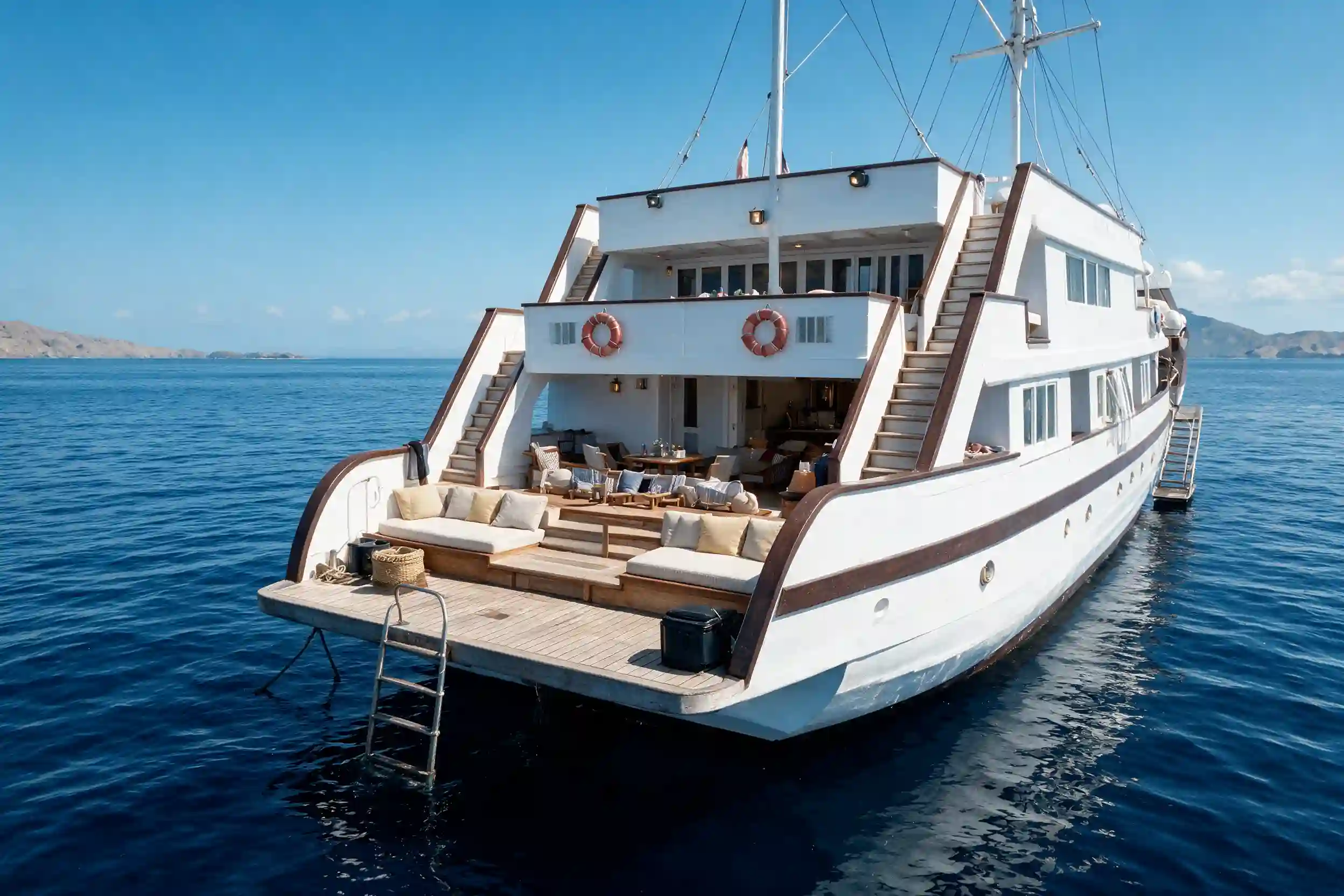
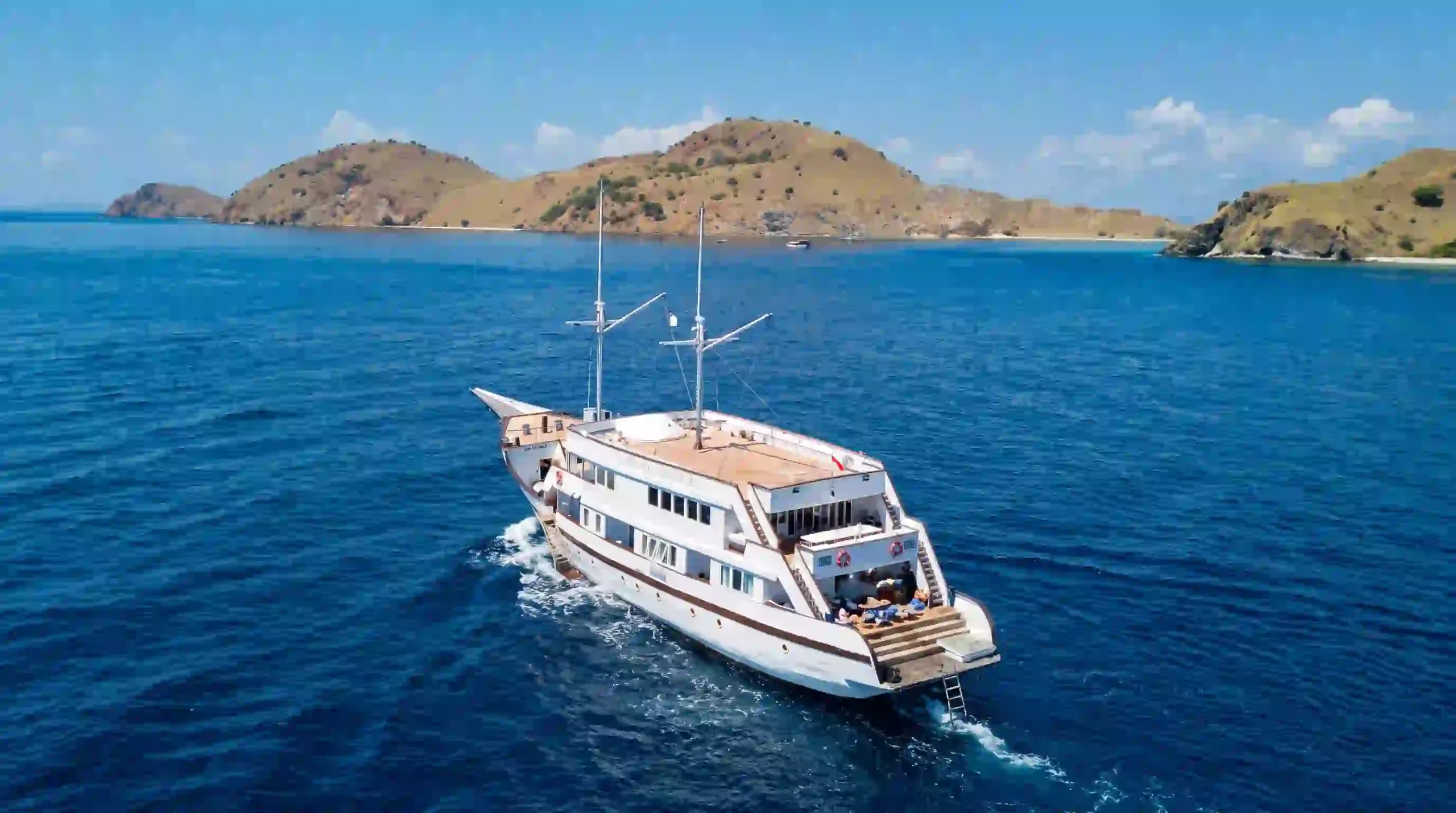
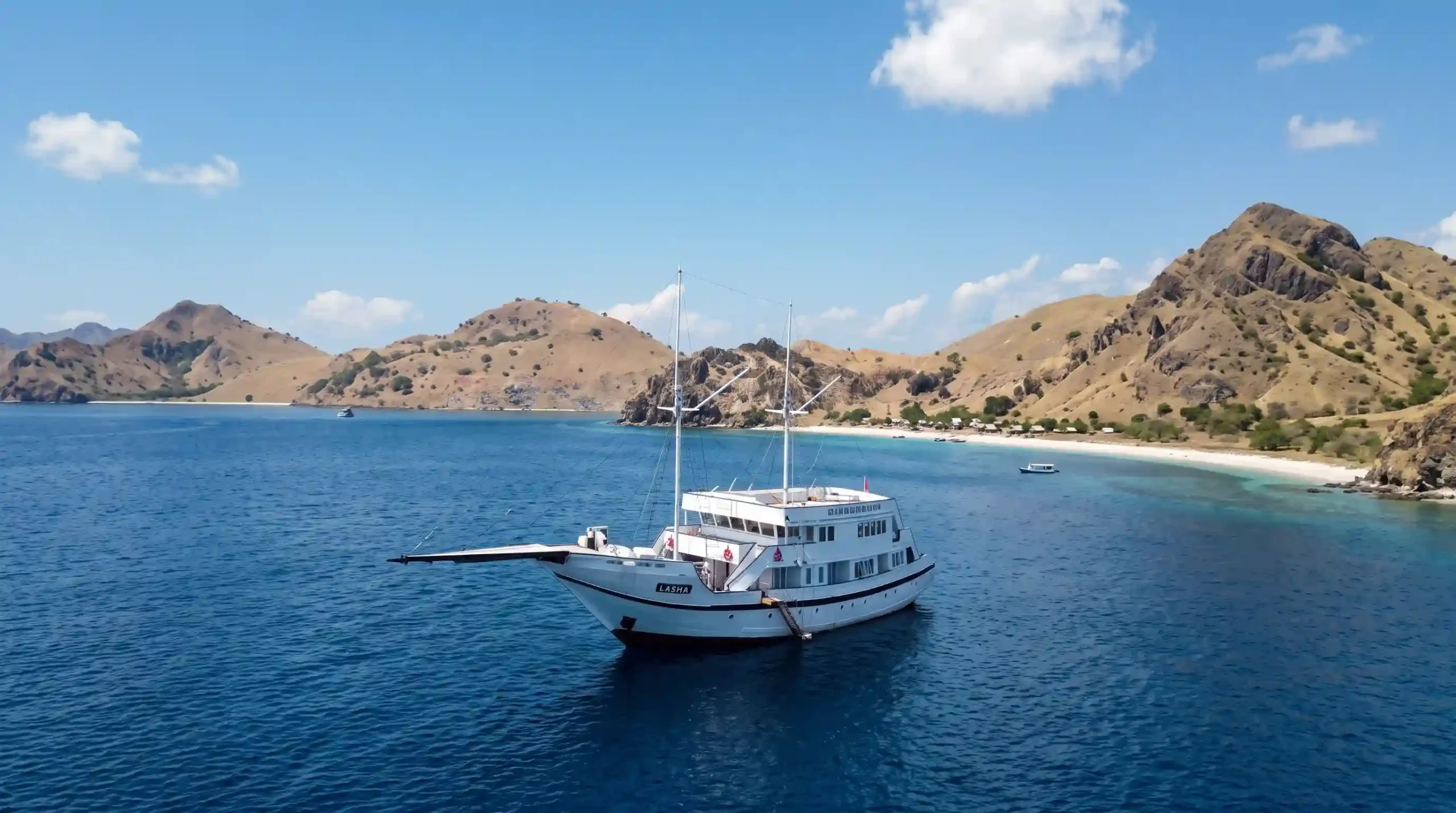
Some ships are built to move people; LASHA was built to slow them down. At 52.5 metres from bowsprit to stern, with a 10.3-metre beam and 466 gross tonnes of ironwood and teak, she is one of the largest luxury phinisi in the Komodo fleet — a scale you feel in the width of her passageways, the calm of her 10 ensuite staterooms, and a sun deck that never feels crowded even with 26 guests aboard.
Scale is not vanity at sea; it is comfort arithmetic. Most luxury phinisi working Komodo carry five to eight cabins, according to charter-market research, so a ten-cabin, 26-guest vessel changes what a charter can be: three generations of one family, a wedding party, a full corporate retreat — one boat, every guest in an ensuite stateroom.
Her maiden public sailing departs Labuan Bajo on 17 August 2026 — Indonesian Independence Day. The date is no accident. The phinisi is Indonesia’s maritime signature, and the art of building one was inscribed on UNESCO’s Representative List of the Intangible Cultural Heritage of Humanity in 2017. LASHA carries that lineage into her first Komodo season under the promise she was named for: Sailing Beyond Dreams.
Why Does a 2023 Build Matter?
Every phinisi is a negotiation between tradition and engineering, and LASHA settles it generously in both directions. According to UNESCO’s inscription, traditional pinisi building is centred in Tana Beru, Ara and Lemo-Lemo in South Sulawesi, where Konjo boatbuilders have shaped hulls by hand and eye for generations. The classic pinisi carries a two-masted schooner rig with seven sails and is framed in dense tropical hardwoods — the same Ulin ironwood and Jati teak used throughout LASHA’s 2023 hull.
What the Bugis tradition supplies in soul, the launch year supplies in systems: a Weichai X6170 main engine rated at 750 HP, twin Mitsubishi 6D22 generators delivering 70 kVA each, 12,000 litres of fuel and 22,000 litres of fresh water. Inside, the palette stays serene — white and ivory surfaces, brass-gold detailing, and an ensuite marble bathroom with rain shower in every one of the 10 cabins.
The measurements deserve translation. A 10.3-metre beam is why the dining room seats a full charter at one table rather than in shifts; 466 gross tonnes is why the ship stands steady while guests carry espresso up open staircases; and 2.7 metres of depth lets her anchor close in, where the swimming is. Numbers first, atmosphere second — that is the correct order at sea, because the second is impossible without the first.
LASHA Technical Specifications
Charter brokers and returning guests read a vessel through her numbers, so here is LASHA’s file in full — no summaries, no rounding.
Dimensions & Registry
| Specification | Detail |
|---|---|
| Length overall | 52.5 m |
| Beam | 10.3 m |
| Depth | 2.7 m |
| Gross tonnage | 466 GT |
| Year built | 2023 |
| Style | Phinisi, Buginese tradition |
| Hull materials | Ulin (ironwood) + Jati (teak) |
| Flag | Indonesia |
| Home port | Labuan Bajo |
| Accommodation | 10 ensuite cabins, up to 26 guests |
Engine Room & Capacities
| System | Detail |
|---|---|
| Main engine | Weichai X6170, 750 HP |
| Generators | 2 × Mitsubishi 6D22, 70 kVA each |
| Fuel capacity | 12,000 L |
| Fresh water | 22,000 L |
Those two tanks matter more than any lounge. Twelve thousand litres of fuel gives LASHA the legs for long Raja Ampat and Banda Sea crossings, while 22,000 litres of fresh water keeps ten rain showers, a working galley, the sun-deck jacuzzi and two in-suite jacuzzi bathtubs supplied for days between ports.
Navigation & Communication
| Equipment | Detail |
|---|---|
| GPS | Garmin |
| AIS transponder | Samyung |
| Radar | SART radar |
| Radio | iCom |
| EPIRB distress beacon | Samyung |
Safety Equipment
| Equipment | Quantity |
|---|---|
| Lifeboats | 2 |
| Liferafts (20 pax each) | 4 — 80 covered places |
| Life jackets | 75 |
| Fire extinguishers | 30 |
| Ring buoys | 12 |
| CCTV | 54-channel system |
Deck by Deck: How LASHA’s Four Levels Work
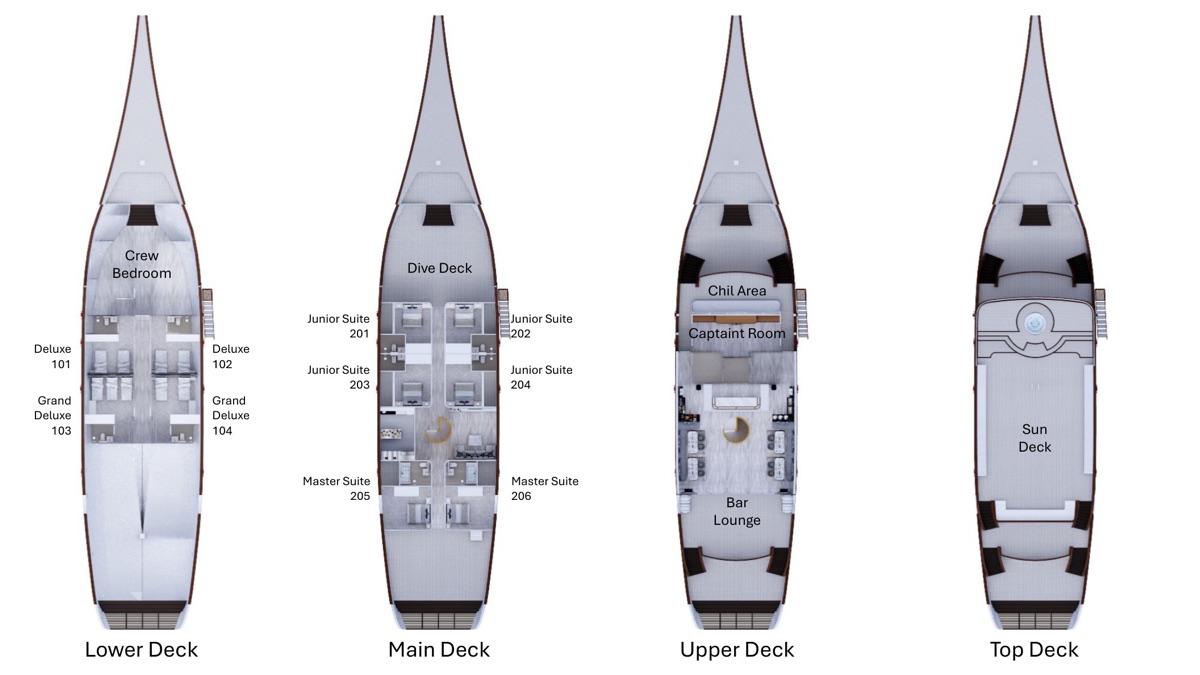
A 52.5-metre hull gives her designers something smaller phinisi never have: room to separate sleep, play, dining and sun into four distinct levels, so that a full ship of 26 guests still moves like a quiet one.
Life on board follows the levels. Mornings begin on the top deck with coffee before the heat; late mornings belong to the water and the Dive Deck; afternoons drift between the Chill Area and the suite balconies; evenings gather everyone at the Lounge & Resto before the jacuzzi takes the night shift. Four decks, four tempos, one ship.

Lower Deck — Deluxe & Grand Deluxe Staterooms
On the lower deck, closest to the waterline where a hull rides steadiest, sit Deluxe cabins 101 and 102 — twin beds for two guests each, ensuite marble bathrooms with rain showers — and Grand Deluxe cabins 103 and 104, which add room for an extra bed and sleep two to three. The crew quarters share this level, keeping service one staircase from every stateroom. The full layout, tier by tier, is on the cabins & suites page.
Main Deck — Suites, Living Room & Dive Deck
The main deck is where LASHA declares her category. Junior Suite Balcony cabins 201–204 each pair a double bed with a private balcony (203 and 204 accept an extra bed), while Master Suites 205 and 206 hold the headline feature: an in-suite jacuzzi bathtub set against ocean-view windows, a double bed with room for an extra, and a private balcony apiece.
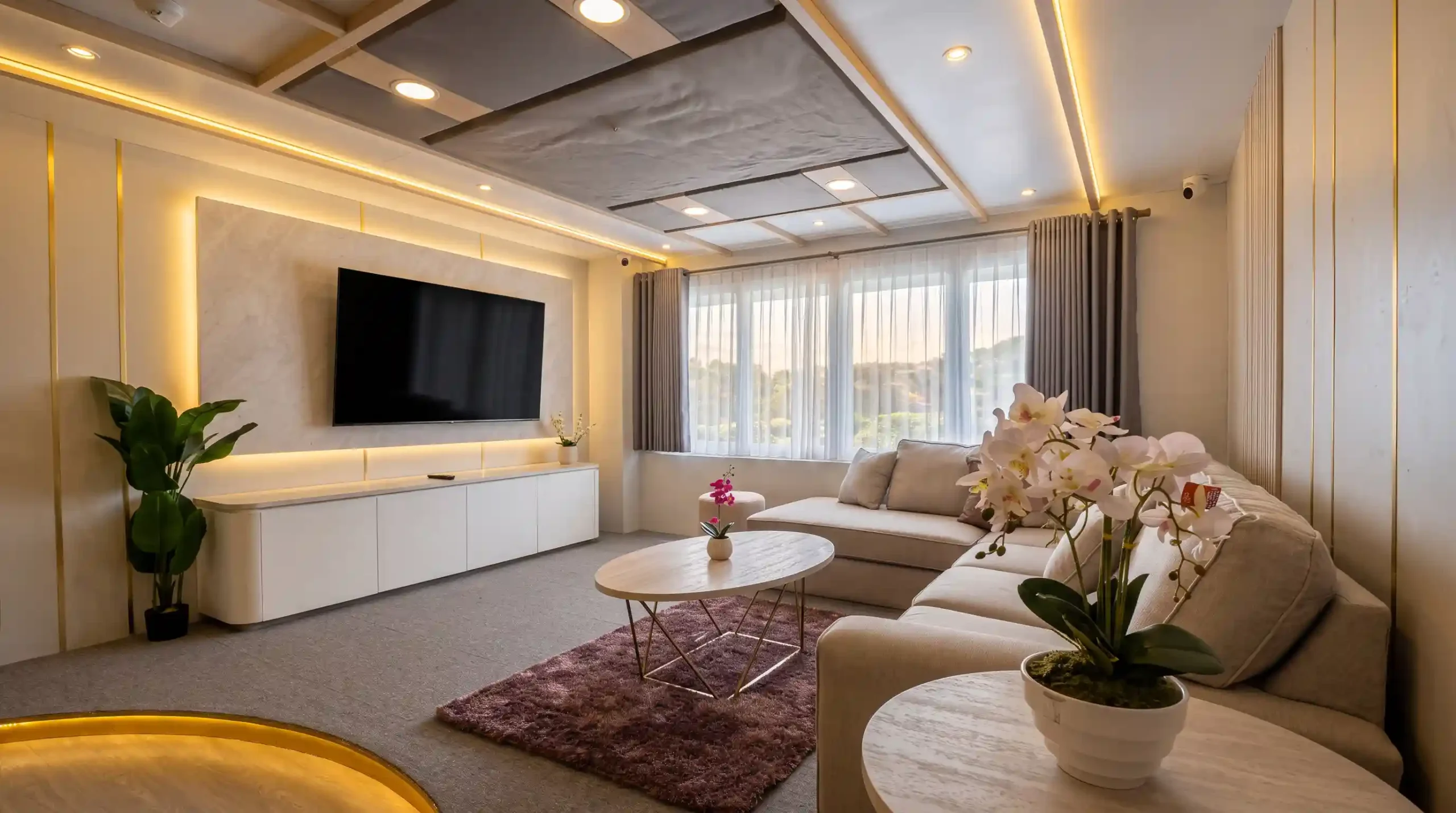
Forward of the suites, the Living Room gathers guests around a smart TV and a PlayStation 5 — the ship’s after-dinner cinema and rainy-hour games room. Aft, the dedicated Dive Deck stages tanks, rinse stations and kit for diving days on Komodo’s reefs, keeping wet gear and salt water away from the lounges. Best visibility in the park — 30 to 40 metres — arrives June through September, according to dive-operator reports, peaking in July and August.

Upper Deck — Lounge & Resto, Chill Area & Alfresco Table
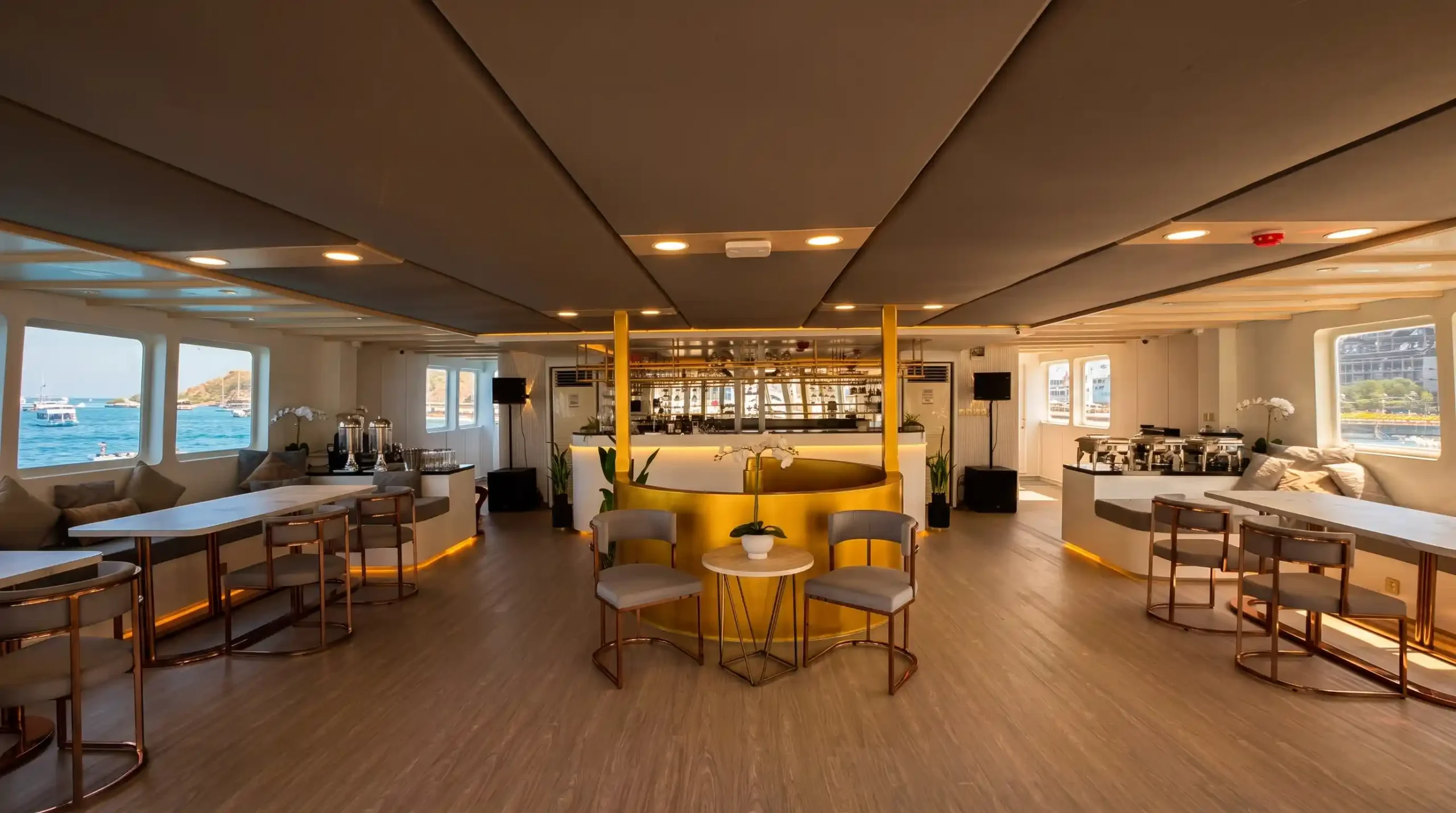
One level up, the Lounge & Resto pairs an indoor dining room with a bar lounge — dinner service moves inside here when the wind rises — flanked by a Chill Area for reading and the Captain Room, from which the ship is conned. Outside, an alfresco dining table takes breakfast under way, with Flores hills sliding past on one side and open water on the other.
Top Deck — Sun Deck & Open-Air Jacuzzi

The top level belongs entirely to leisure: a Sun Deck lined with loungers and, at its centre, an open-air jacuzzi. This is where anchorages earn their reputation — warm water below, Padar’s ridgelines on the horizon, and nothing above but rigging and sky.
How Safe Is LASHA at Sea?
Redundancy is the quiet language of a serious ship, and LASHA speaks it fluently. Her four 20-person liferafts provide 80 covered places — three times her maximum of 26 guests, with capacity for the full crew besides — backed by 2 lifeboats, 75 life jackets, 12 ring buoys and 30 fire extinguishers distributed across all four decks. A 54-channel CCTV system watches passageways, decks and the engine room around the clock.
The navigation stack is equally layered: Garmin GPS for positioning, a Samyung AIS transponder broadcasting her identity to commercial traffic, SART radar, iCom radio for the working channels, and a Samyung EPIRB — the satellite distress beacon that keeps transmitting even if every other system goes dark. None of it is visible from the jacuzzi. All of it is why the jacuzzi feels the way it does.
Guests meet the safety briefing once, on boarding day, and the equipment ideally never again — the mark of a ship where preparedness stays backstage while the crew keeps watch through the 54 channels no guest will ever need to think about.
Where Does LASHA Sail?
Home waters are Komodo National Park — established in 1980 to protect the Komodo dragon and inscribed as a UNESCO World Heritage Site in 1991, according to the park’s World Heritage listing. Its three main islands, Komodo, Rinca and Padar, anchor sailings of two nights and longer; a 2023 demographic analysis estimated around 2,448 dragons living inside the park’s boundaries.
The anchorages do the rest of the persuading. Padar’s trail climbs roughly 800 steps to a viewpoint around 200 metres above three differently coloured bays, according to local trail guides; Pink Beach owes its blush to red-shelled foraminifera mixed through white coral sand; and Manta Point’s reef mantas are present year-round, with plankton-rich December to March widely cited by dive operators as the peak. LASHA’s schedule threads all of them between swims.
Komodo’s dry season runs roughly April to October. When the northwest monsoon arrives, most luxury phinisi reposition to Raja Ampat from about October or November through April, according to operator consensus — and LASHA follows that rhythm with Raja Ampat, Banda Sea, Wakatobi and Maratua expeditions of five nights and more. Day-by-day routes live on the itineraries page; for a private full-boat sailing, start with the Komodo charter page and the 2026–2027 charter rates.
Plan your LASHA charter — send your dates and group size, and the charter desk will confirm availability for the 2026–2027 seasons.
Bookings for LASHA Phinisi Cruise are handled end-to-end by Komodo Luxury, the vessel’s official marketing partner. The owner built the ship; Komodo Luxury is entrusted with her guests.