
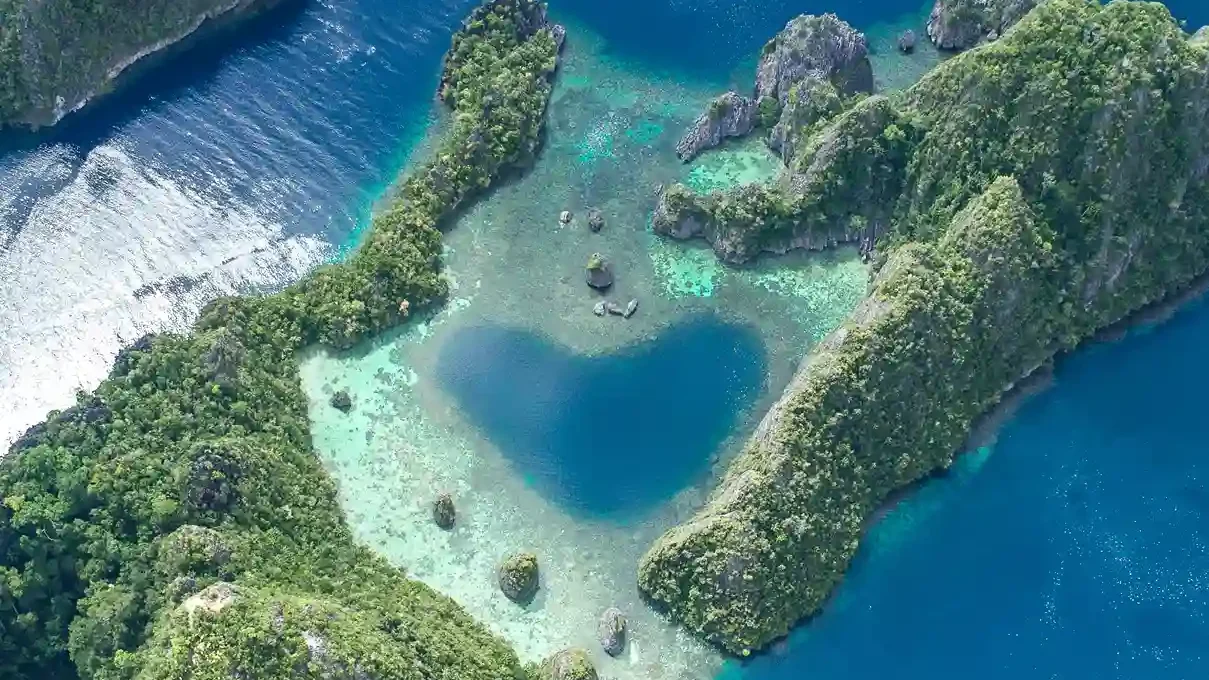
Raja Ampat's conservation card funds a marine protected area of roughly two million hectares; southern Misool adds a no-take reserve of about 1,220 square kilometres run with the Misool Foundation. Foreign visitors pay IDR 700,000 for the card, valid twelve months, plus IDR 1,000,000 for the regency tourism levy — IDR 1,700,000 in total. What that money buys is patrols, moorings and a fishing ban that has visibly rebuilt the reefs.
Conservation fees are easy to resent when nobody explains them, and Raja Ampat's are among the highest in Indonesia — close to seven times what Komodo National Park charges a foreign visitor. So it is worth setting out what the money is attached to, particularly in the south around Misool, where the relationship between protection and what you see under water is unusually direct.
What Do the Two Charges Actually Fund?
| Charge | Foreign | Indonesian | Validity | Attached to |
|---|---|---|---|---|
| Marine park conservation card (TLPJL / PIN) | IDR 700,000 | IDR 425,000 | 12 months | Management of the Raja Ampat marine protected area — patrols, moorings, monitoring, across roughly 2 million hectares |
| Regency tourism levy (Perbup No. 34/2025) | IDR 1,000,000 | IDR 300,000 | Per visit | Regency government tourism administration |
| Total | IDR 1,700,000 | IDR 650,000 | — | Both of the above |
Children under 12 are exempt from both. Guides published before 2026 that quote a single IDR 1,000,000 charge are describing the pre-adjustment structure.
What Makes Misool Different From the Rest of the Archipelago?
Misool is where Raja Ampat's conservation story is most measurable. The Misool Foundation reports a no-take reserve of approximately 1,220 square kilometres in which no fishing of any kind is permitted, backed by a ranger patrol operation. Since enforcement began the foundation has reported substantial increases in fish biomass and in shark numbers inside the reserve. Those are the foundation's own monitoring figures rather than an independent audit, and they are presented on that basis — but the underlying pattern, that a genuinely enforced no-take area rebuilds a reef, is one of the better-supported findings in marine science.
What that means for a visitor is straightforward. Divers who have worked Indonesian reefs for years describe Misool's soft coral walls and fish density as being on a different scale from anywhere else in the archipelago. It is not a marketing claim; it is what happens when nobody has fished a reef for over a decade.
Why Is Misool Effectively Expedition-Only?
Distance decides it. Misool lies roughly 100 to 120 nautical miles from Sorong — ten to fourteen hours of passage at working speed. There is no way to see it properly from a base in the Dampier Strait, and day boats do not cross that water. A vessel that carries your bed, your compressor and your galley to the reef and keeps them there is the only practical arrangement, which is the entire case made on the Misool expedition-only page.
| Group | Whole boat / night | 10 nights, per paying guest | Plus park fee | Plus entry fees |
|---|---|---|---|---|
| 14 paying | $11,600 | $8,286 | $250 | IDR 1,700,000 |
| 18 paying | $14,900 | $8,278 | $250 | IDR 1,700,000 |
| 22 paying | $18,200 | $8,273 | $250 | IDR 1,700,000 |
Arithmetic on the published eastern expedition band. Park fees are $25 per guest per night; entry fees are government charges shown in rupiah.
Is the Fee Reasonable?
Judge it against what it protects rather than against other ticket prices. Raja Ampat holds more than 540 species of hard coral — roughly three-quarters of all known hard coral species on earth — and around 1,300 species of reef fish, inside a protected area of about two million hectares. Komodo National Park, by comparison, charges IDR 250,000 per foreign visitor under PP 36/2024 for an area of a different order of size and biodiversity. On that basis the Raja Ampat charge looks less like a toll and more like the running cost of the reason you came.
The full published rate bands that sit alongside these fees are on the 2027 expedition rates page. For the numbers behind the biodiversity claim, see the species figures in full.
Frequently Asked Questions
What is the Misool conservation area?
A large no-take marine reserve in southern Raja Ampat, established and monitored with the Misool Foundation. The foundation reports a protected area of roughly 1,220 square kilometres in which no fishing is permitted at all.
Does my Raja Ampat entry fee fund Misool specifically?
The marine park conservation card funds the wider Raja Ampat marine protected area — patrols, moorings and management across roughly two million hectares. Misool's no-take reserve is separately administered with the Misool Foundation, so the two are related but not identical.
Has protection actually worked at Misool?
The Misool Foundation reports substantial increases in fish biomass and shark numbers inside the reserve since patrols began. Those are the foundation's own monitoring figures, reported as such — but the direction of travel is consistent and well publicised.
How much does entering Raja Ampat cost in total?
IDR 1,700,000 for a foreign visitor: IDR 700,000 for the conservation card, valid twelve months, plus IDR 1,000,000 for the regency tourism levy per visit. Indonesian visitors pay IDR 650,000. Under-12s are exempt.
Why can't I visit Misool on a short trip?
Distance. Misool sits roughly 100 to 120 nautical miles from Sorong — ten to fourteen hours of passage — so reaching it and diving it properly needs a boat that sleeps you there.
Is diving restricted inside the no-take zone?
Diving and snorkelling continue under management; it is extractive fishing that is excluded. That combination is exactly why the reefs there look the way they do.
Where These Numbers Come From
Vessel dimensions, tank capacities, cabin counts and safety inventory come from LASHA's own published specification sheet on the yacht page. Charter figures are the published 2026–2027 rate file on the rates page — the same document the Komodo Luxury charter desk quotes from, reproduced in full rather than hidden behind an enquiry form. Government fees are cited to their regulation or issuing body in the text. Anything that is an operational estimate rather than a published figure is labelled as an estimate where it appears. LASHA begins her maiden public season on 17 August 2026, so there are no guest reviews to quote yet and none are invented here. Misool no-take reserve area and biomass recovery figures are reported by the Misool Foundation and are attributed to it rather than independently verified here. Figures checked 1 August 2026.
Plan This With the Charter Desk
Southern Raja Ampat needs a ten-night itinerary minimum — ask which 2027 windows still have space. Every LASHA Phinisi Cruise booking is handled by Komodo Luxury, the vessel's official marketing and booking partner — an operator working Indonesian waters since 2015 and part of Juara Holding Group. Send your month, guest count and how many of the party dive, and you get a written quotation drawn from the same rate bands published on this site, with every separately billed item listed before anything is paid.
WhatsApp +62 811 3823 875 [email protected]
⚓ This guide is part of the journal of the LASHA boat in Komodo — the 52.5-metre luxury phinisi sailing Komodo National Park and Raja Ampat. Official booking only via lashacruise.com · WhatsApp +62 811-3823-875 (Komodo Luxury).