

Wae Rebo is a traditional Manggarai village of cone-shaped Mbaru Niang houses set at roughly 1,100 m in the mountains of Flores. Reaching it from Labuan Bajo takes about a four-hour drive plus a 2–3-hour forest trek, so plan a 2-day, 1-night overnight — ideally scheduled immediately before or after your LASHA Komodo charter.
Of all the land extensions guests ask us to arrange around a Komodo sailing, Wae Rebo is the most requested — and the most frequently misplanned. Travellers picture a quick cultural stop; in reality it is a full mountain journey to one of Indonesia’s most celebrated living villages. Done properly, it is the perfect counterweight to a week at sea: highland cloud forest before or after coral reefs and dragon islands. This guide explains the logistics honestly, then shows how to slot it around a private charter without stress.
What Makes Wae Rebo Worth Leaving the Coast For?
Wae Rebo is a remote Manggarai settlement built around seven Mbaru Niang — towering, five-level houses thatched in a near-perfect cone, arranged in a crescent on a grassy mountain saddle. Each house shelters several families and functions as home, granary and ceremonial space at once. The village’s painstaking, community-led rebuilding of these structures earned the top prize in the 2012 UNESCO Asia-Pacific Awards for Cultural Heritage Conservation, and the architecture remains fully lived-in rather than staged for visitors.
The setting does the rest. At around 1,100 m above sea level, the village sits above a valley that fills with mist most mornings — the reason it is often called Flores’ village above the clouds. Arabica coffee grows on the surrounding slopes, roasted and served by the families who grow it. After days of saltwater and sun on deck, waking to cold mountain air and drumbeats from a ceremonial house is a genuinely different Indonesia.
How Do You Get to Wae Rebo Village from Labuan Bajo?
There is no road to the village itself — that is precisely why it has survived intact. The journey from Labuan Bajo has two distinct legs: a long scenic drive east along the Trans-Flores corridor to the trailhead at Denge village, then a guided trek up through rainforest. The final hour of the drive is winding and slow; the trail climbs steadily for roughly 5.5 km with about 600 m of ascent. A registered local guide is mandatory from Denge, and on arrival visitors wait for a short welcome ceremony led by a village elder before taking photographs.
| Stage | Route | Time | Notes |
|---|---|---|---|
| Road transfer | Labuan Bajo → Denge trailhead | ±4 hours | Trans-Flores corridor; winding final stretch |
| Trek up | Denge → Wae Rebo | 2–3 hours | ±5.5 km forest trail, ±600 m ascent, local guide required |
| Village stay | Welcome ceremony, overnight | — | Communal guest Mbaru Niang, dinner with village families |
| Trek down | Wae Rebo → Denge | 1.5–2 hours | Slippery after rain; trekking shoes essential |
| Road transfer | Denge → Labuan Bajo | ±4 hours | Back in town by early evening |
Why Does Wae Rebo Really Need Two Days and One Night?
Add the numbers and the answer is obvious: six to seven hours of travel each way. A same-day round trip means trekking through midday heat, rushing the village and descending against fading light — while missing the two moments Wae Rebo exists for: the evening, when the houses glow with cooking fires, and dawn, when mist pours through the valley below the cones. The overnight is the visit.
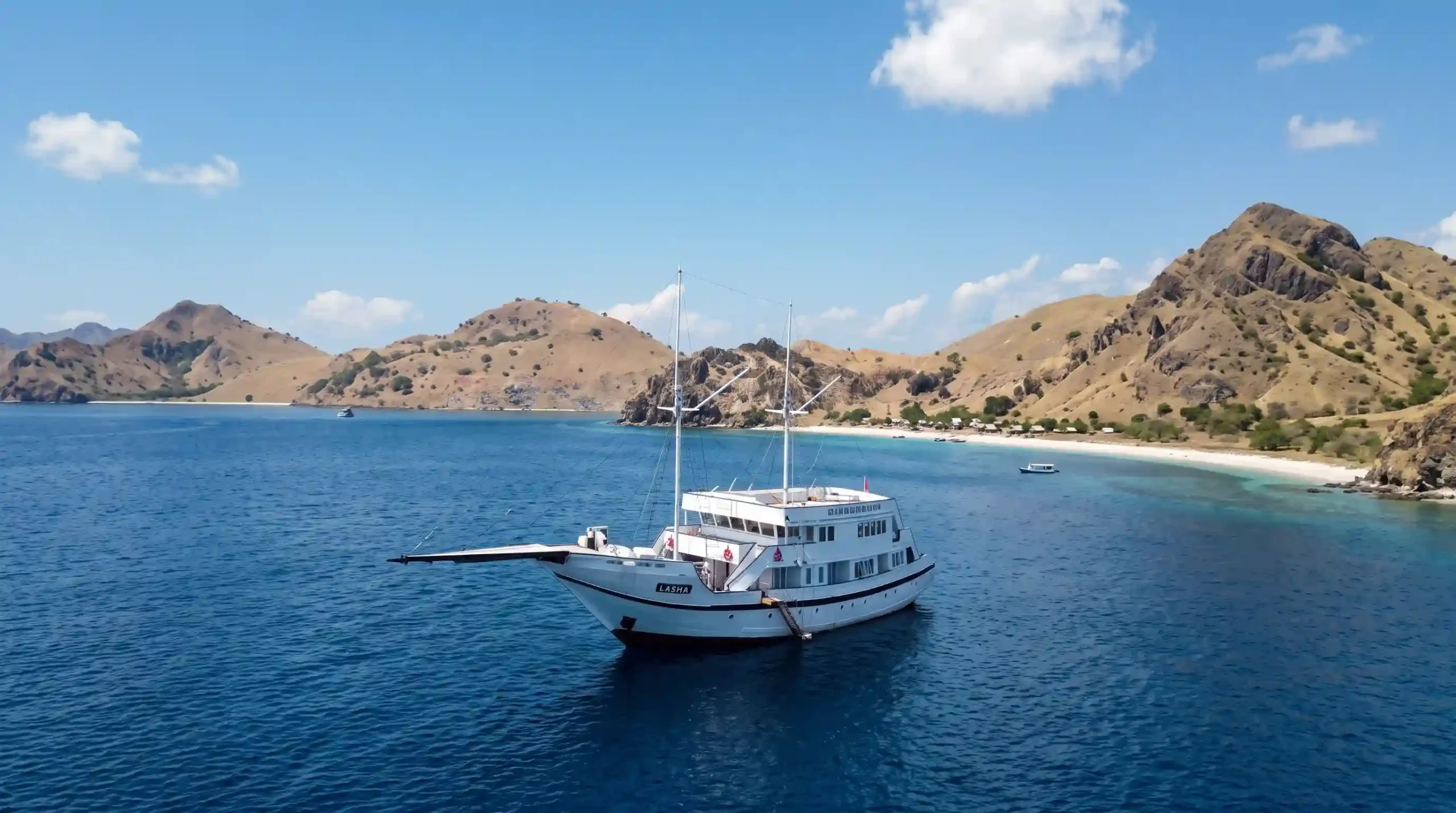
Be clear-eyed about comfort, though. Guests sleep communally in a guest Mbaru Niang on mattresses on the floor, with simple shared facilities and home-cooked Manggarai meals. It is memorable, warm and authentic — and it is not a luxury stay. That contrast is exactly why the extension pairs so well with a private phinisi: one night of highland simplicity framed by ensuite cabins, a jacuzzi deck and a full crew aboard LASHA. Many guests tell us the sequence makes both experiences sharper. Browse the ten ensuite cabins to see what awaits after the descent.
Is Wae Rebo Inside Komodo National Park?
No — and this is the single most common misconception we correct. Komodo National Park is a marine and island reserve west of Labuan Bajo, reached only by boat; Wae Rebo lies in the opposite direction, deep in the mountains of mainland Flores. You cannot sail there, and no cruise itinerary includes it. The two are separate systems administratively as well: park entrance fees of US$25 per guest per night apply to your charter days, while Wae Rebo’s village contribution is arranged separately on arrival and goes directly to the community. Practically, this means Wae Rebo is a land block that must be scheduled around your sailing dates, never inside them.
How Do You Combine Wae Rebo with a LASHA Komodo Charter?
One rule governs everything: give Wae Rebo its own days. Never place the trek on the same day as a flight or your embarkation. Mountain roads, weather and trail conditions all carry natural variability, and a private charter departure — or an international connection — should never depend on them. Build a buffer night in Labuan Bajo between the descent and boarding day, and the whole plan becomes relaxed instead of fragile.
Should You Trek Before or After the Cruise?
Both work; the rhythm differs. Trekking first means you board the yacht with the hardest physical effort behind you — the charter becomes the reward, and any minor delay on land can absorb into the buffer night rather than threaten your sailing. Trekking after the cruise suits guests who want to end on a cultural high note, but it demands stricter discipline: keep at least one clear day between disembarkation and the drive, and another before your flight. For most itineraries we recommend the pre-cruise sequence.
What Does a Combined Week Look Like?
| Day | Plan |
|---|---|
| Day 1 | Arrive Labuan Bajo, overnight in town |
| Day 2 | Drive to Denge, trek up, ceremony and overnight in Wae Rebo |
| Day 3 | Dawn in the village, descend, drive back, buffer night in Labuan Bajo |
| Day 4 | Board LASHA for a 5D4N private Komodo charter |
| Days 5–7 | Padar, Komodo and Rinca dragon treks, Pink Beach, manta sites |
| Day 8 | Disembark in Labuan Bajo; fly out in the afternoon or next morning |
On the water side, LASHA operates as a whole-boat private charter for up to 14 guests on leisure routes, with a two-night minimum — a 5D4N charter is US$43,200 whole-boat plus the US$25 per-guest, per-night park entrance fee. Full duration pricing is on our rates page, route options on the Komodo charter page, and day-by-day sailing plans under itineraries. Our desk coordinates the land arrangements — driver, guide and village contribution — so the two halves connect cleanly.
What Should You Pack for the Trek and the Village?
Travel light and leave your main luggage in Labuan Bajo or with your driver. Bring proper trekking shoes with grip, a rain layer even in dry season, a warm layer for the cool mountain night, a headlamp, insect repellent and cash for the village contribution and optional porters. Dress modestly in the village and follow your guide’s lead on ceremony etiquette. Fitness-wise, the trail asks for moderate condition rather than mountaineering experience — steady walkers of most ages complete it comfortably. The dry months from April to November offer the most reliable trail conditions, conveniently matching the best of the Komodo sailing season.
⚓ This guide is part of the journal of the LASHA yacht — the 52.5-metre luxury phinisi sailing Komodo National Park and Raja Ampat. Official booking only via lashacruise.com · WhatsApp +62 811-3823-875 (Komodo Luxury).