
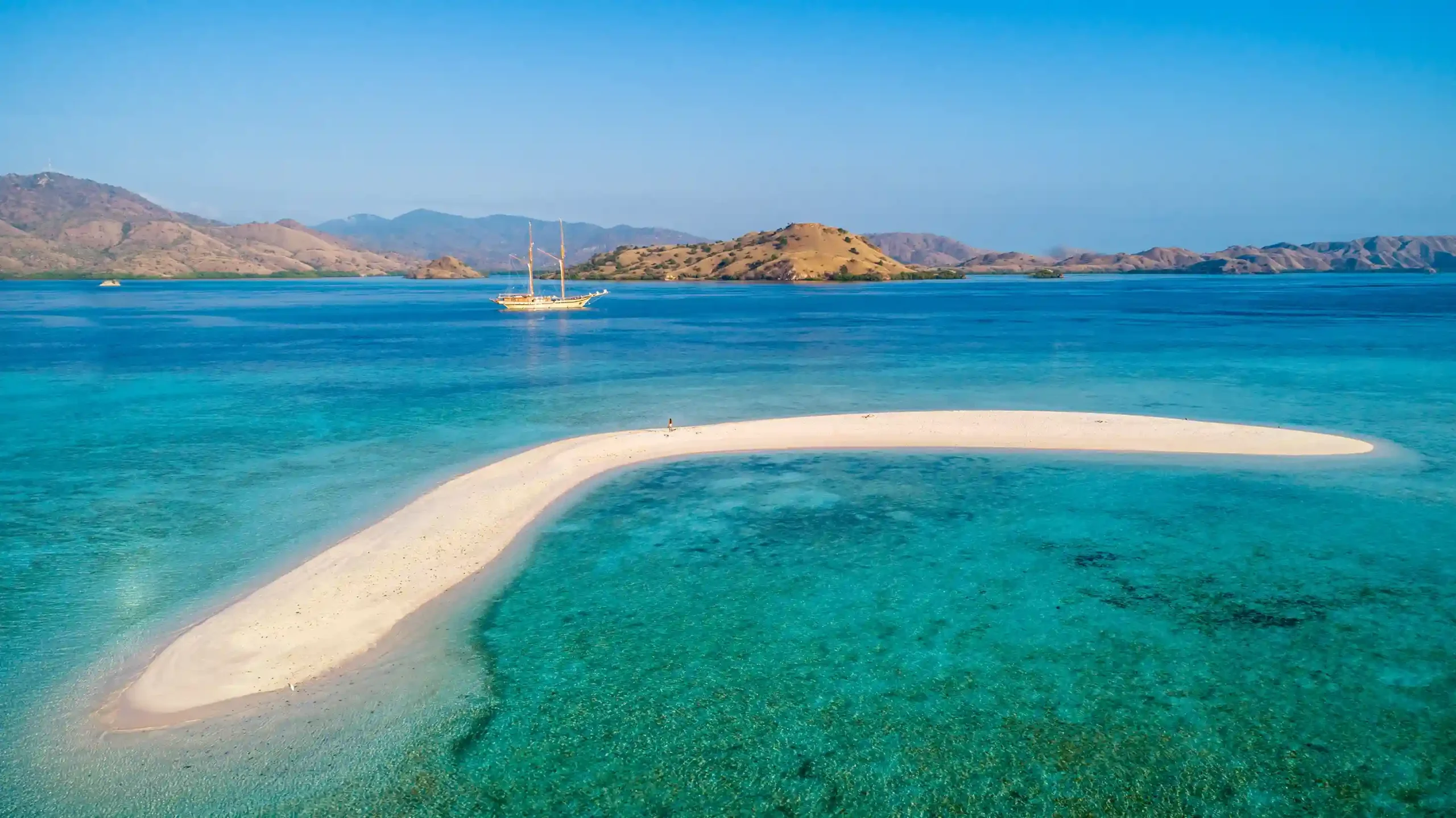
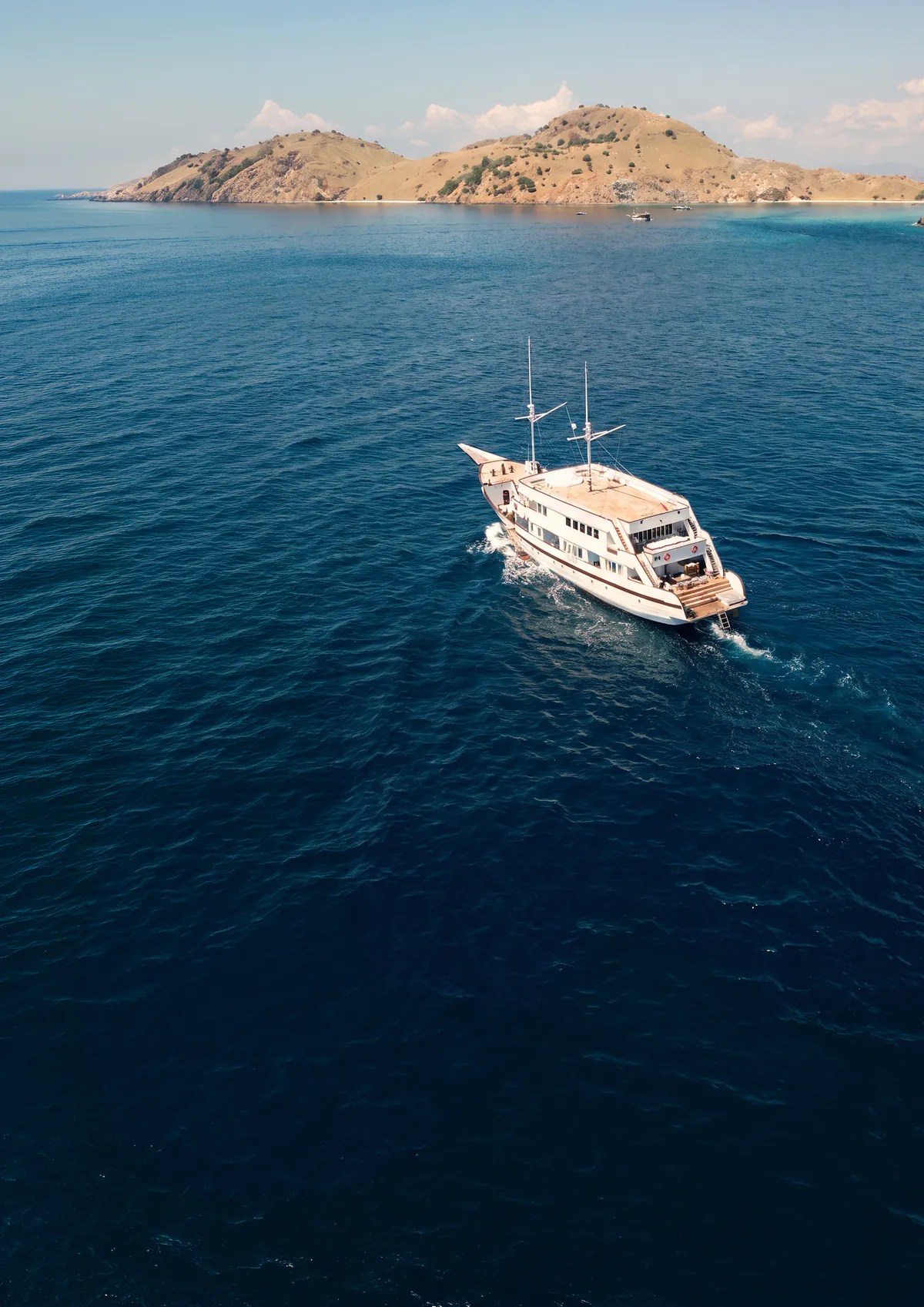
Taka Makassar is a small crescent-shaped sandbar in Komodo National Park, rising from a shallow turquoise lagoon a few minutes from Manta Point. Its size changes dramatically with the tide, so timing matters. LASHA, a 52.5 m luxury phinisi, schedules visits around the tide table and pairs the sandbar with a manta swim in one morning.
What exactly is Taka Makassar?
Taka Makassar is a bare crescent of pale sand sitting on a low reef shoal in the middle of open water, with no rock, no vegetation, and no shade — just sand, a milky turquoise lagoon, and deep blue sea on every side. Seen from the deck or from a drone, the curve of the crescent against the gradient of shallows is one of the most photographed images in Komodo National Park. There is nothing to climb and nothing to tour here; the entire point of the stop is to stand on a ribbon of sand that barely exists, swim in water that behaves like a natural infinity pool, and take the photographs everyone comes to Komodo hoping for. Every LASHA Komodo charter can include it.
Where is Taka Makassar, and how close is Manta Point?
The sandbar lies in the heart of the park, off the east side of Komodo Island and directly beside Karang Makassar — the long drift reef better known as Manta Point. The two sites are effectively next door: from a vessel positioned for the manta drift, the tender reaches the sandbar in minutes. That geography is why almost every well-planned itinerary treats them as a single morning, and why our Manta Point guide is the natural companion to this one. Padar's viewpoint and Pink Beach sit within the same central corridor of the park, so a day built around this area flows without long repositioning runs. See how the pieces fit together on our itineraries page.
How do the tides change the sandbar?
This is the detail most visitors only learn on arrival: Taka Makassar is not a fixed beach. It is the exposed crest of a shoal, and its footprint expands and shrinks with every tidal cycle. At low water the crescent stretches out with firm, walkable sand and wide shallows; at high water most of it slips under the surface, leaving a narrow strip — sometimes only ankle-deep sand you wade across rather than stand on. Neither state is "wrong," but they are very different experiences, and the photographs differ accordingly.
| Tide state | What you find | Best for |
|---|---|---|
| Low tide | The crescent at its largest; firm sand, long exposed curve, wide wading shallows | Walking the sandbar, drone shape shots, families |
| Mid tide | A balanced strip of sand with a generous swimmable lagoon | Swimming plus photos in one stop |
| High tide | Only a narrow crest above the surface; much of the bar ankle- to knee-deep | The "standing on water" look; short swim stops |
Because the state of the tide decides what the stop looks like, the visit is worth planning rather than improvising. LASHA's crew works from the tide tables when sequencing each day, sliding the sandbar call earlier or later so guests arrive with the conditions that suit what they want from it.
When is the best time to visit Taka Makassar?
Morning, comfortably ahead of the day-boat wave. Day trips out of Labuan Bajo — a broad category spanning speedboats to slow wooden boats — reach the central park from late morning, and a sandbar this small feels crowded quickly. A liveaboard sleeping inside the park wakes up minutes away, which is the structural advantage: you can be on the sand not long after sunrise, in soft light, with the crescent to yourselves. The ideal combination is an early-morning slot on a falling or low tide; when the tide table disagrees with the sunrise, your cruise director will tell you honestly which trade-off buys the better morning. That flexibility — resequencing an entire day around one tide window — is what a private liveaboard exists to provide.
Is the snorkeling suitable for beginners?
Inside the lagoon, yes — and genuinely so. The protected shallows over sand are calm, clear, and waist-to-chest deep in the swimming areas, which makes this one of the easiest water entries in the park for nervous swimmers, first-time snorkelers, and children under supervision. The honest caveat sits at the edges: where the shoal drops away toward the channel, the current can run hard. This is the same tidal flow that feeds the manta aggregation at Karang Makassar next door, and it deserves respect. The working rule aboard LASHA is simple — swim inside the lagoon freely, and go beyond the rim only when the crew has checked conditions and cleared it. The tender stays close to swimmers throughout. Note that Taka Makassar itself is a snorkel and beach stop, not a dive site; certified divers get their fill on the drift next door, run by the team behind our diving program.
What should you bring to the sandbar?
Everything, because the sandbar provides nothing. There is no shade, no vendor, no toilet, no jetty — not a single structure. Bring a hat, sunglasses, drinking water, and reef-safe sunscreen applied before you land; by mid-morning the glare off white sand and shallow water is fierce, and there is nowhere to hide from it. Footwear is optional on the soft sand but sandals help later in the day when it heats up. On a LASHA landing the practical load is carried for you — the tender comes across with chilled water and towels — but the principle stands for any visitor: treat Taka Makassar as a place you carry in and carry out, and leave nothing but footprints that the next tide erases anyway.
How does LASHA run the Taka Makassar morning?
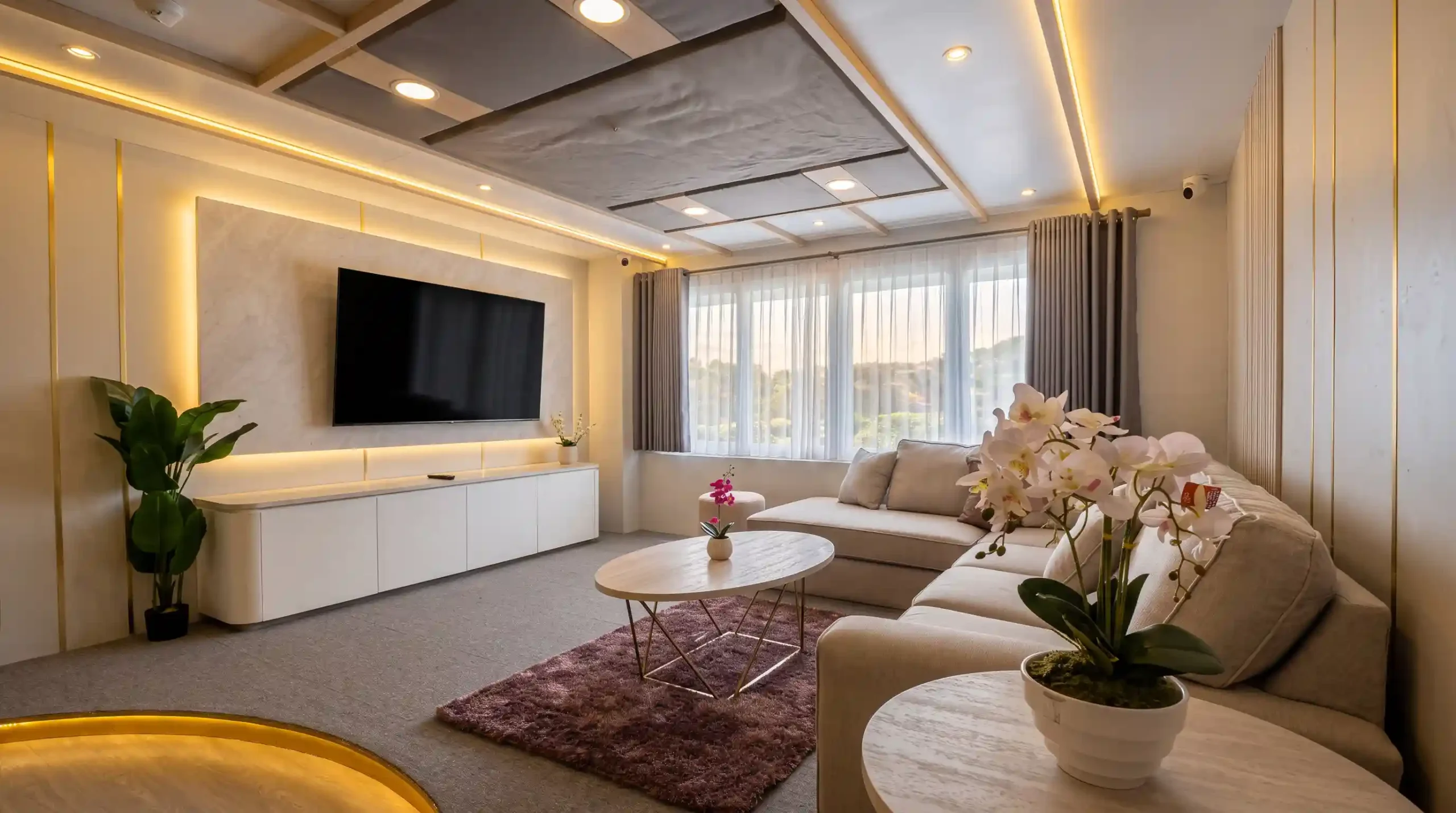
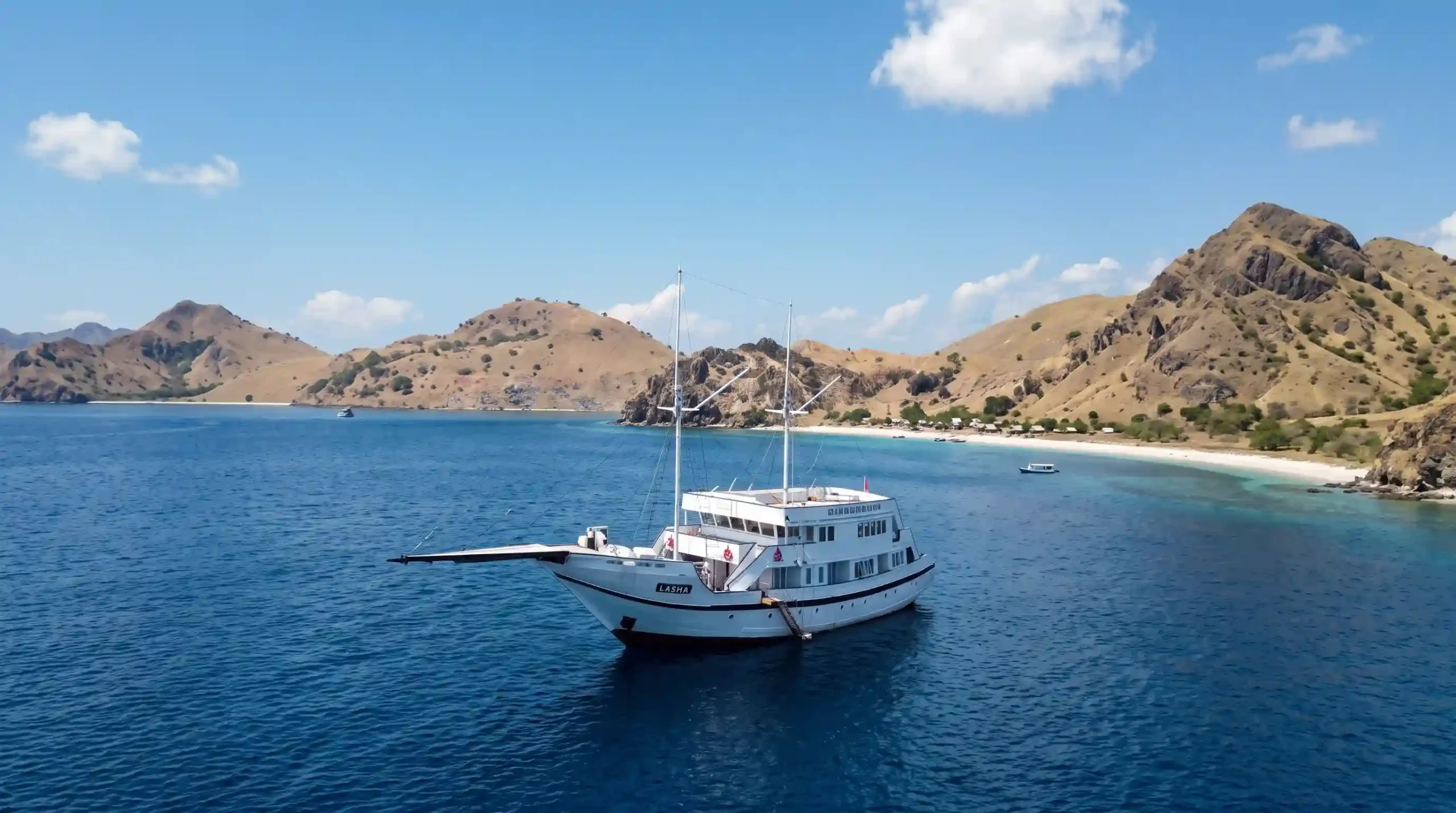
A typical sequence pairs the two neighbouring sites into one unhurried block. Guests tender out early for the manta encounter at Karang Makassar while the current is favourable, then hop across to the sandbar as the tide reaches its window — or the reverse order, when the tide table says so. Back on board, breakfast is served in the Lounge & Resto as LASHA repositions toward Padar or Pink Beach for the next act of the day. The ship herself — a 52.5-metre, 466 GT ironwood-and-teak phinisi launched in 2026, with ten ensuite cabins across four decks for up to 26 guests — is described in full on the yacht page, and the 3D2N version of this routing is laid out in our sample Komodo itinerary. One honest note for planners: LASHA is a traditional wooden phinisi without active fin stabilizers, though Komodo's inner waters are generally sheltered on these short hops.
What does a private charter to Taka Makassar cost?
Taka Makassar is not sold as a stand-alone ticket aboard LASHA; it is one call within a whole-boat private charter of the vessel. Komodo charters run year-round from Labuan Bajo with a two-night minimum, priced by trip length for the entire yacht.
| Duration | Leisure (1–14 guests) | Diving (1–14 guests) |
|---|---|---|
| 3D2N | US$21,600 | US$23,200 |
| 4D3N | US$32,400 | US$34,800 |
| 5D4N | US$43,200 | US$46,400 |
Larger groups move to stepped tiers up to 22 paying guests, with complimentary (FOC) places added from 15 guests upward — the full ladder, plus Full Day and 2D1N short formats, is published on the rates page. Komodo National Park's entrance fee of US$25 per guest per night is billed alongside the charter. Cabin categories, from the two Master Suites with jacuzzi and private balcony down, are compared on the cabins page, and confirmed dates can be held through booking.
⚓ This guide is part of the journal of the LASHA boat in Komodo — the 52.5-metre luxury phinisi sailing Komodo National Park and Raja Ampat. Official booking only via lashacruise.com · WhatsApp +62 811-3823-875 (Komodo Luxury).