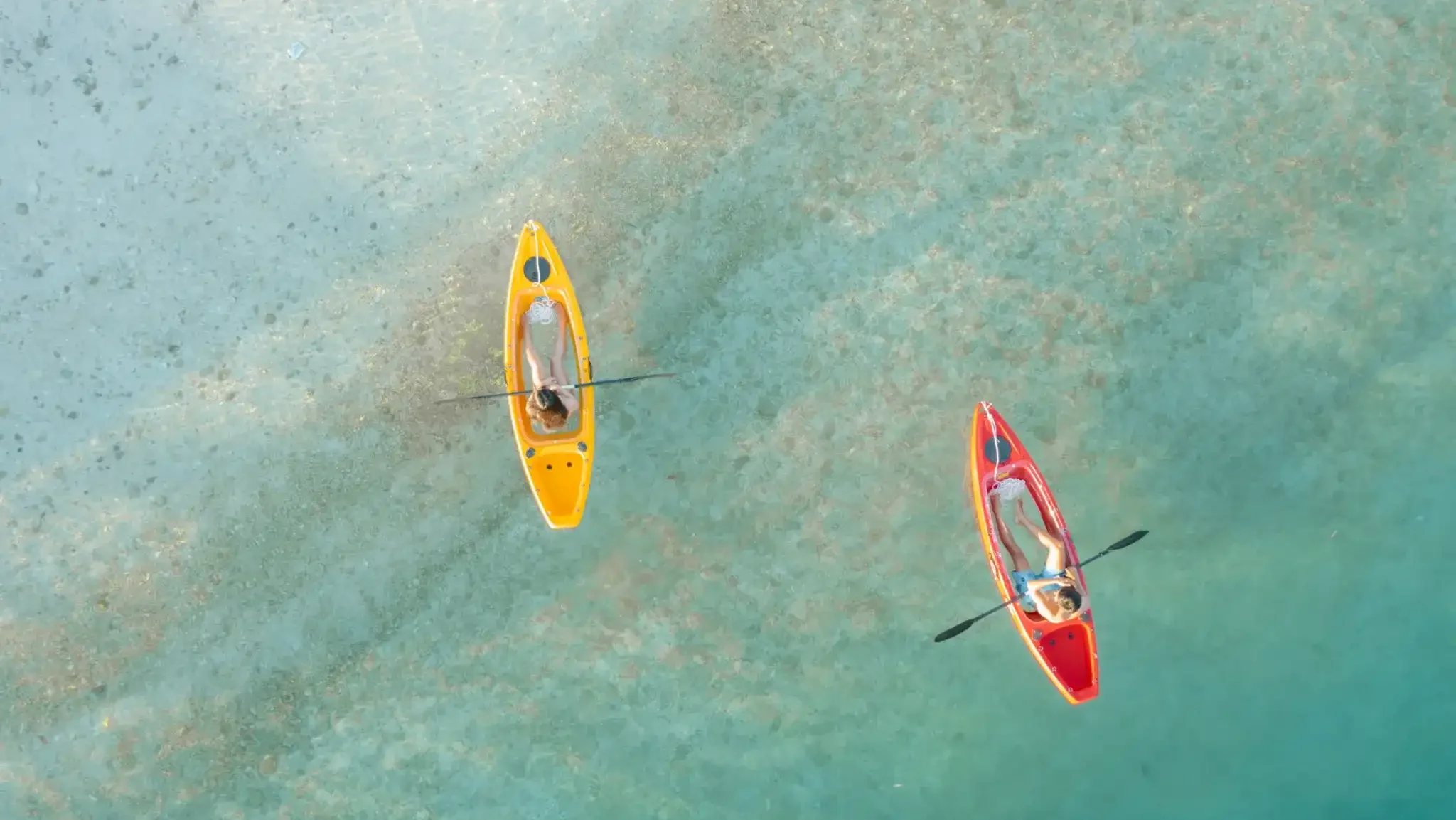

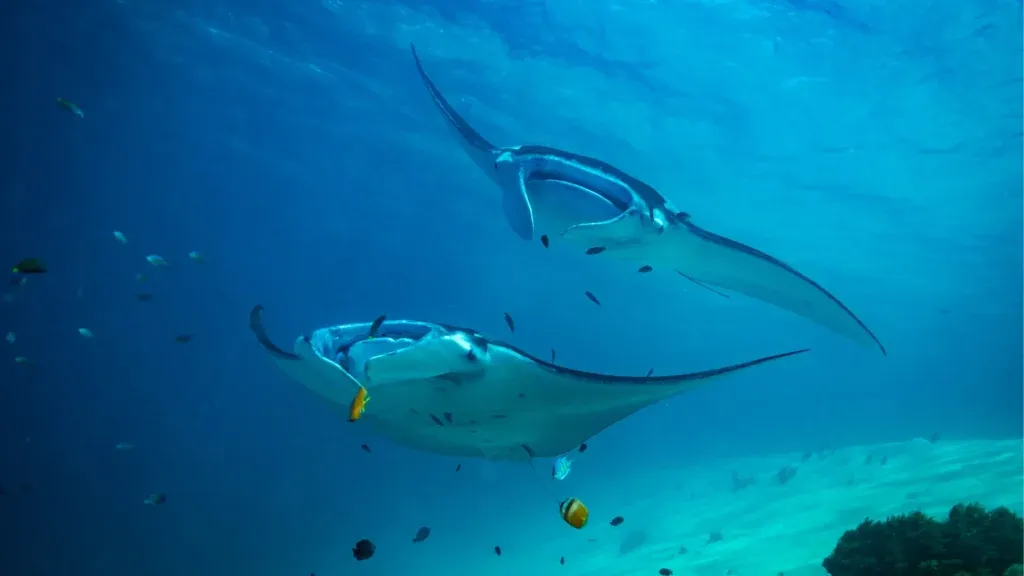
Manta rays are present at Komodo's Manta Point all year. Plankton-rich December–March is the most widely cited peak, while dive operators such as Scuba Junkie Komodo put the best odds at September–May. Most encounters are with reef mantas (Mobula alfredi) at 10–20 m depth — shallow enough that snorkellers from a private phinisi see them too.
THE ONLY QUEUE WORTH JOINING IN KOMODO
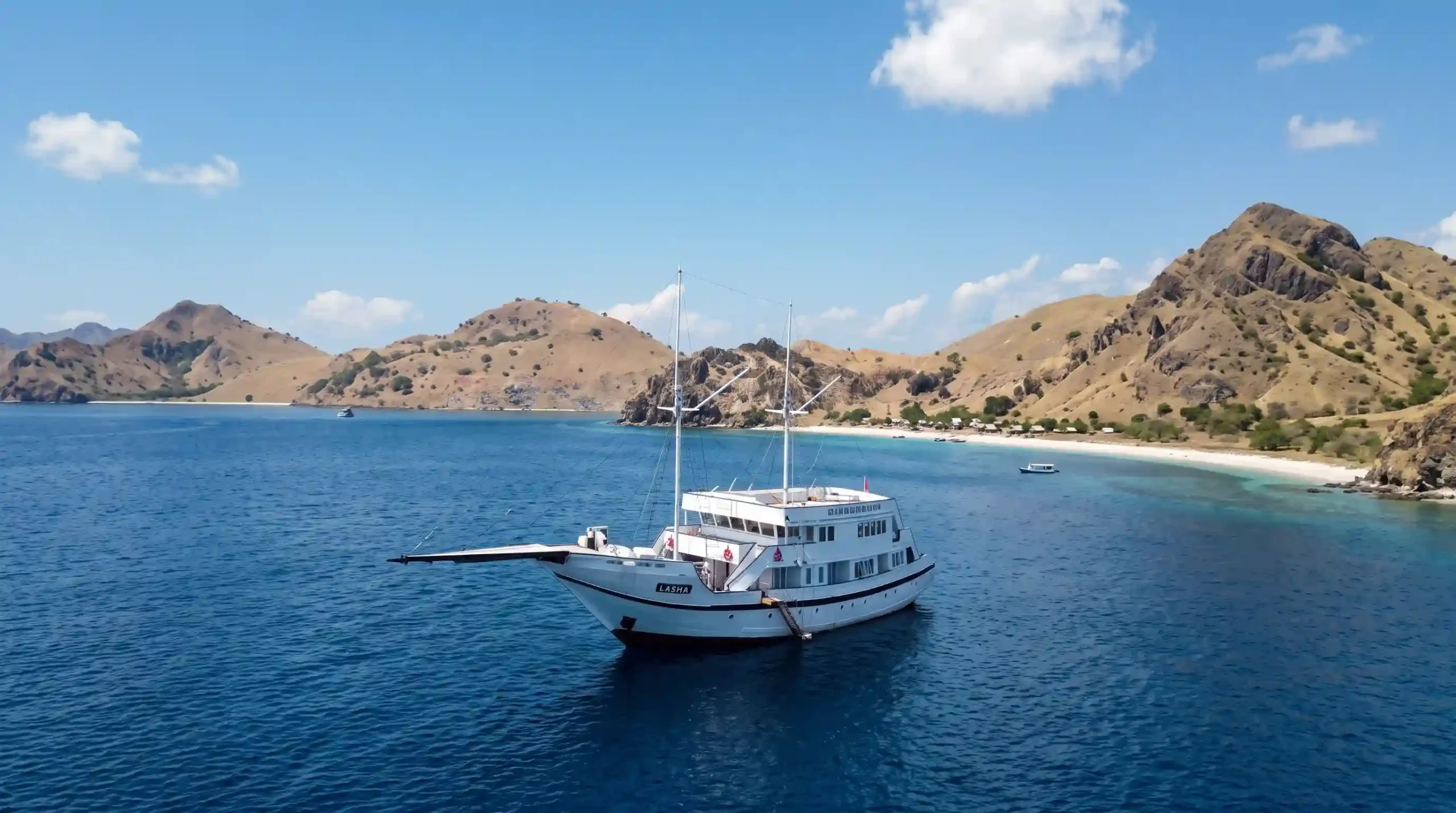
Some wildlife encounters are engineered. Manta Point is not: the rays come for the plankton and the cleaning stations, on their own schedule, and the only variables you control are the month you sail and the boat you watch from. This guide settles the season question with the published numbers, then explains how LASHA runs the site — snorkellers and divers together, staged from the Dive Deck on her main deck.
Which mantas live at Manta Point?
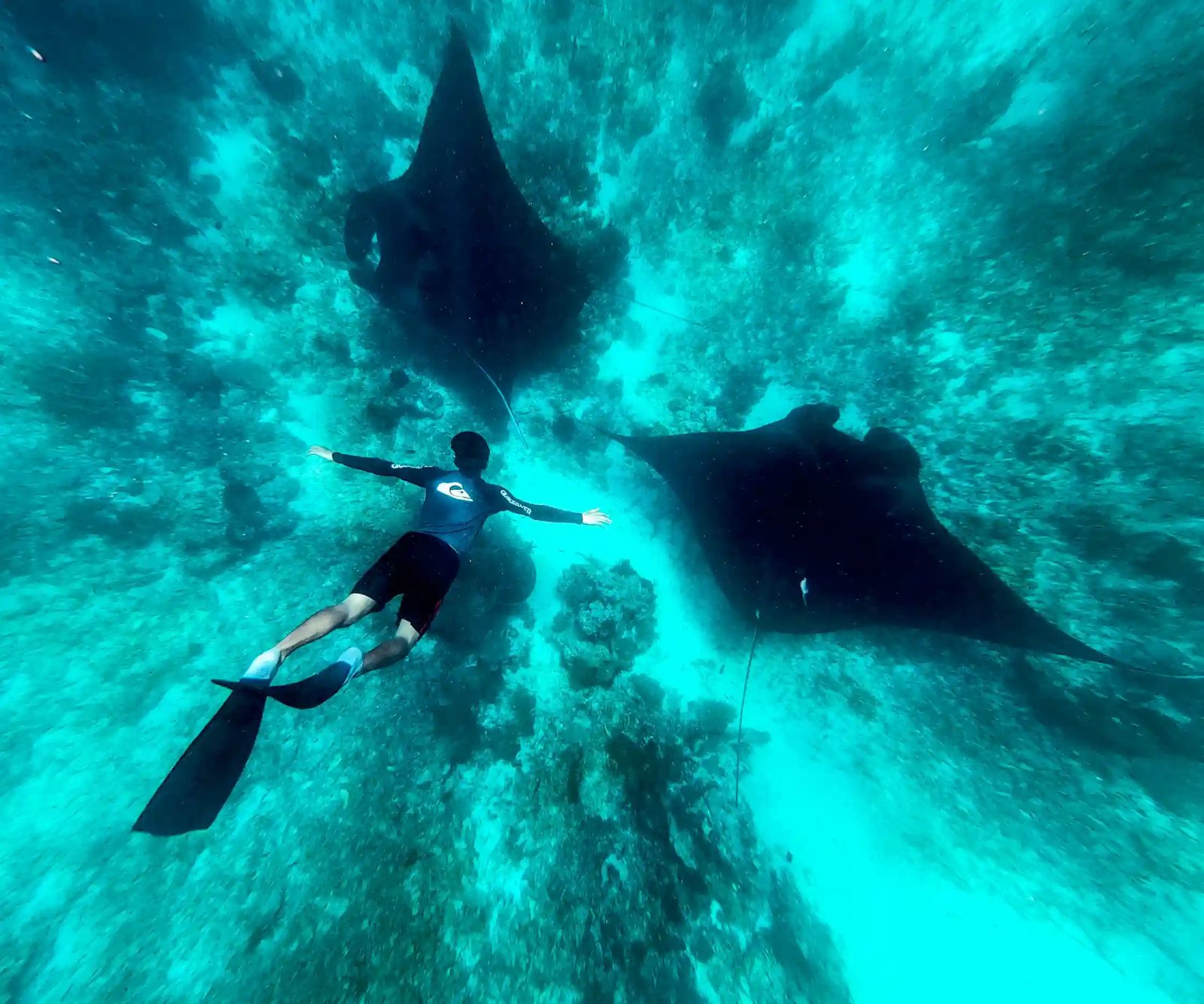
The resident species is the reef manta ray, Mobula alfredi; the larger oceanic manta, Mobula birostris, is only an occasional visitor, according to the dive-operator consensus recorded by Scuba Junkie Komodo. Most encounters happen at 10–20 metres — the rays holding over cleaning stations or feeding along the current line — which is the detail that changes everything for non-divers. At those depths a manta is clearly visible from the surface, so a snorkeller drifting overhead gets the full silhouette, wingtip to wingtip, without a tank.
When is manta season in Komodo?
Strictly: always, loosely: winter. Mantas are seen at Manta Point year-round, but the plankton-rich months of December to March are the most widely cited peak, and Scuba Junkie Komodo frames the best overall odds as September through May. The complication is the sea itself. December to March is also Komodo's wet season, when seas can be rough and January–February see the fewest departures — a window that rewards flexible travellers with the best manta activity and the lowest prices of the year, as the season guides from Hello Flores and other operators note.
| Months | Sea state | Manta picture |
|---|---|---|
| December–March | Wet season; seas can be rough, fewest departures in Jan–Feb | Plankton peak — the most widely cited best manta window, at the lowest prices |
| April–May | Drying and calming | Strong — inside the September–May best-odds window |
| June–September | Calmest, most-booked months (May–August); visibility 30–40 m, peaking July–August | Mantas present year-round; the clearest water to see them in |
| October–November | Shoulder season | September–May odds window reopens as plankton builds |
Two site-planning facts sharpen the choice further: central Komodo dive sites work year-round, northern sites are at their best roughly March/April to October/November, and the southern sites around Nusa Kode peak from October/November to February/March. A full-boat charter can simply follow that map — the captain repositions to wherever the season is performing.
Should you snorkel or dive at Manta Point?
Do whichever you are, honestly. Divers get the longer, deeper audience: settled near a cleaning station at 10–20 m while the rays circle back overhead. Snorkellers get the aerial view, drifting the current line above the same animals — and on a mixed family charter this is the great equaliser, because a twelve-year-old in fins and a certified diver come back to the ship with the same story. Water clarity favours the middle of the year: underwater visibility runs 30–40 metres from June to September, peaking in July and August — which happens to be exactly when LASHA's maiden Komodo season opens, with her first public sailing on 17 August 2026, one month from now.
How does LASHA run a Manta Point session?
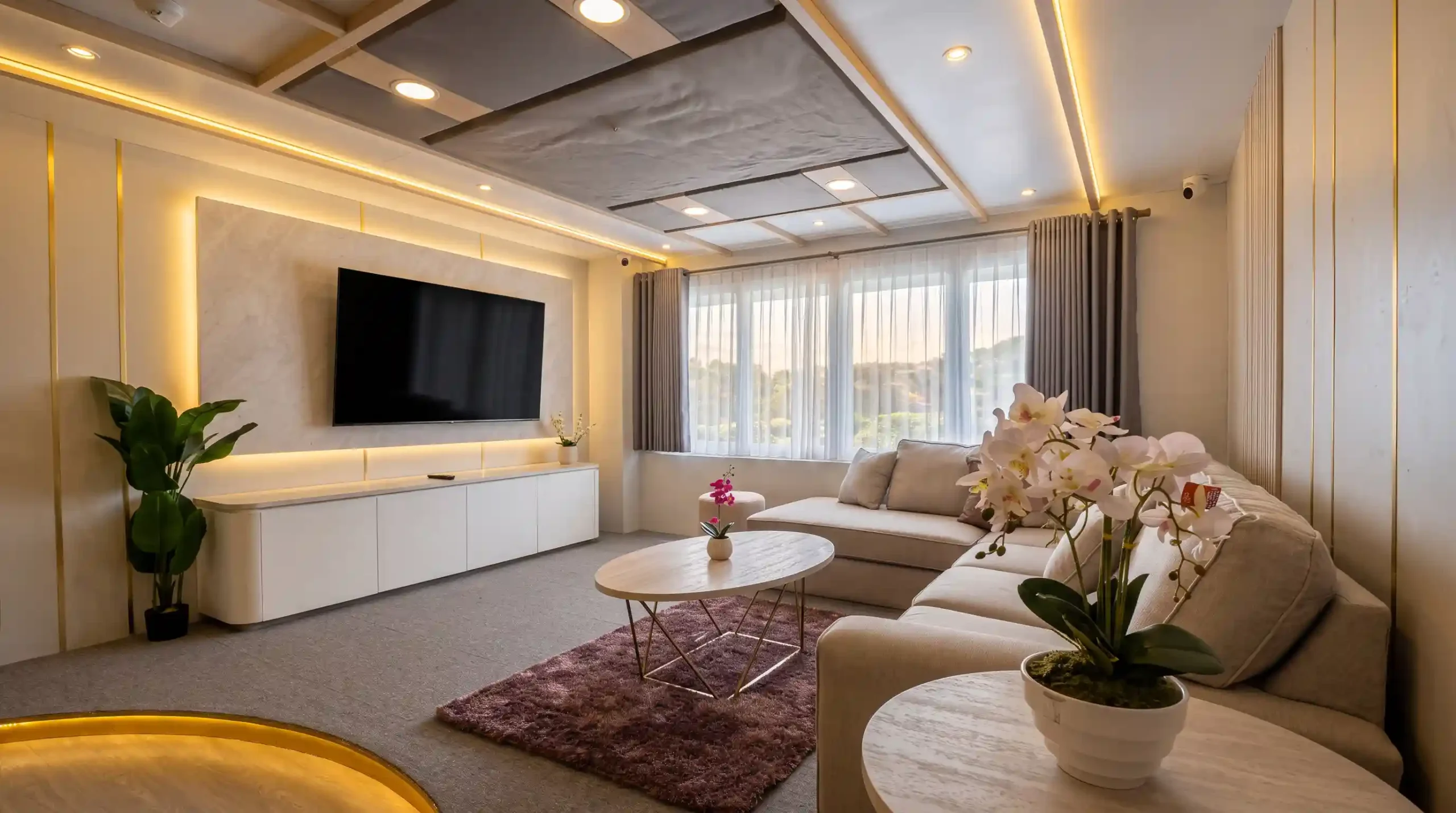
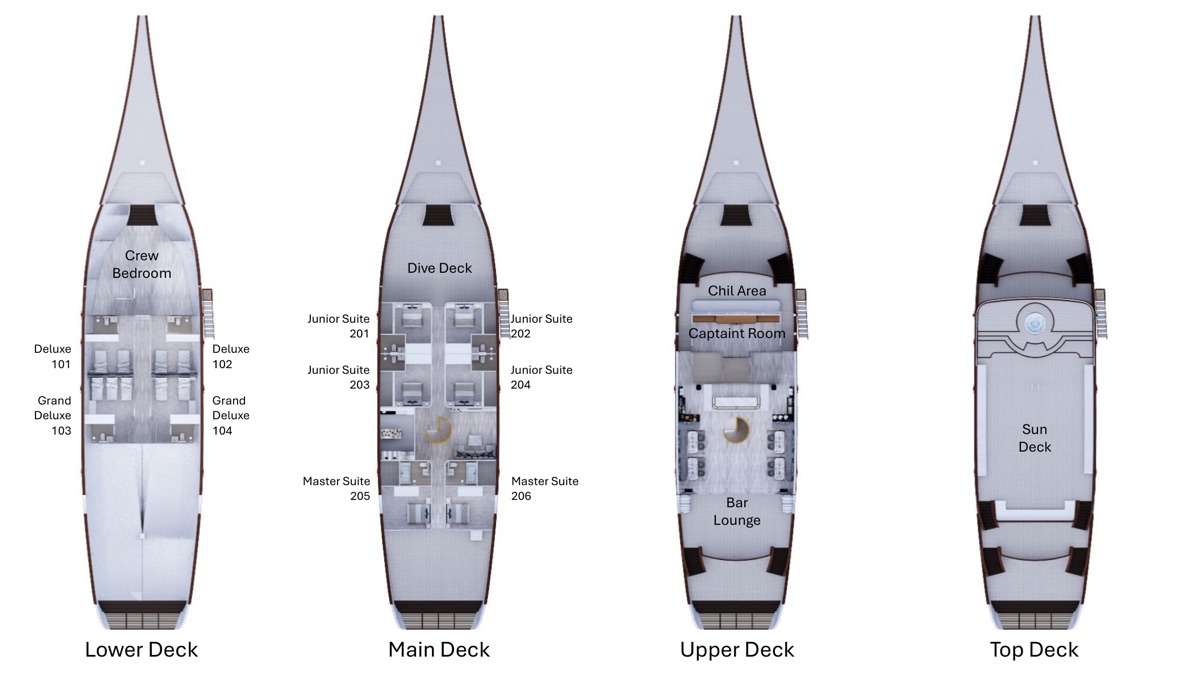
From the Dive Deck on the main deck, which exists precisely so that saltwater logistics never touch the rest of the ship. Snorkellers and divers gear up there, take the briefing there, and board the tenders there, while the sun deck two levels up stays dry and horizontal for everyone sitting this one out. Back aboard, the sequence writes itself: rain showers in all 10 ensuite cabins, the open-air jacuzzi on the sun deck, and a long lunch while the crew repositions. On dive-focused charters the whole route is built around the sites — the diving with LASHA page covers certification, seasons and how dive days are sequenced.
What does a manta charter cost?
On LASHA's core Komodo route, minimum two nights, leisure and dive rates by trip length and group size are published in full on the rates page, along with park entrance fees. Larger groups earn free-of-charge places on top: from 15 guests the rate card adds one FOC guest, scaling to four FOC guests at 21–22. The complete tables are on the 2026–2027 charter rates page.
Timing the booking matters as much as pricing it. July–August departures on luxury phinisi routinely book out 6–12 months in advance, per operator booking data — and those are precisely the 30–40 m visibility months. Travellers chasing the December–March plankton peak get the opposite market: the fewest departures of the year, the roughest seas, and the lowest prices, a trade the manta-first traveller often takes gladly.
Dive-trip rates apply to itineraries built around diving; snorkelling at Manta Point is part of the standard leisure route. Park and ranger fees are collected by the national park and can change — confirm the current tariff with the charter desk when booking.
Can you combine mantas with the rest of the park?
That is the whole argument for a multi-day charter. Manta Point slots between the park's fixed monuments — Padar's ridge at dawn, Pink Beach in the slow afternoon, the dragons on Rinca or Komodo with a ranger — and a private boat sequences them so no day carries two early starts. Evenings resolve at anchor, most memorably near Kalong Island, where the flying foxes stream out at sunset as the ship settles for the night. For the wider season logic across the year, the month-by-month sailing guide puts every window in one table.
Plan your LASHA charter — tell the charter desk whether mantas are the headline or one stop among many, and they will match your dates to the right sites and season.
A manta does not care what you paid to be there. But it is hard to think of a better place to wait for one than the deck of a 52.5-metre phinisi with the anchor down, the water at 30-metre clarity, and nowhere else to be.
⚓ This guide is part of the journal of the LASHA boat in Komodo — the 52.5-metre luxury phinisi sailing Komodo National Park and Raja Ampat. Official booking only via lashacruise.com · WhatsApp +62 811-3823-875 (Komodo Luxury).