
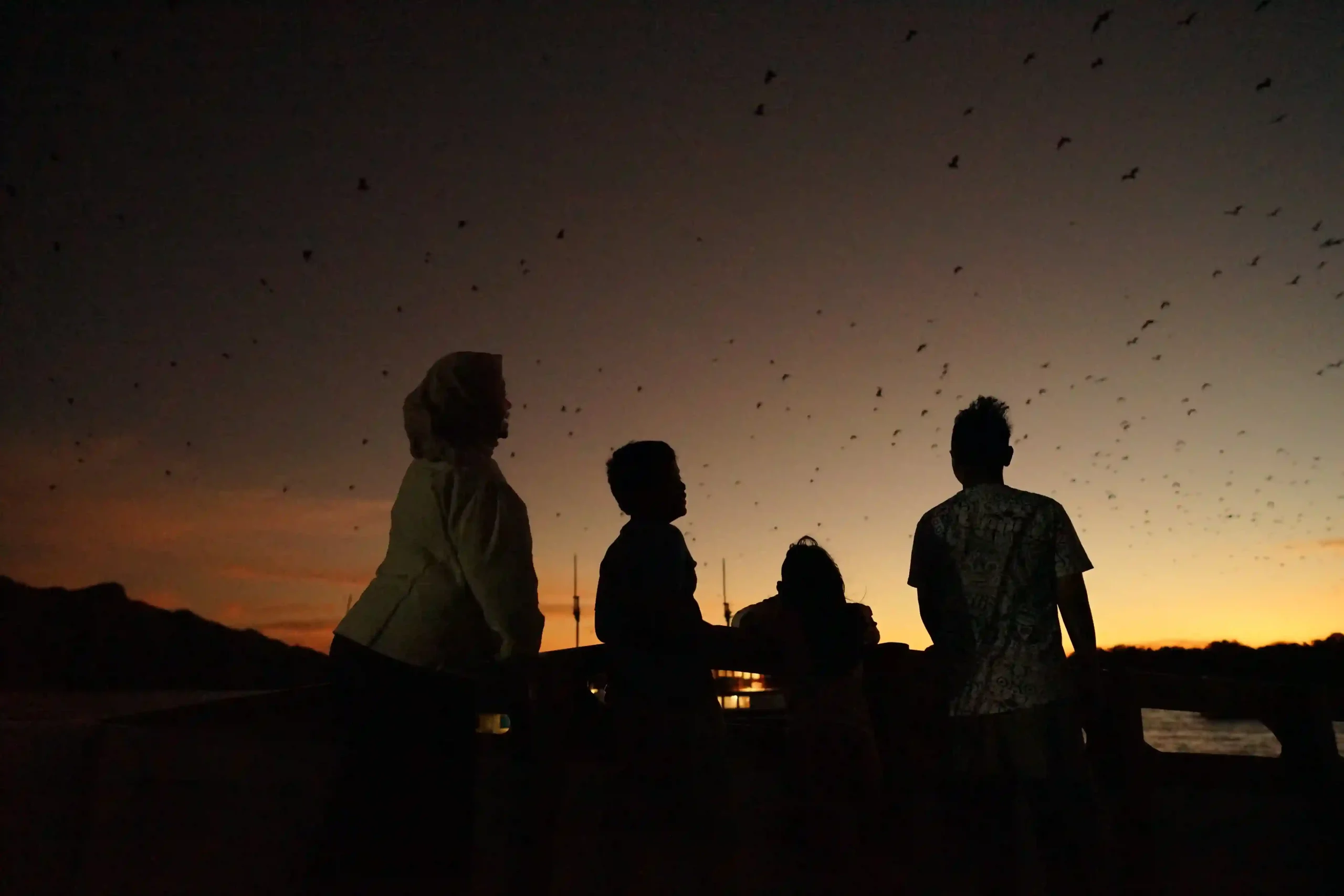
Kalong Island is a mangrove islet in Komodo National Park where flying foxes — large fruit bats, kalong in Indonesian — stream out at dusk to feed. The exodus begins around sunset and continues past dark, which is why overnight boats anchor nearby: day-trippers are already back in Labuan Bajo when it starts.
THE PARK'S CLOSING CEREMONY
Komodo National Park performs most of its wonders in daylight — the dragons, the ridgelines, the mantas. It saves one for the hour the day boats leave. Every evening at dusk, the flying foxes of Kalong Island rise from the mangroves and cross the sky above the anchorage in a slow, unhurried river of wings, heading out to feed. Nobody aboard counts them; nobody could. It lasts long enough that you stop trying and simply watch.
What actually happens at Kalong Island at sunset?
Kalong roosts by day and empties by night. The island is a mangrove islet whose trees hold a resident colony of flying foxes — the largest of the fruit bats, and the animal that gives the island its Indonesian name. Through the afternoon the mangroves look almost still. Then the light drops, the first few animals lift off, and within minutes the sky above the anchorage carries a continuous procession heading for the fruit trees of the larger islands. The stream thickens, thins, and keeps coming well past dark. It is wildlife spectacle at its least strenuous: the audience sits on deck with a drink, and the show comes directly overhead. No trail, no ranger, no early alarm — of all the park's set pieces, this is the only one that meets you exactly where you are already sitting.
Why do boats anchor overnight near Kalong?
Because the timing excludes everyone else. Day trips out of Labuan Bajo must turn for home in the afternoon, so the dusk exodus belongs entirely to vessels that sleep inside the park — a quiet structural advantage of the multi-day format, played out across the park's 159,172 protected hectares of sea. For overnight boats, Kalong is the natural final stop of a sailing day: the anchor goes down in daylight, dinner is timed around dusk, and the night is spent exactly where the evening ended. On LASHA the sequence is deliberate — the sample itineraries place Kalong at the close of day one or day two, so the exodus becomes the punctuation mark of the route rather than a detour.
When is the best season to see it?
The colony flies every evening; the question is the sky you watch it against. Komodo's dry season runs roughly April to October, when sunsets are most reliably clear, and May through August bring the calmest seas and the steadiest anchorages, according to the operators' season guides. In the wet months of December to March the seas can be rough and evenings cloud over more often — the flight still happens, but the golden backdrop is a coin toss. LASHA's maiden Komodo season opens on 17 August 2026, a month from now, in the driest, clearest stretch of the year; her first guests will get the exodus at its most cinematic. For the full-year picture, the month-by-month sailing guide lays every season side by side.
How does LASHA stage the sunset?
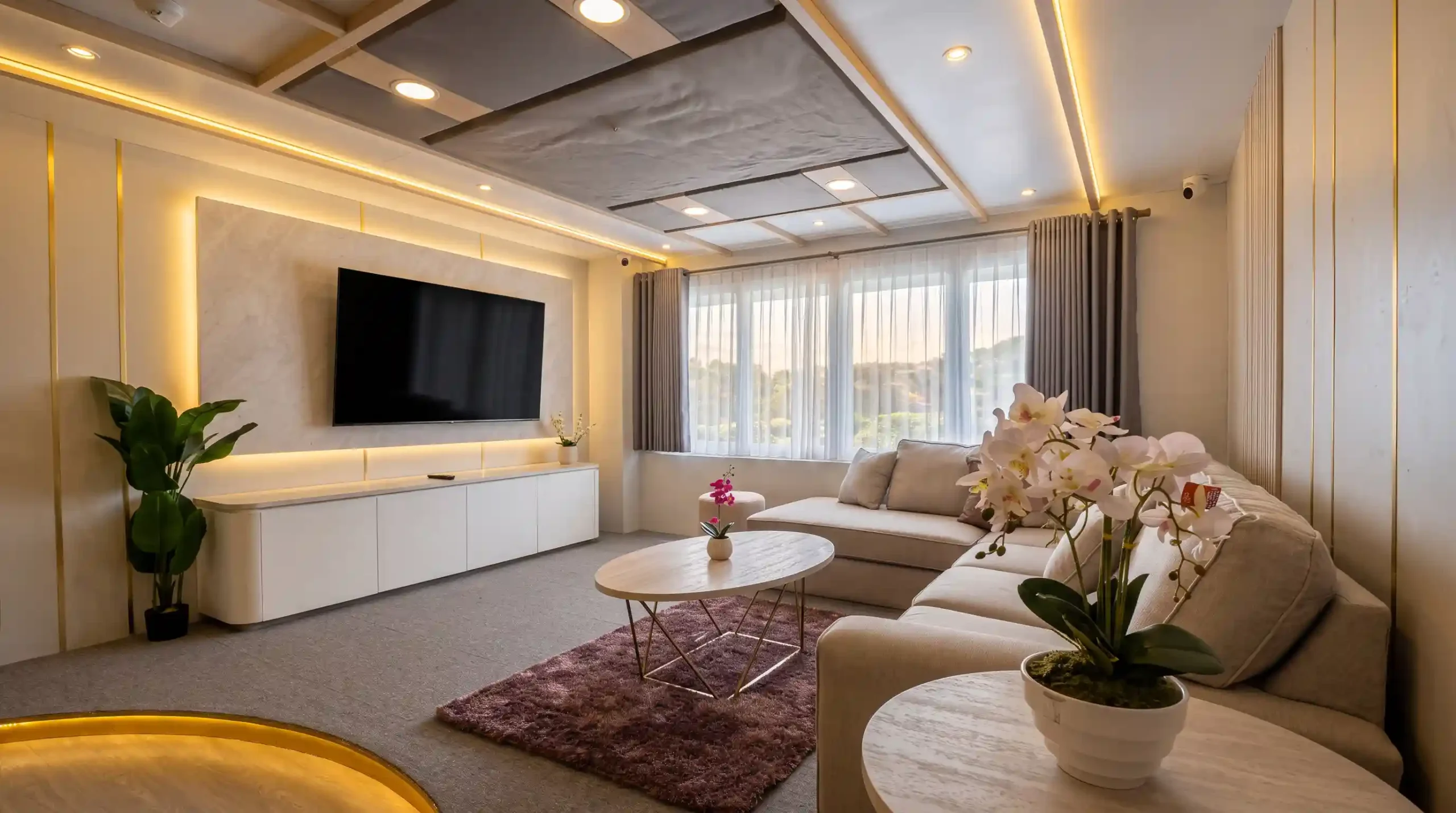
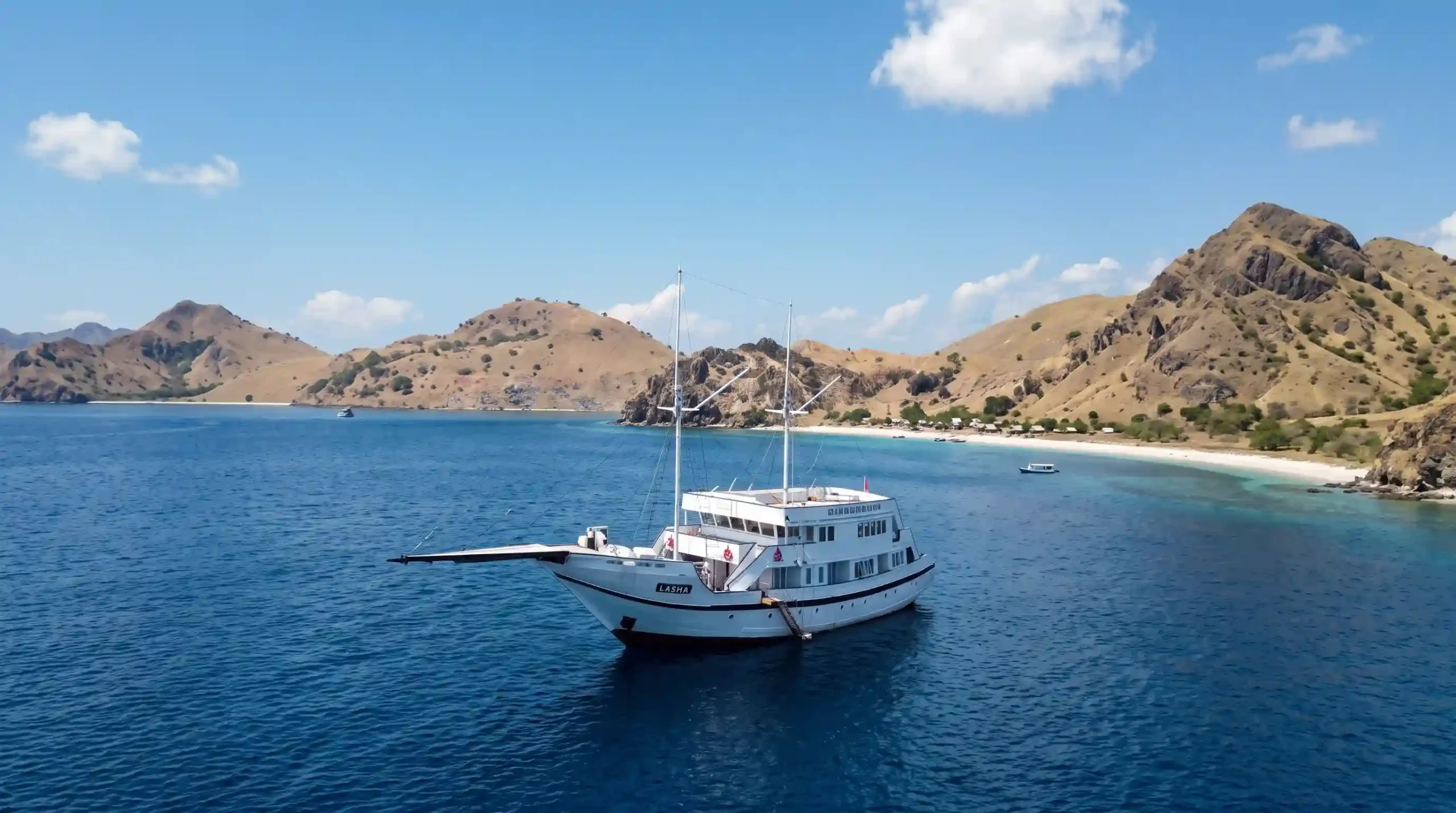
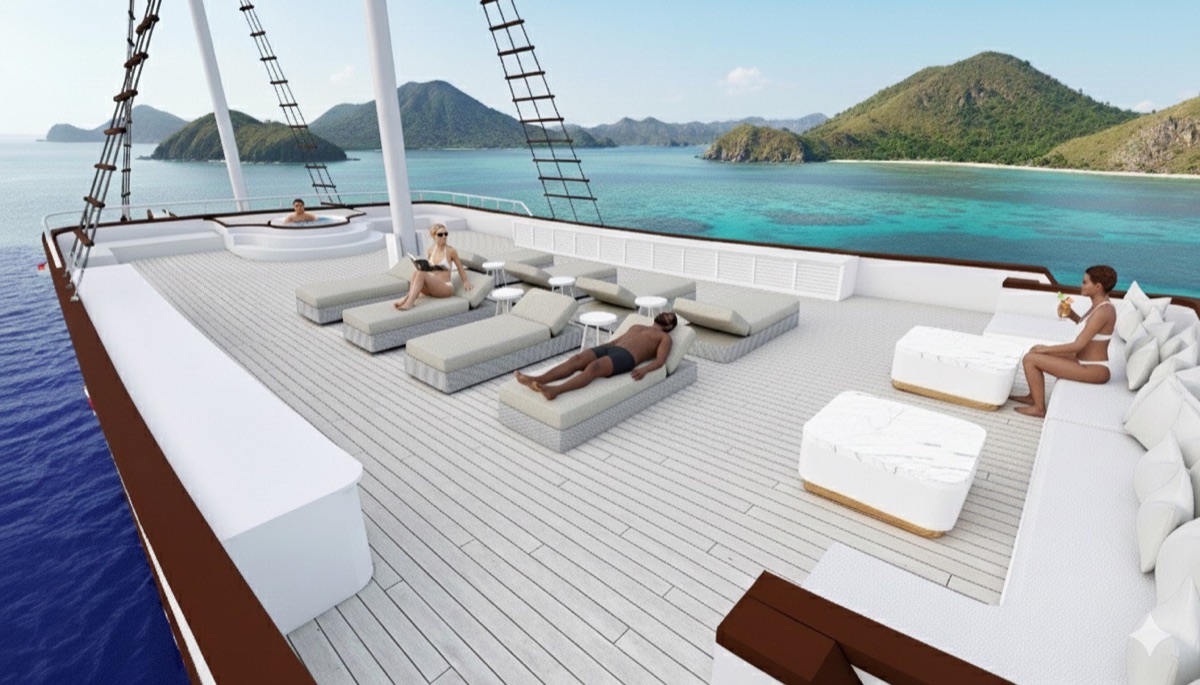
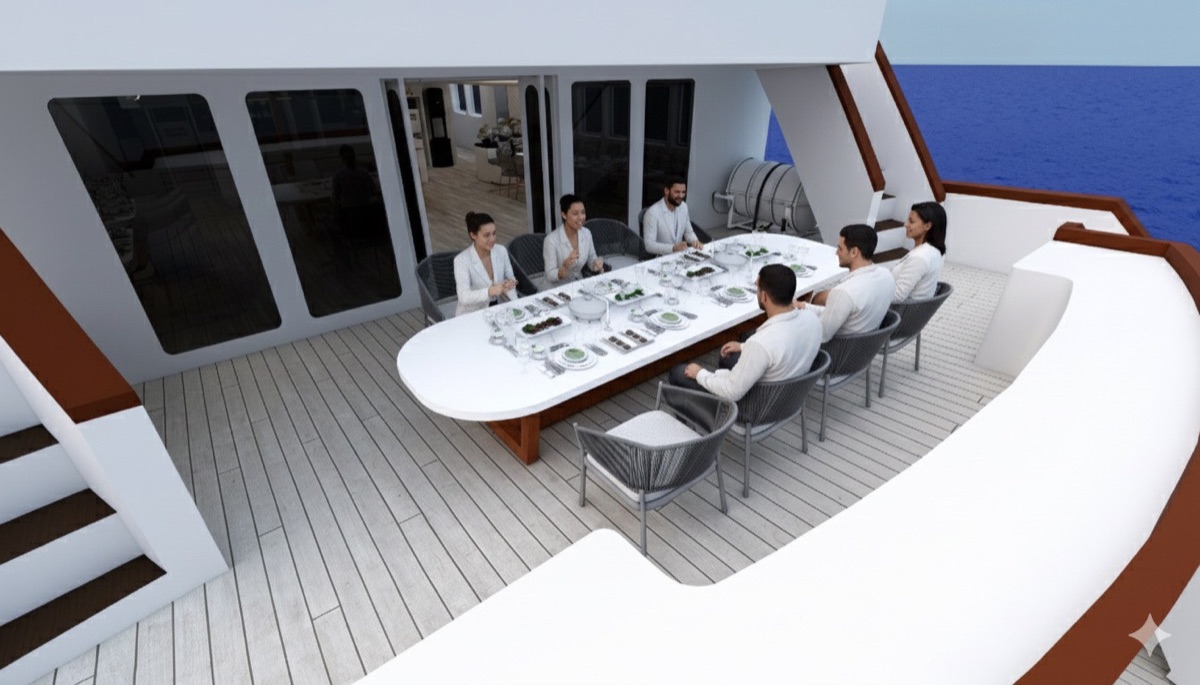
From the top deck, with the details already handled. The Sun Deck carries an open-air jacuzzi and rows of sun loungers, and on Kalong evenings it becomes the ship's theatre: sundowners come up from the Lounge & Resto bar one deck below, the jacuzzi runs warm against the evening breeze, and the crew angles the anchorage so the flight path crosses the bow. Dinner follows at the alfresco table on the upper deck — or indoors if the night turns — and the 54-channel CCTV, twin generators and full navigation suite keep the ship's quiet machinery invisible beneath the experience. At 52.5 metres and 466 GT, with 10 ensuite cabins for up to 26 guests, LASHA has room for the whole group on one deck for the exodus, then space enough afterwards for everyone to disappear to their own corner of the ship — the cabin pages show where those corners are.
Some of those corners come with their own view of the show. The four Junior Suite Balcony cabins on the main deck each carry a private balcony, and the two Master Suites add an in-suite jacuzzi bathtub set against ocean-view windows — meaning a couple can watch the last of the colony cross the sky from their own rail, or from the bath, without going up top at all. It is the rare wildlife event that can be attended in a bathrobe, and nobody aboard will judge the choice.
| A Kalong evening aboard LASHA | Timing |
|---|---|
| Anchor down near Kalong | Late afternoon, after the day's last swim stop |
| Sundowners on the Sun Deck | Golden hour — jacuzzi warm, loungers facing the islet |
| The exodus | From sunset, continuing well past dark |
| Dinner | Alfresco on the upper deck, or in the Lounge & Resto |
| Overnight | At anchor — tomorrow's first stop is minutes away, not hours |
Can you see the flying foxes on a short charter?
Yes — this is the one marquee sight that even the shortest overnight format captures in full. LASHA's Komodo 2D1N charter runs at $900 per guest per night with a 14-guest minimum — $13,900 whole-boat for 1–14 guests, rising to $21,800 at 22 guests — plus park entrance of $35 per guest per night, and its single night at anchor is timed for exactly this. Longer routes fold Kalong in even more naturally: the core Komodo charter, minimum two nights, pairs the sunset exodus with a dawn that answers it — the Padar sunrise climb the next morning, bats out by night, first light over three bays by day. Exact tables for every group size live on the 2026–2027 charter rates page.
Park entrance fees are set by the national park authority and are reported to change during 2026 — confirm the current tariff with the charter desk when you book.
Plan your LASHA charter — ask the charter desk to time your route so the Kalong exodus falls on your first evening aboard.
Most of Komodo asks something of you — steps, fins, early alarms. Kalong asks only that you stay the night. From 17 August 2026, LASHA will be staying anyway.
⚓ This guide is part of the journal of LASHA Phinisi — the 52.5-metre luxury phinisi sailing Komodo National Park and Raja Ampat. Official booking only via lashacruise.com · WhatsApp +62 811-3823-875 (Komodo Luxury).