
The best time to sail Komodo is the April–October dry season: June–September brings 30–40 m underwater visibility, and May–August are the calmest, most-booked months. December–March means rain and rougher seas but peak manta activity and the lowest rates. July and August departures on luxury phinisi sell out 6–12 months ahead.
SEASONS, HONESTLY
What Are Komodo's Two Sailing Seasons?
Komodo runs on a simple rhythm. The dry season stretches roughly April through October: settled seas, golden savannah hills, and the long windless afternoons that make a sun deck earn its name. The wet season concentrates from December or January through March — seas can be rough, winds strengthen, and January–February see the fewest departures of the year, according to operator consensus across Flores.
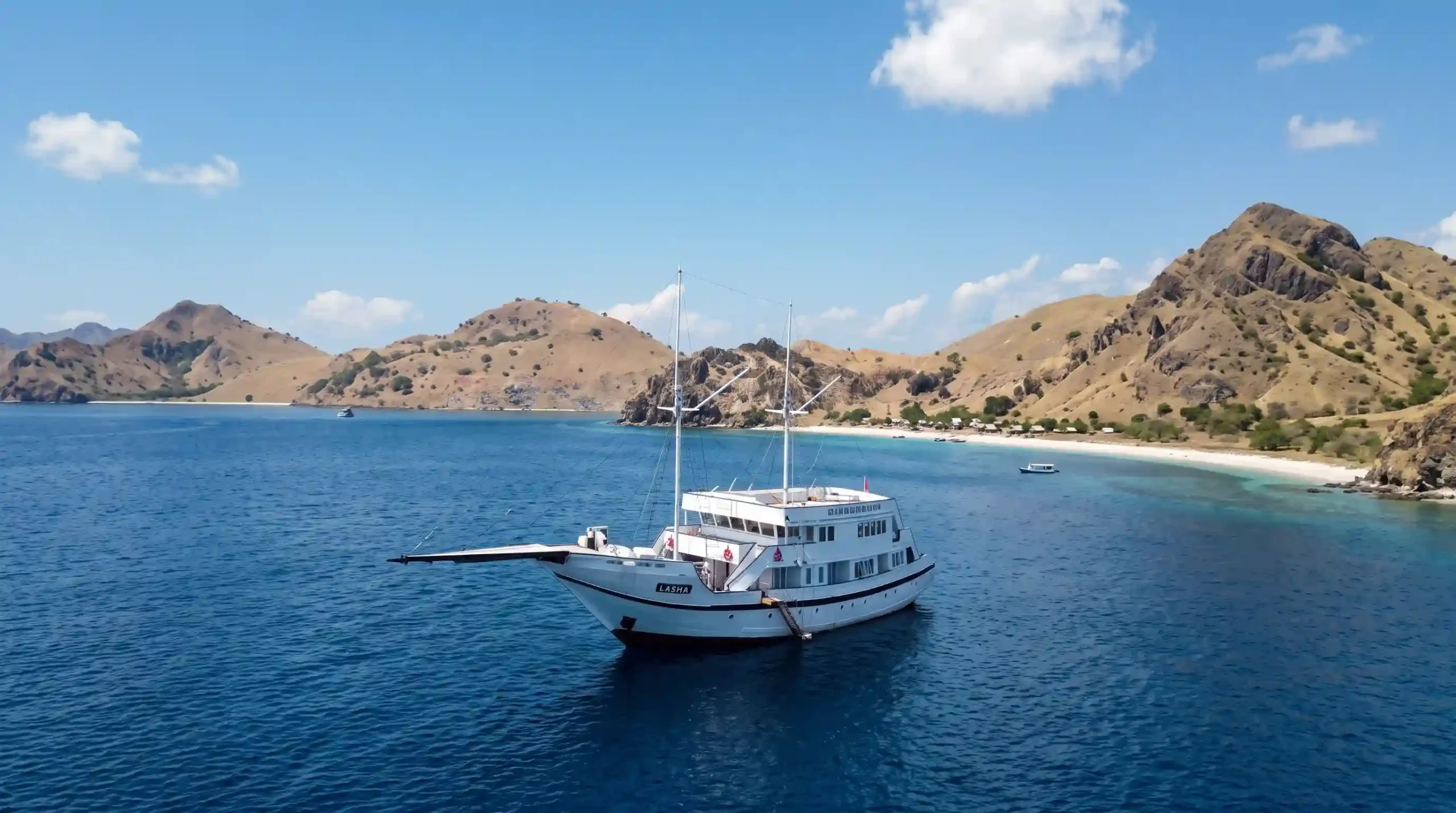
But "best" depends on what you came for. The plankton-rich water that clouds February visibility is exactly what packs Manta Point with feeding rays. The empty November anchorages that look like a compromise on paper are the closest the park comes to privacy. A 52.5-metre ship like LASHA, built in 2023 from ironwood and teak with a 750 HP main engine, handles shoulder-season crossings that would rattle smaller hulls — which widens the honest answer to "when should we go" well beyond July.
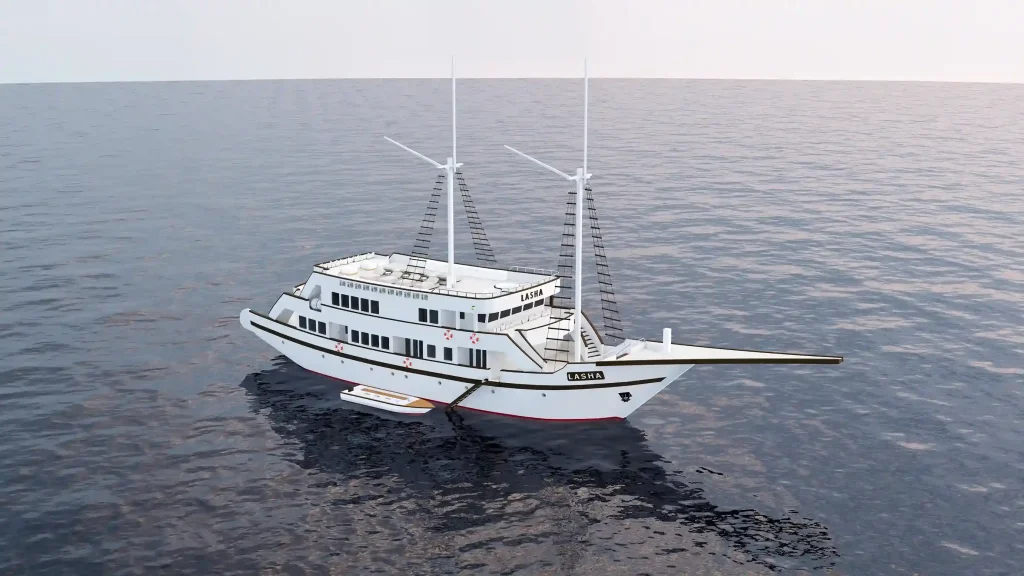
Komodo Month by Month: Which Month Suits Your Charter?
| Month | Season | Sea & underwater conditions | Charter notes |
|---|---|---|---|
| January | Wet | Strong winds, waves, heavy rain; fewest departures | Peak manta activity; lowest rates; south sites at their best |
| February | Wet | Still rough; plankton-rich water | Manta season continues; the value window of the year |
| March | Transition | Seas begin settling late in the month | South sites still strong; northern sites open from March–April |
| April | Early dry | Calming seas, drying skies | Green hills after the rains; Banda Sea shoulder crossings run March–April |
| May | Dry | Among the calmest months | One of the most-booked months — reserve early |
| June | Dry peak | Visibility climbing toward 30–40 m | High demand across the fleet |
| July | Dry peak | Peak visibility, calmest seas | Sells out 6–12 months ahead on luxury phinisi |
| August | Dry peak | Peak visibility holds | LASHA's maiden sailing departs 17 August 2026 |
| September | Late dry | Excellent conditions, thinning crowds | Manta odds rising; Banda Sea hammerhead season begins |
| October | Late dry | Warm and reliable | Northern sites good through October–November; Raja Ampat repositioning begins |
| November | Transition | Rain building, seas variable | Quiet park; south-Komodo sites come alive; Raja Ampat window opens |
| December | Wet | Rain arrives; plankton blooms | Peak manta season begins; festive whole-boat charters |
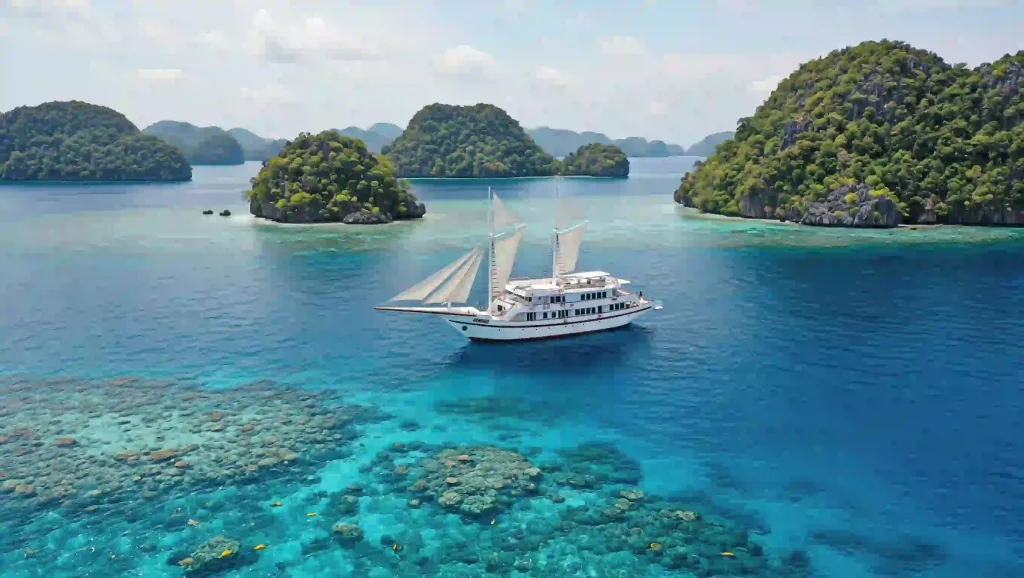
When Is Manta Season in Komodo?
Reef mantas are resident, so sightings happen year-round — but the plankton-rich December–March window is widely cited as the peak, and dive operators such as Scuba Junkie Komodo put the best odds across September–May. Most encounters at Manta Point happen at 10–20 m, well within snorkeling-plus-freedive range for confident swimmers. If the rays are the reason you are booking, the wet season stops being a warning and becomes the whole point; our Manta Point guide covers site behavior, etiquette and timing in detail.
Which Dive Sites Work in Which Months?
The park conveniently splits into three zones. Central Komodo sites work year-round. Northern sites run best from March–April through October–November. Southern sites around Nusa Kode peak from October–November through February–March — which is why a well-planned wet-season charter simply points the bow south rather than staying ashore. LASHA's dedicated dive deck and dive-charter format (a per-guest supplement above leisure rates — see the rates page) are built for exactly this kind of seasonal routing; see the diving program for how the ship supports multi-site days.
Does the Land Program Change with the Seasons?
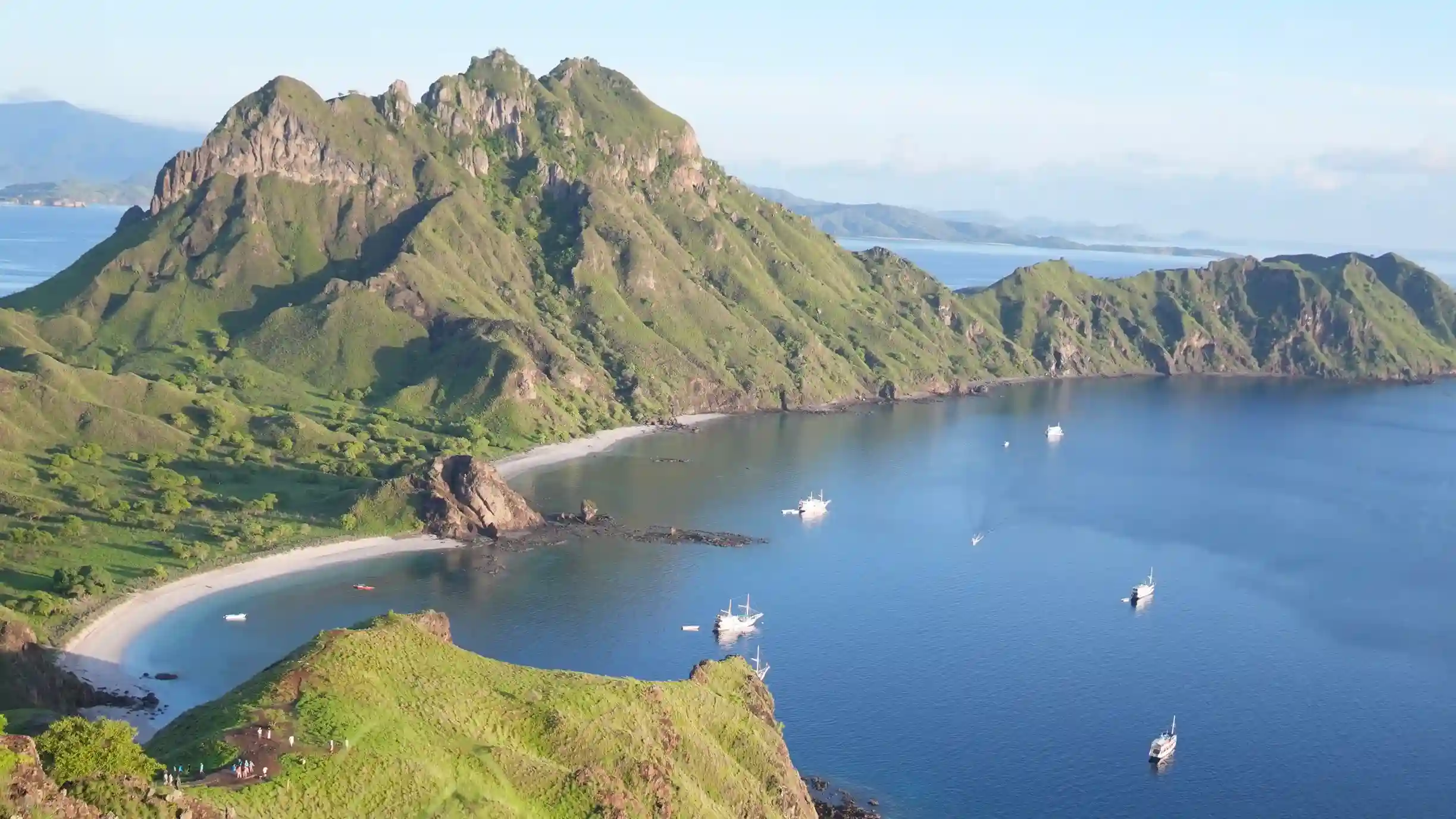
Less than the sea does — and in one way, the wet season wins. The park's three main islands, Komodo, Rinca and Padar, walk year-round with licensed rangers, and the dragons neither migrate nor hibernate; a 2023 demographic analysis counted roughly 2,448 of them inside the park. What changes is the color. Dry-season hills glow amber and gold; after the rains, the same ridgelines turn a deep, improbable green that most visitors never see photographed.
Padar rewards every month the ferries can reach it. The viewpoint stands around 200 metres above the sea at the top of a staircase of roughly 800 steps, overlooking three differently colored bays — white, black and pink sand. In the July crush, the trick is timing: a private charter anchors overnight nearby and puts its guests on the ridge at first light, before the day boats arrive. In November, you may have the staircase to yourselves at any hour.
How Far Ahead Should You Book?
For July and August: very. Luxury phinisi departures in those months routinely book out 6–12 months in advance, according to operator data from across the Komodo fleet — and 2027's peak weeks start being shopped from roughly September 2026 onward. For LASHA specifically, the calendar has a particular shape this year: the maiden sailing departs Labuan Bajo on 17 August 2026 — one month from this writing — so the realistic first-season window runs late August through November 2026. Those are shoulder weeks in the best sense: calm crossings, warm water, thinning crowds and manta activity rising from September.
Whole-boat pricing is published transparently — every trip length and group size — on the 2026–2027 rate tables, so a group can budget a July 2027 charter today and simply hold dates. The story of why the first sailing lands on Indonesian Independence Day is told in the maiden season announcement.
Where Does LASHA Sail in the Wet Season?
Where most of the luxury fleet goes: east. The standard pattern, confirmed across operators, is Komodo from April to October, then repositioning to Raja Ampat for roughly October/November through April, matching the northwest monsoon when Raja Ampat is more sheltered and Komodo is wet. Banda Sea crossings run in the inter-monsoon shoulders — September–November, which is also prime hammerhead season, and March–April — as expedition legs between the two. LASHA's Raja Ampat and Banda Sea expeditions carry a 5-night minimum at $825–880 per person per night, with the full route logic on the itineraries page.
One planning note that follows from all of this: park entrance fees apply per person per night inside Komodo ($25 on multi-night charters), so month choice never changes the fee math — only the weather and the water. The 2026 fees guide keeps the current tariffs straight.
Plan your LASHA charter — tell the charter desk your preferred month and group size, and they will confirm availability, conditions outlook and a written whole-boat quote.
Bookings for LASHA Phinisi Cruise are handled end-to-end by Komodo Luxury, the vessel's official marketing partner. Seasonal patterns above reflect published operator and dive-industry consensus as of July 2026.
⚓ This guide is part of the journal of LASHA Phinisi — the 52.5-metre luxury phinisi sailing Komodo National Park and Raja Ampat. Official booking only via lashacruise.com · WhatsApp +62 811-3823-875 (Komodo Luxury).