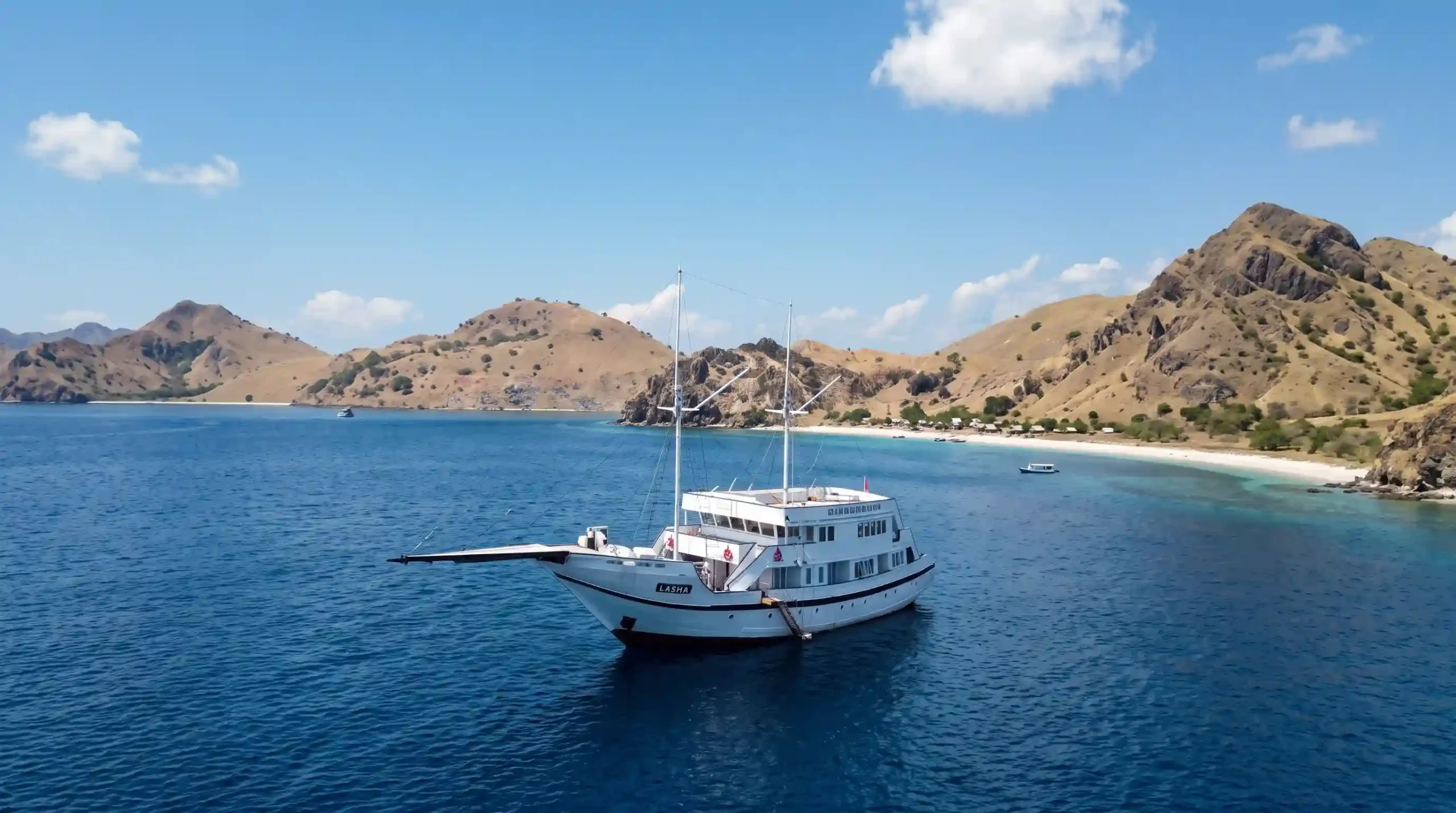

LASHA’s first public sailing departs Labuan Bajo on 17 August 2026 — Indonesia’s Independence Day. The date honours the ship herself: a phinisi, the Buginese craft UNESCO inscribed as Intangible Cultural Heritage in 2017. An Indonesian-flagged, 2023-built, 466 GT schooner-style vessel raising the red-and-white at sea on Hari Kemerdekaan is the launch statement.
Ship launches usually chase the calendar of demand — a peak-season Saturday, a holiday weekend. LASHA’s owner chose differently. With one month to go, here is why the first public sailing of this 52.5-metre phinisi was always going to fall on 17 August, and what that morning will actually look like from her sun deck.
What Happens in Indonesia on 17 August?
Hari Kemerdekaan — Independence Day — is the one date on which the entire archipelago pauses. Flags line every street; ceremonies raise the Merah Putih, the red-and-white, from village squares to the presidential palace. For a nation of islands whose story has always been written by boats, there are few more fitting places to mark it than at sea. LASHA flies the Indonesian flag, sails from an Indonesian home port — Labuan Bajo — and was built by Indonesian hands from Indonesian hardwoods. Her maiden sailing is, in the most literal sense, a national ceremony afloat.
Why Does the Date Fit a Phinisi in Particular?
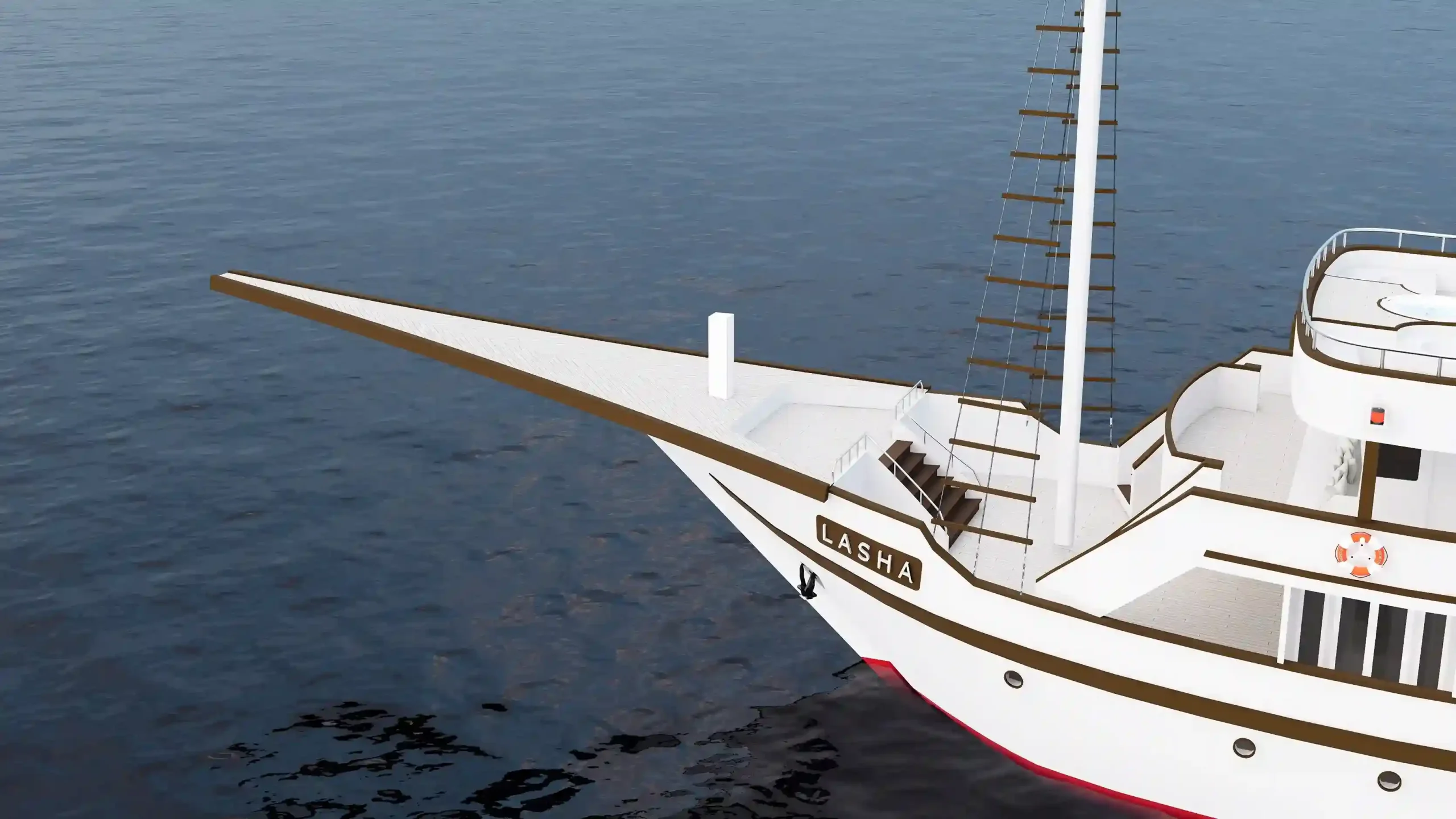
Because the phinisi is itself a piece of the national heritage the day celebrates. In 2017, UNESCO inscribed “Pinisi, art of boatbuilding in South Sulawesi” on its Representative List of the Intangible Cultural Heritage of Humanity. The listing centres the craft in Tana Beru, Ara and Lemo-Lemo — villages of the Konjo boatbuilders in Bulukumba Regency — where hulls are still raised by hand, plank by plank. The traditional pinisi carries a two-masted schooner rig with seven sails and is built from hardwoods such as ironwood and teak, according to the UNESCO listing — the same Ulin-and-Jati pairing in LASHA’s 2023 hull.
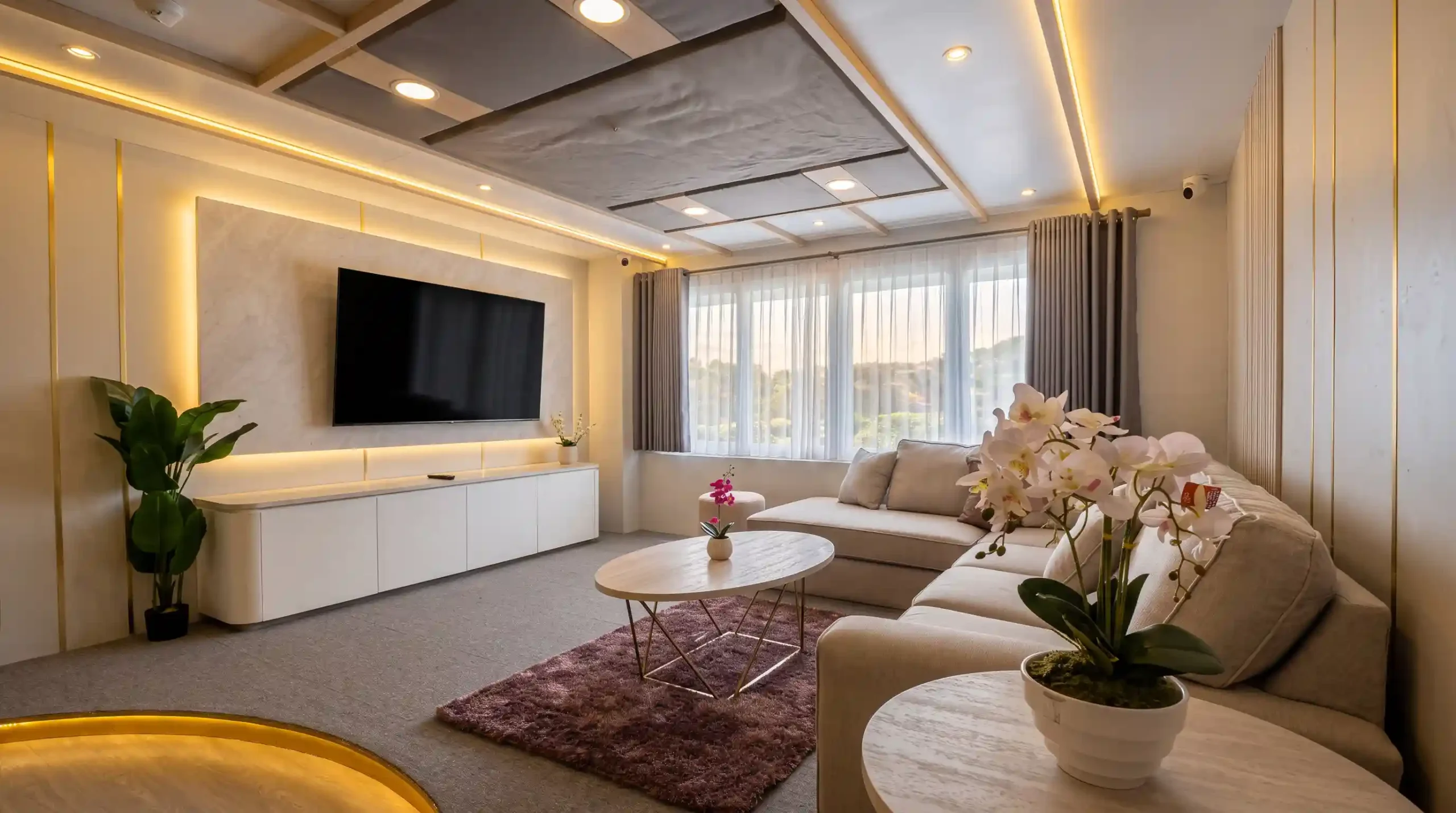
LASHA is a modern expression of that lineage rather than a museum piece: 466 gross tonnes, a 750 HP Weichai engine, Garmin GPS and Samyung AIS behind the wheelhouse, ten ensuite cabins for up to 26 guests within the timber. The full story of how these ships are built — and why the wood matters — is told in our boatbuilding feature; the technical sheet is on the yacht page.
Hold those two dates side by side and the symmetry is hard to miss. UNESCO’s 2017 inscription recognised pinisi building as living heritage — knowledge passed hand to hand, generation to generation, still practised rather than preserved behind glass. Independence Day celebrates the same idea at national scale: something declared once, then kept alive by daily practice. A 2023-built phinisi making her first public sailing on 17 August is both arguments in a single hull.
Why Launch in Mid-August at All?
Sentiment alone does not set a sailing calendar; conditions do, and mid-August happens to be superb. Komodo’s dry season runs roughly April to October, July and August are among the calmest and most-booked months on the water, and peak-season departures on luxury phinisi are typically reserved six to twelve months in advance, according to operator reporting from Samara and Hello Flores. A 17 August debut therefore does double duty: it lands the ceremony on the right date and the ship in the right sea state — with fresh peak-window inventory that simply did not exist when other 2026 calendars sold out.
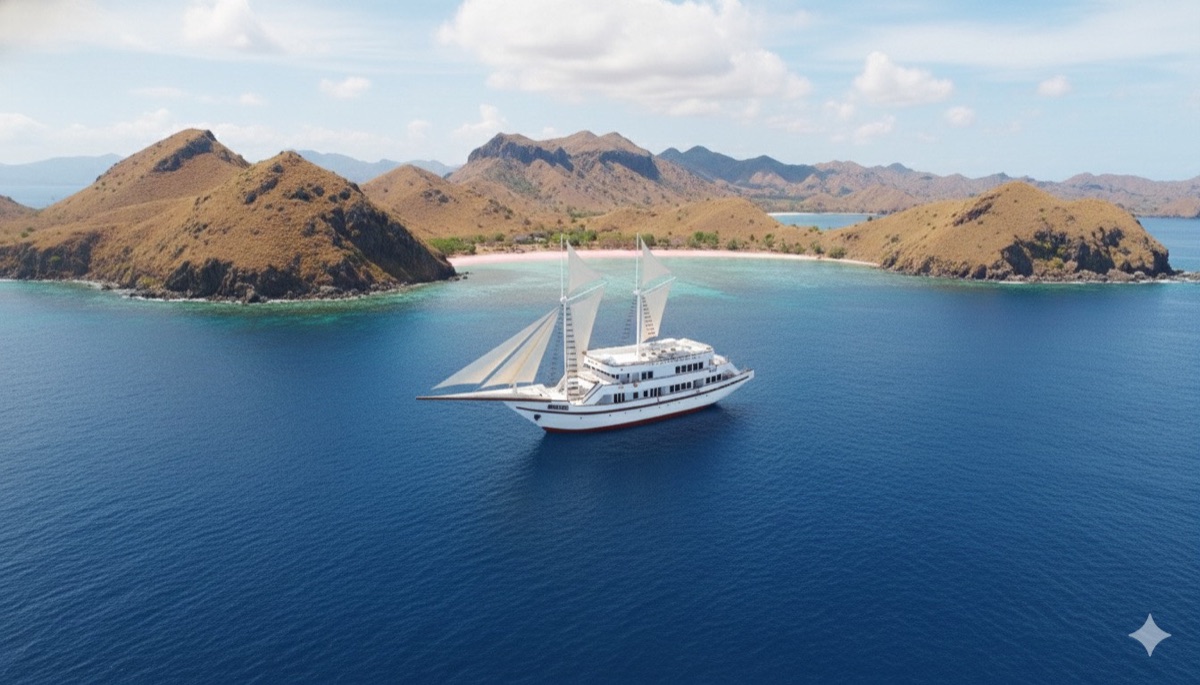
What Will the Flag-at-Sea Moment Look Like?
Picture the morning itself. Dive operators such as Scuba Junkie Komodo report the year’s best underwater visibility — 30 to 40 metres — from June through September, peaking in July and August, and the same clear, settled weather holds above the surface. Expect a calm dawn crossing out of Labuan Bajo, the red-and-white run up over a teak deck, and the first of the park’s islands — Komodo, Rinca, Padar — rising ahead in clear morning light. It is a ceremony measured not in speeches but in canvas, timber and open water.
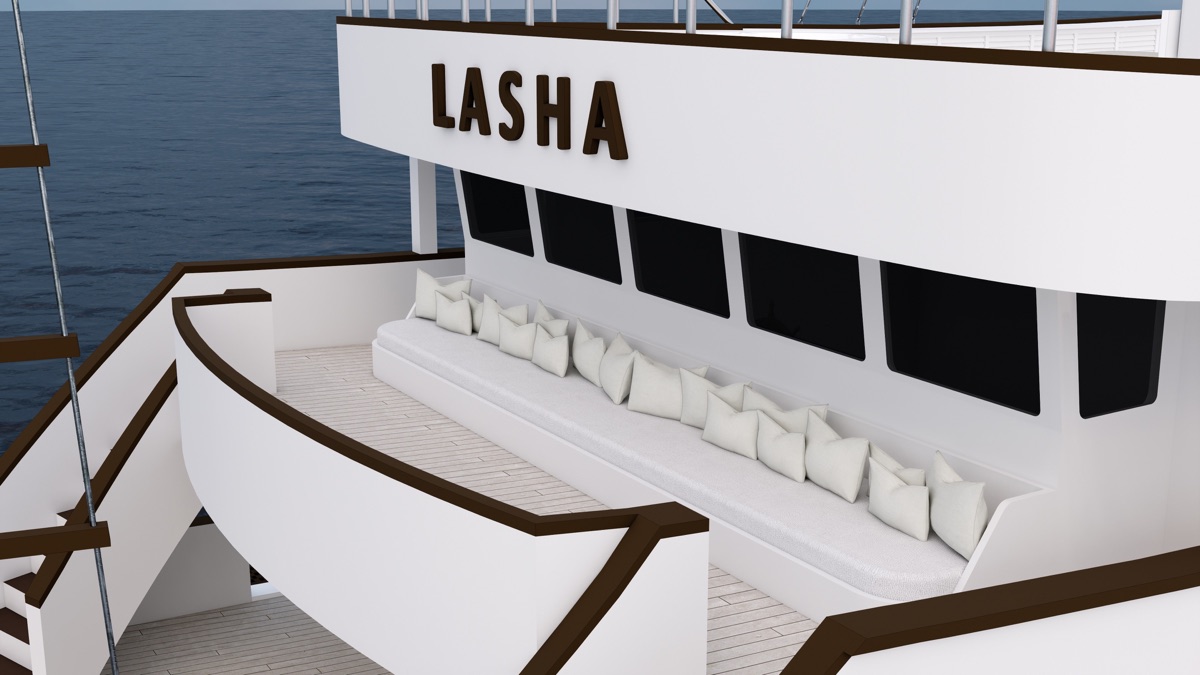
The rest of the day writes itself around the ship. Twenty-six guests can spread across four decks without crowding a single one: the top-deck sun loungers and open-air jacuzzi for the crossing, the upper-deck chill area through the heat of the afternoon, and — as the light goes gold — dinner at the alfresco table aft of the Lounge & Resto, the Indonesian flag still flying above a hull of Ulin and Jati. Independence Day dinners ashore are festive; this one comes with an anchorage.
Where Does the Maiden Voyage Go?
Into a World Heritage Site, fittingly. Komodo National Park was established in 1980 to protect the Komodo dragon and inscribed by UNESCO in 1991; its three main islands anchor every LASHA route. First-season sailings take in the Padar viewpoint climb, Pink Beach’s foraminifera-tinted sand and the manta cleaning stations of central Komodo — routes are mapped on the itineraries page, and the wider launch picture, including which dates remain open, is in the maiden-season announcement.
What Comes After the First Sailing?
The maiden season proper: late August through November 2026, the shoulder window of calm crossings, thinner crowds and manta activity rising from September as plankton density builds. Beyond that, LASHA follows the pattern most luxury phinisi observe — Komodo from roughly April to October, then repositioning toward Raja Ampat for the sheltered months of the northwest monsoon, per fleet reporting from Ultimate Bali and Komodo Island Tour. Those future routes are outlined on the Raja Ampat page.
Can You Join the First Sailing?
The 17 August departure and the weeks that follow are sold as full-boat charters — the entire vessel, all ten cabins, minimum two nights on Komodo leisure routes. Whole-boat rates for Komodo leisure routes are priced by trip length and group size, plus park entrance fees of $25 per person per night; every band is published on the rates page. For a group that wants its own Independence Day at sea aboard a brand-new phinisi, there will never be another first.
Plan your LASHA charter — ask about the 17 August 2026 maiden sailing week and the dates immediately after it.
One flag, seven traditional sails in the rig’s lineage, 466 gross tonnes of UNESCO-listed craft: 17 August 2026 was never really a choice. It was the only date that said what this ship is.
⚓ This guide is part of the journal of LASHA Phinisi — the 52.5-metre luxury phinisi sailing Komodo National Park and Raja Ampat. Official booking only via lashacruise.com · WhatsApp +62 811-3823-875 (Komodo Luxury).