
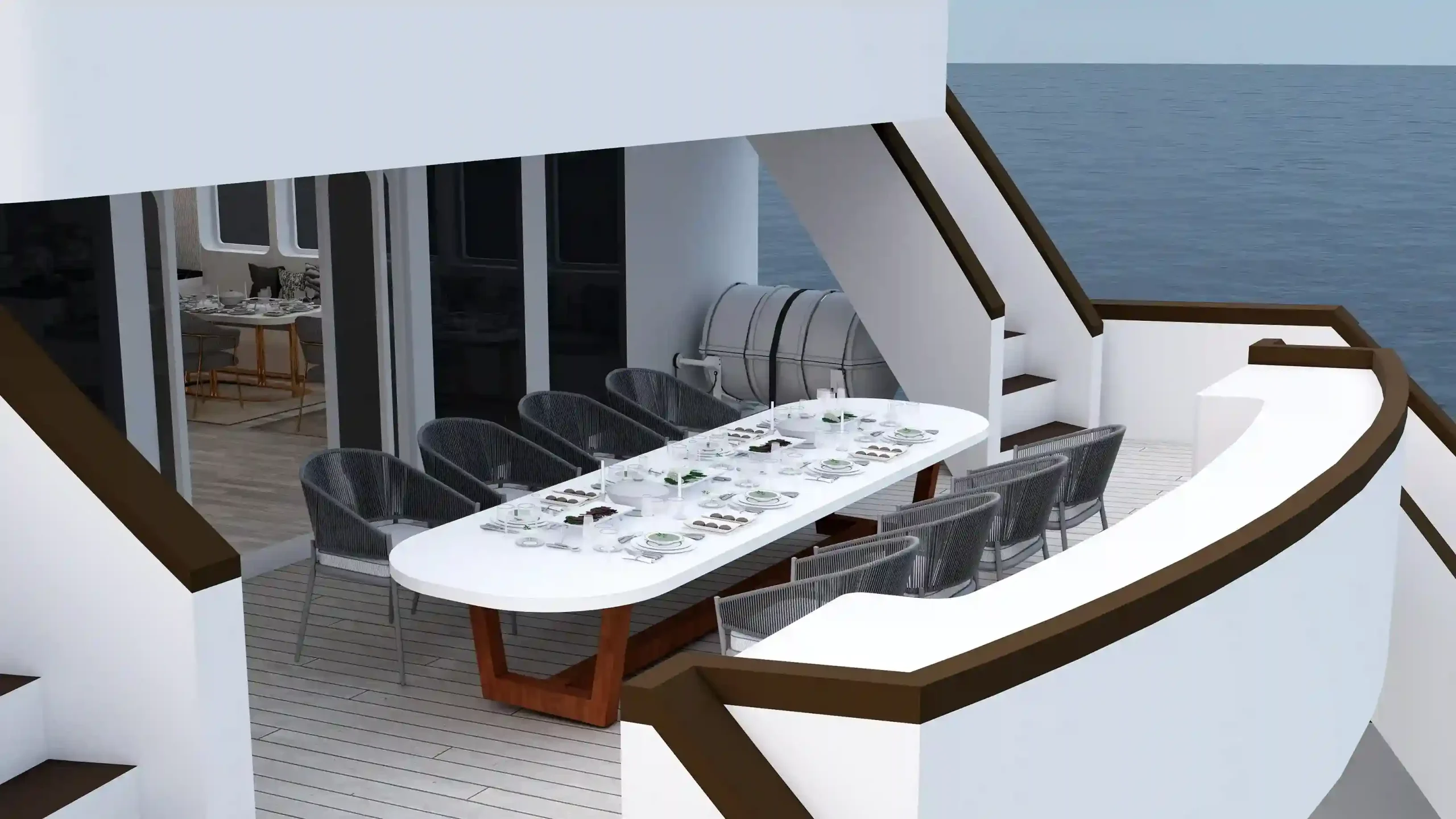
LASHA serves meals across three settings: the Lounge & Resto on the Upper Deck — an indoor dining room with a bar lounge — the open-air alfresco dining table beside it, and a casual stern lounge aft. Menus rotate daily around the sailing plan, and dietary requirements, from allergies to halal and plant-based cooking, are arranged at booking.
One month before LASHA's maiden sailing on 17 August 2026, the galley team is running full-service trials in Labuan Bajo — plating dinners for empty chairs so that nothing is improvised when the first guests step aboard. This is a tour of where those meals will land: three settings, one kitchen, and a rhythm set by the anchor rather than the clock.
One galley, three rooms
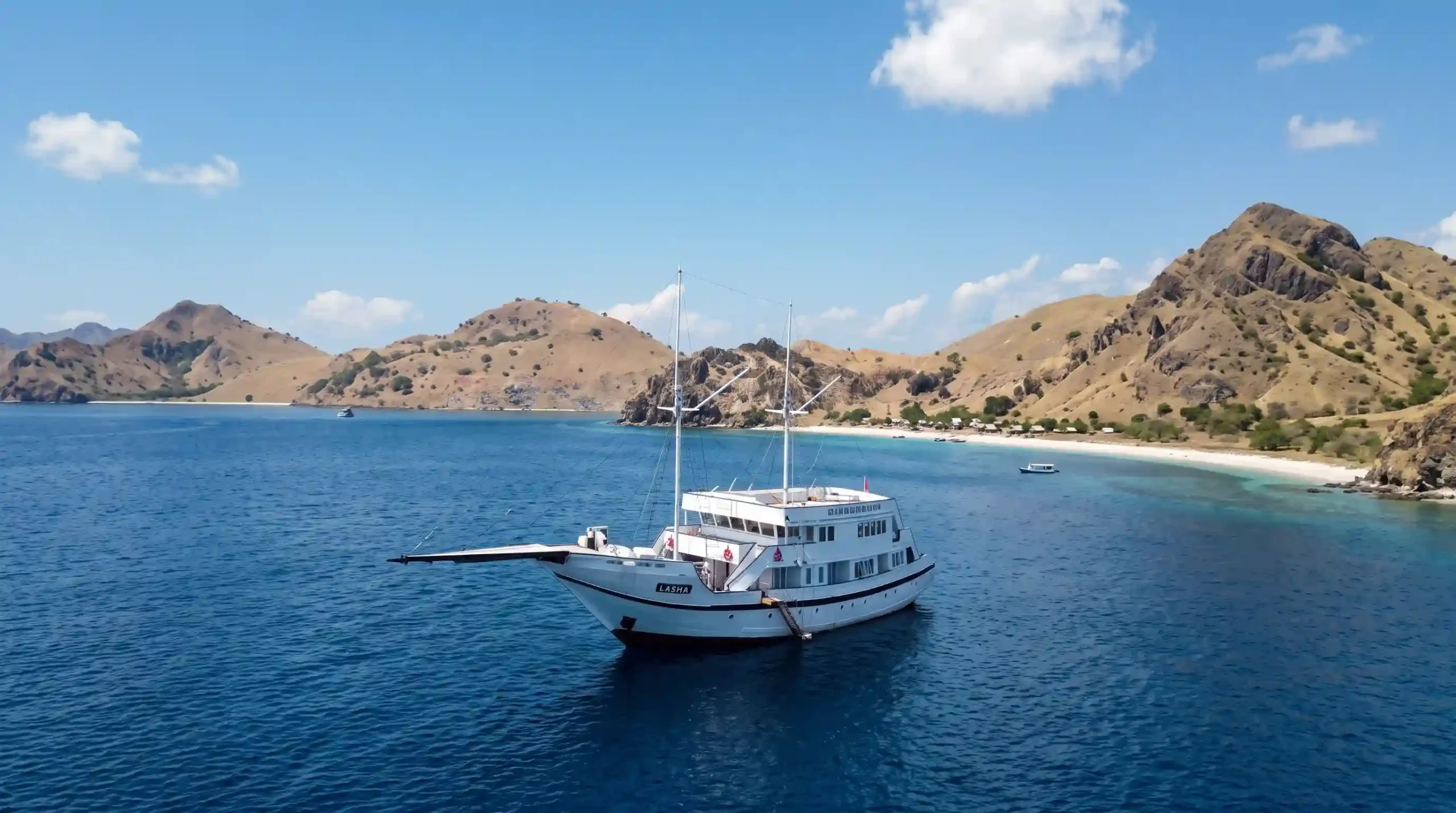
Meals move around the ship deliberately. The Upper Deck carries the Lounge & Resto — the indoor dining room and bar lounge — and, a few steps away in the open air, the alfresco dining table. Aft, the stern lounge takes the casual hours: early coffee, afternoon fruit, a nightcap after the stars come out. On a 52.5 m hull with a 10.3 m beam there is enough deck for all three to feel like different places, and on a full 26-guest charter that separation matters — breakfast can be three small tables in three moods rather than one long queue.
Inside the Lounge & Resto
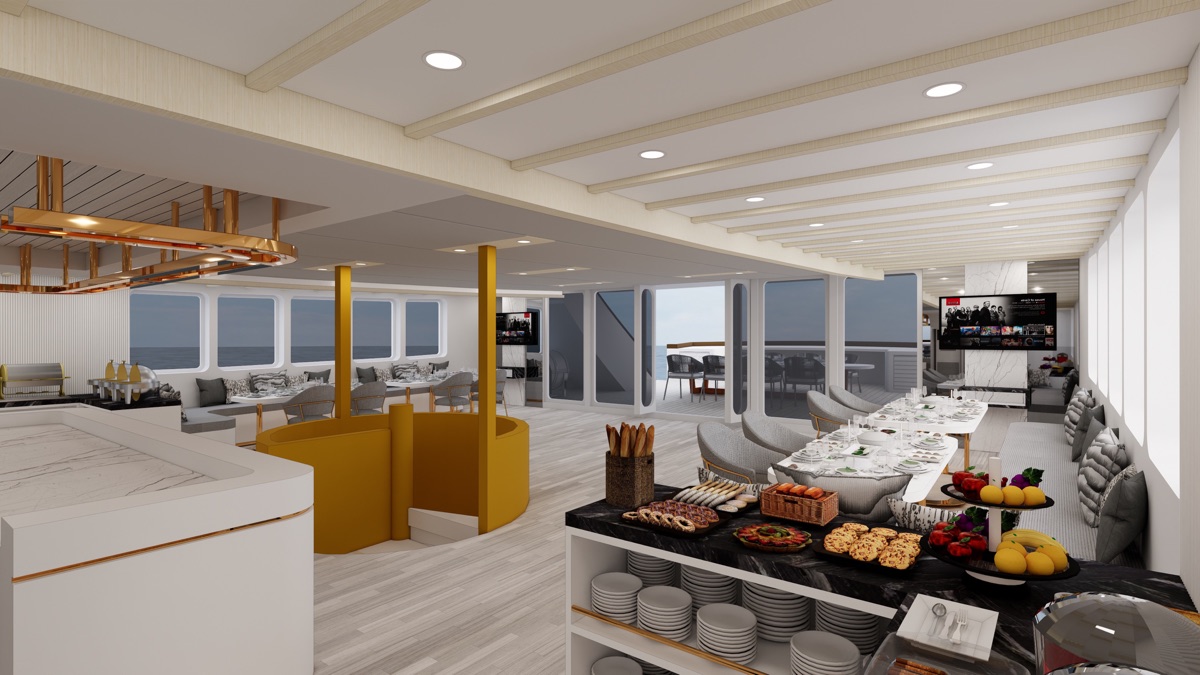
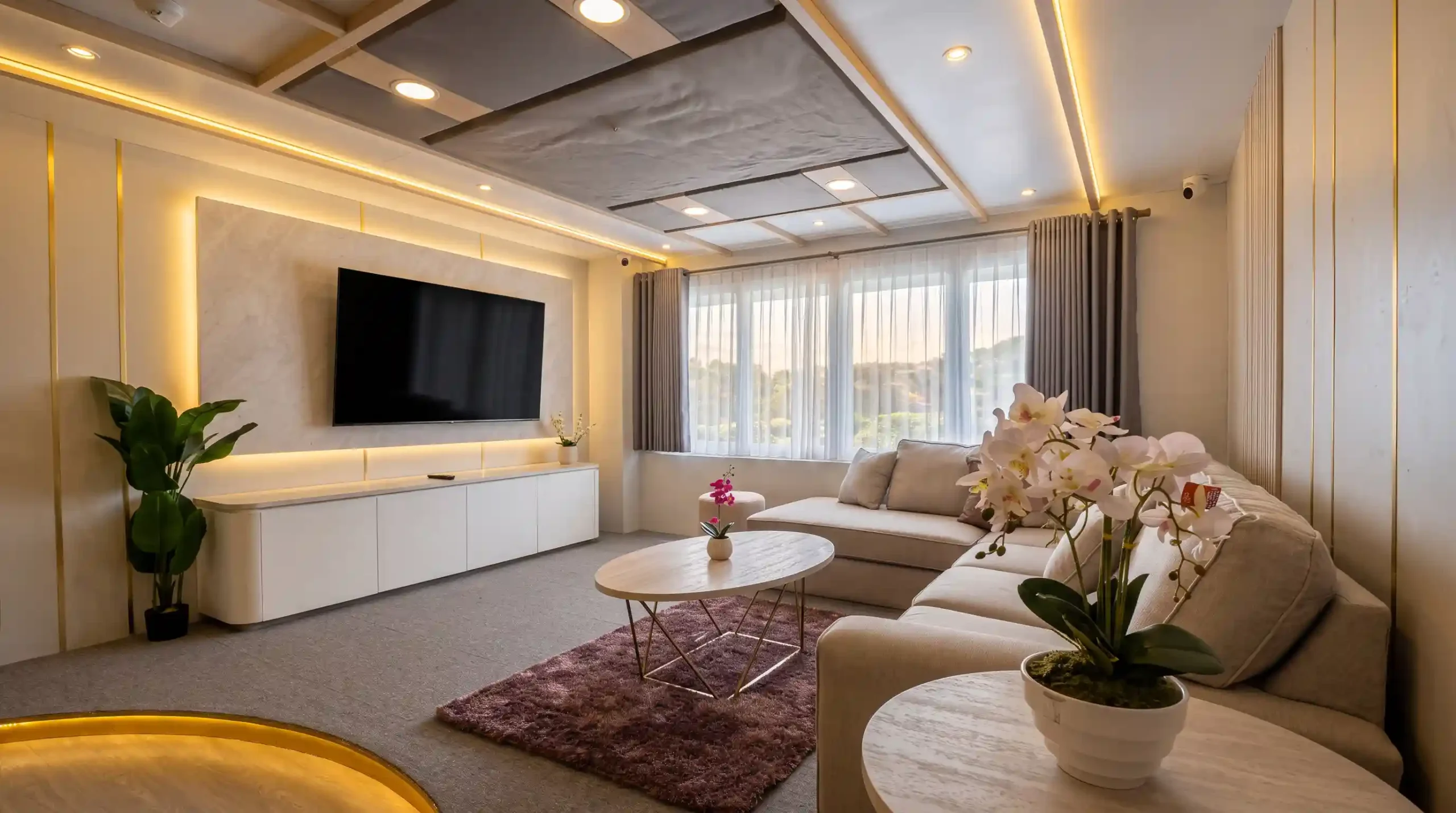
The indoor room follows the interior language of the whole vessel: white and ivory surfaces, brass-gold detailing, the same restraint you find in the ensuite cabins with their marble bathrooms. The bar lounge runs along one side, which is why this room works at every hour — espresso at seven, a long shaded lunch at one, dinner service when the wind picks up, and the quiet half hour when the chef appears to talk through tomorrow. It is also the natural refuge on the rare wet-season day; Komodo's rains concentrate from roughly December to March, operators note, while the April–October dry season leaves the room mostly to the bar.
The alfresco table
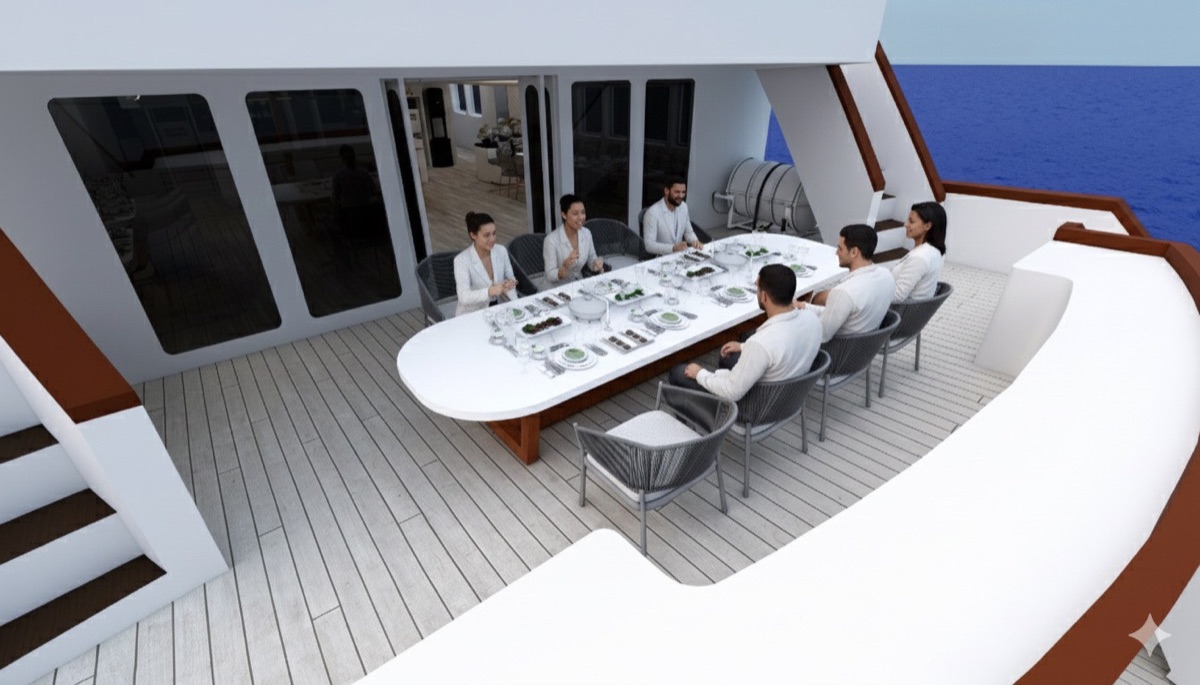
The open-air table on the Upper Deck is where the 3D2N pattern puts its finest hours: breakfast under way after the Padar sunrise climb, the island shrinking astern while the coffee is still hot — the full sequence is in A Day Aboard LASHA. Dinner moves out here whenever the evening is still, and inside Komodo National Park — a UNESCO World Heritage Site since 1991 — sheltered anchorages make still evenings the rule through the dry season. The table seats a full group, which turns dinner into the day's assembly point after everyone has scattered across four decks.
The stern lounge
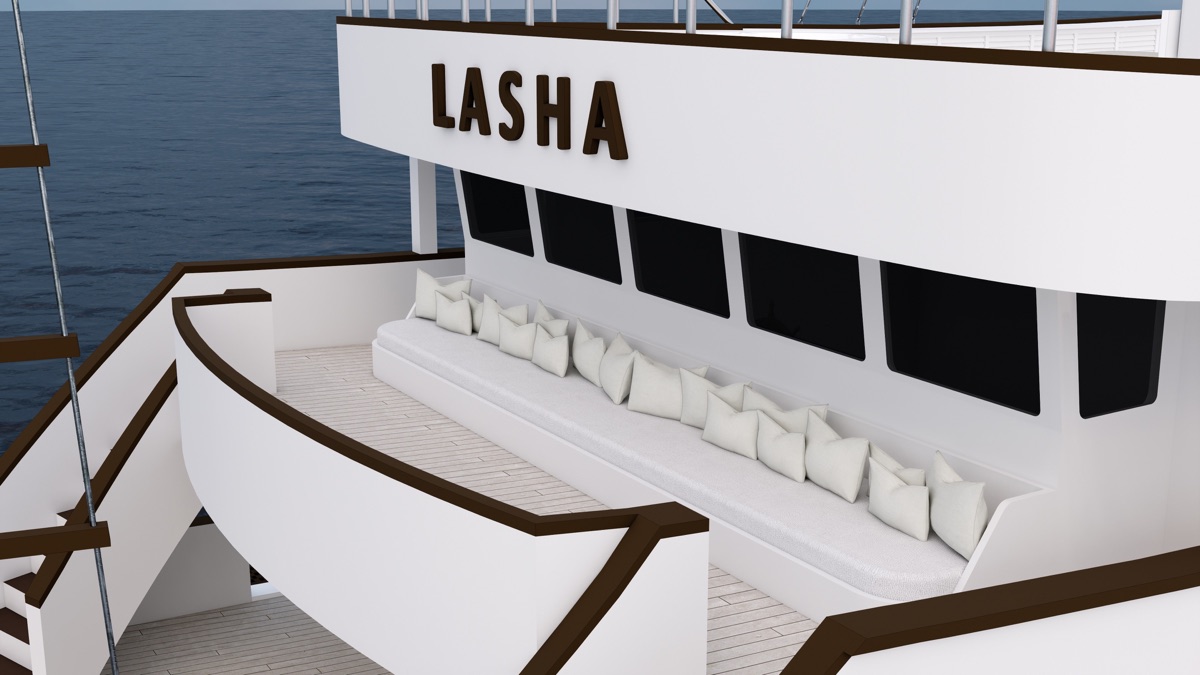
Low, aft and closest to the water, the stern lounge is the informal counterweight to the dining rooms above. It takes the in-between meals: fruit after a snorkel session, tea while the tender shuttles the last swimmers back, a sundowner while flying foxes cross the sky off Kalong Island. Couples on celebration charters tend to claim it after dark — more on that in honeymoons and celebrations aboard LASHA.
How does the meal rhythm follow the sailing plan?
At anchor, meals stretch; on passage, they tighten. Komodo enforces its own tempo — treks and swims belong to the morning windows, so lunch tends to follow salt water rather than precede it. From June to September, when underwater visibility runs 30–40 m according to dive operators, lunches drift later because nobody wants to leave the reef. Dinner is almost always at anchor, often after the dusk flying-fox exodus, and the galley plans each day's menu the evening before, around where the boat will actually be. It is dining scheduled by geography, and it is better for it.
What does dinner at anchor actually look like?
A worked evening, from the trial runs. Around 6:15 the boat is anchored for the night — off Kalong Island if the plan is right, where the flying foxes cross the dusk sky on cue — and sundowners open at the stern lounge while the galley finishes service prep. By 7:30 the alfresco table is set end to end: a full charter seats everyone at once, so dinner doubles as the day's reunion after 26 people have spent the afternoon scattered between reef, tender and Sun Deck. Courses arrive unhurried; the crew clears as the conversation outlasts the food. Then the migration — coffee and dessert drift up to the Top Deck, the twin generators settle to their low overnight hum, and the only lights left are anchor lights inside a World Heritage marine park. Nobody books a phinisi for the tablecloths, but this hour is usually the one guests describe first when they get home.
How are dietary requirements handled?
Arranged at booking — that is the phrase to remember. Allergies and intolerances, halal requirements, vegetarian and plant-based cooking, children's meals: the charter desk collects all of it when the charter is confirmed, and the galley provisions accordingly in Labuan Bajo before boarding. There is no mid-route resupply between anchorages, which is exactly why the vessel carries 22,000 litres of fresh water and twin 70 kVA Mitsubishi generators to keep cold storage running across multi-day itineraries. Raise requirements early, and the kitchen builds the week around them rather than working around the edges.
What is included at the table?
Inclusion questions deserve exact answers, so they have their own guide: what a LASHA charter includes. For pricing context here: charter rates for the standard Komodo program are published in full — every trip length and group size — on the rates page, along with 2D1N and day-charter formats and park entrance fees.
Rates shown are the published 2026–2027 charter rates. Park entrance tariffs are under revision for 2026 — confirm the current figure with the charter desk when you book.
Plan your LASHA charter — tell the desk your dates, group size and dietary notes, and the galley plans from there.
The Lounge & Resto, the alfresco table and the stern lounge are all part of the full walkthrough on The Yacht page, alongside the deck plans and technical specification. First-season dinners begin on 17 August 2026; the galley, as of this month, is already cooking.
⚓ This guide is part of the journal of LASHA Phinisi — the 52.5-metre luxury phinisi sailing Komodo National Park and Raja Ampat. Official booking only via lashacruise.com · WhatsApp +62 811-3823-875 (Komodo Luxury).