
A phinisi is a wooden vessel built in the Buginese boatbuilding tradition of South Sulawesi, carrying masts and sails on a hull shaped in timber by shipwrights. A modern liveaboard is usually a steel or fibreglass motor vessel. The difference shows in hull material, motion at sea, deck layout and how the boat is maintained and repaired.
Anyone comparing Komodo liveaboards meets the word phinisi within five minutes. It is used loosely, and that looseness costs money: two boats described with the same word can differ enormously in size, age and equipment. Here is what the term covers, what changes when the hull under you is wood rather than steel, and where one vessel — LASHA — sits on the figures her operator publishes.
What is a phinisi, exactly?
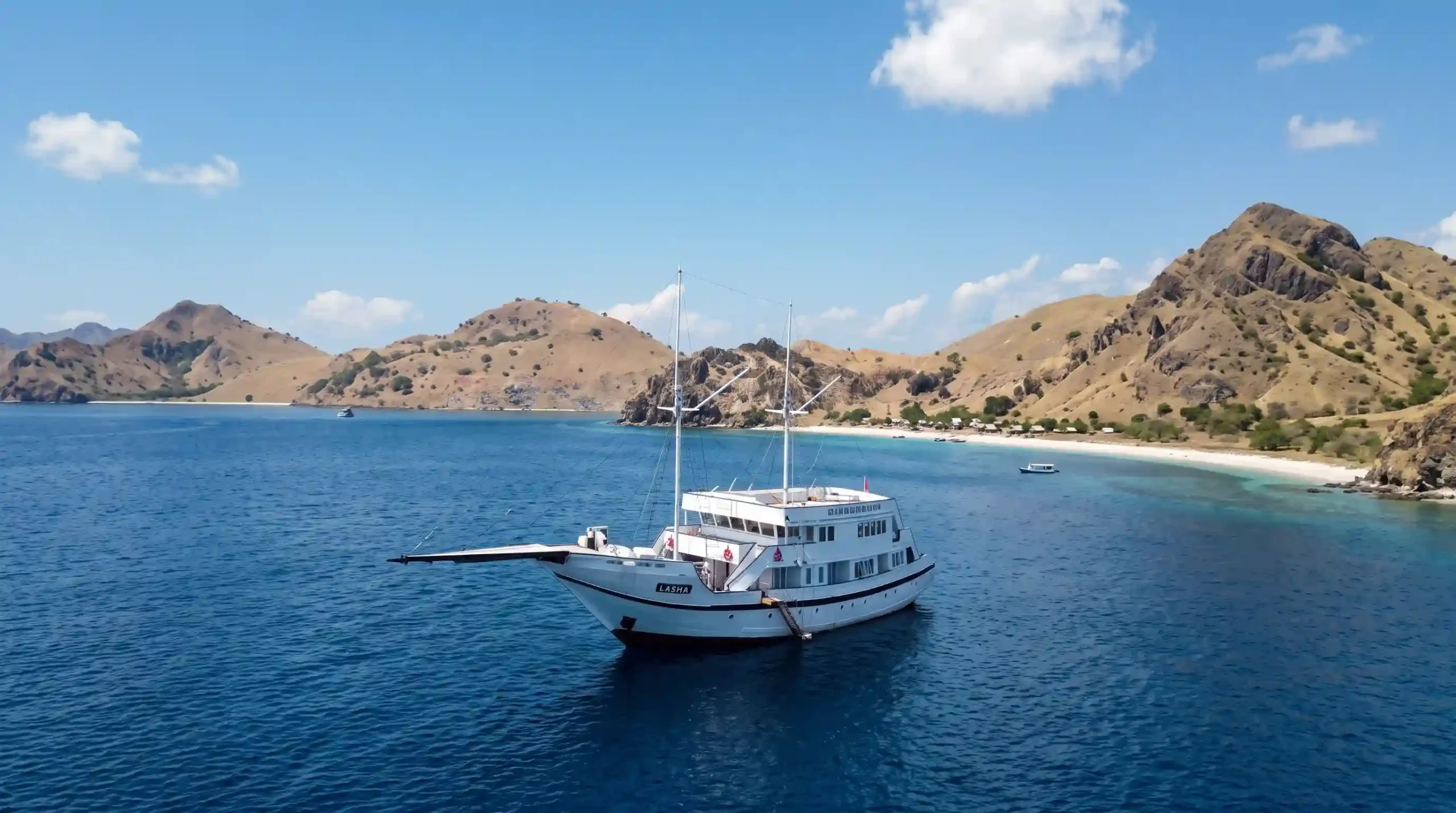
Phinisi describes a rig and a building tradition rather than one fixed design. It belongs to the Buginese boatbuilding culture of South Sulawesi, and the hulls are worked in timber by shipwrights rather than cut from plate to a factory drawing. UNESCO inscribed the art of pinisi boatbuilding as Intangible Cultural Heritage of Humanity in 2017. Contemporary charter phinisi keep the timber hull and the masts, and add what guests now expect: engines, generators, air conditioning, ensuite bathrooms and a dive platform.
The caution is that the label stretches: it covers small open-trip day boats and large private charter vessels alike. The word tells you about heritage and material, and almost nothing about size, cabin count, safety equipment or how the boat is run. Treat it as the beginning of your research, not the conclusion.
How is a phinisi built differently from a steel liveaboard?
Four differences matter to a guest, and none are marketing points — they are consequences of the material.
- Hull material. A phinisi is timber. LASHA, for example, is built from Ulin — Bornean ironwood — and teak, according to her published specification. A modern liveaboard is typically steel or fibreglass.
- How damage is repaired. Timber hulls are maintained and repaired plank by plank by shipwrights; steel hulls are cut and welded. Neither is inherently better, but they demand different yards, different skills and different maintenance calendars.
- Rig. A phinisi carries masts and sails. Most purpose-built dive liveaboards carry none. Sails are not the primary means of propulsion on a modern charter phinisi — the engines are — but the rig shapes the whole silhouette and deck plan.
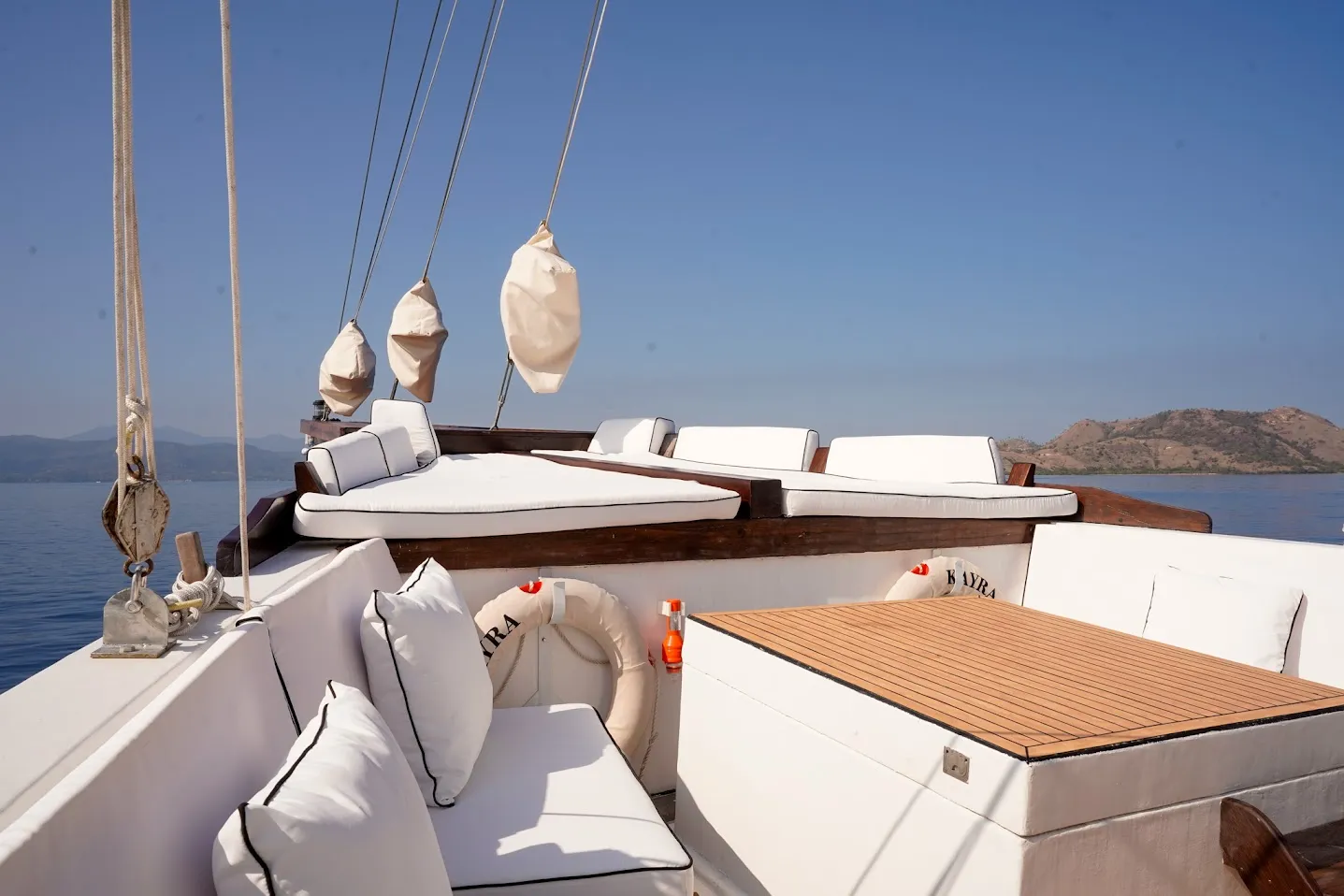
- Deck philosophy. Phinisi tend to spread guests across broad open timber decks; dedicated dive vessels organise the deck around the dive operation first. A generalisation with exceptions, but the pattern you will see in photographs.
Does a wooden phinisi feel different at sea?
Yes, and this is where honest operators separate themselves from brochures. Some modern steel liveaboards carry active fin stabilisers, which damp roll while underway. LASHA's operator states plainly on her own site that she has no active fin stabilisers, and that open-sea passage days genuinely factor into this choice.
How much that matters depends on the route. A Komodo itinerary is a chain of short inter-island hops with the vessel at anchor overnight, so sustained open-water exposure is limited — though the straits inside the park carry strong currents, and the Labuan Bajo harbourmaster has suspended tourist sailing outright when conditions demanded it, including inside the dry season. A long eastern crossing towards the Banda Sea is a different proposition. If your trip involves one, read phinisi vs steel motor liveaboard for long crossings first.
What does a phinisi give you on deck?
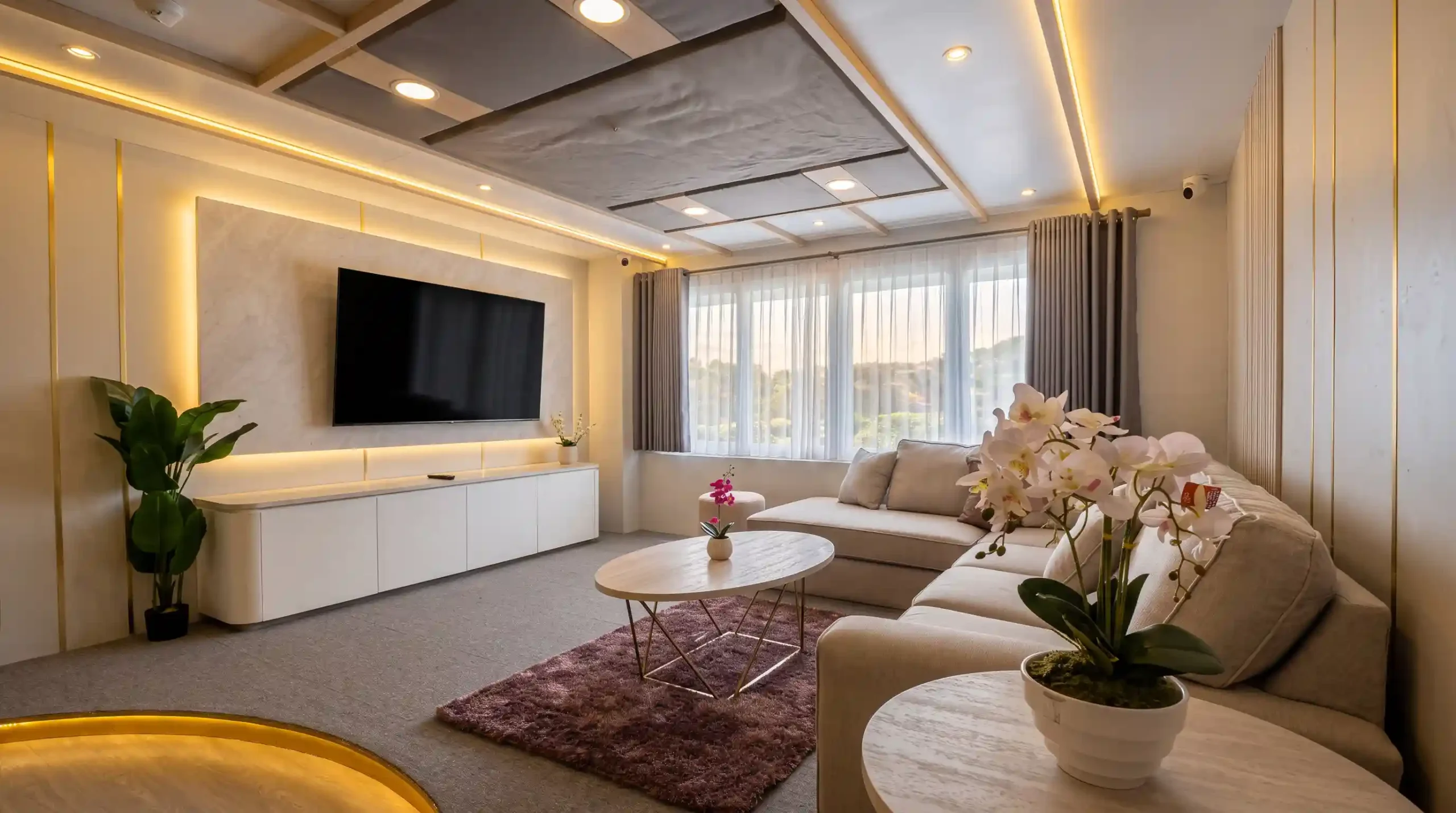
Space, generally, and a different kind of it. LASHA's published facility list includes a sun-deck jacuzzi, an indoor Lounge & Resto, alfresco dining, a living room and a dedicated dive deck across four decks. Six of her ten cabins have private balconies, and the two Master Suites carry an in-suite jacuzzi bathtub. That suits a group that wants to spread out; it is not a bunk-and-tank dive boat, and it is not priced like one.
Where does LASHA sit among phinisi?
These are the figures her operator publishes. We make no claim about how she ranks against other vessels: no verified fleet comparison exists, and superlatives on a purchase of this size are worth nothing.
| Specification | Published figure |
|---|---|
| Length overall | 52.5 m |
| Beam / draught | 10.3 m / 2.7 m |
| Tonnage | 466 GT |
| Built / flag | 2023 / Indonesian |
| Materials | Ulin (Bornean ironwood) and teak |
| Decks / cabins | 4 decks / 10 ensuite cabins |
| Maximum guests | 26 (crew separate) |
| Main engine | Weichai X6170, 750 hp |
| Fuel / fresh water | 12,000 L / 22,000 L |
| Active fin stabilisers | None |
| Home port | Labuan Bajo, Flores |
Her published safety inventory includes Garmin GPS, Samyung AIS, radar with SART, iCom radio, EPIRB, 54-channel CCTV, two lifeboats, four twenty-person liferafts, 75 life jackets, 30 fire extinguishers and 12 ring buoys. Whether a vessel publishes that list at all is itself a useful signal when comparing boats.
What this means for your trip
- Match the hull to the route. On Komodo's short hops the absence of stabilisers is a minor consideration; on multi-day crossings, ask directly and accept the honest answer.
- Stop treating "phinisi" as a specification. Ask for length, tonnage, build year, cabin count and guest cap in writing. A boat that will not put those in an email is telling you something.
- Weigh deck space against dive throughput. A group wanting lounging, shade and privacy wants a large phinisi; a group diving several times a day may prefer a purpose-built dive vessel.
LASHA charters whole-boat only — no cabin is sold separately — and her rate tables are published in full rather than offered on request. Full specifications sit on the vessel page; rates sit on the rates page.
LASHA Phinisi Cruise is operated and booked by Komodo Luxury, founded in 2015 in Labuan Bajo and Bali. Charter enquiries: WhatsApp +62 811 3823 875 or [email protected].
Frequently Asked Questions
Is a phinisi safe for a Komodo liveaboard trip?
Safety depends on the individual vessel and its crew, not on the hull material. Ask any operator for its published safety inventory and its policy when the harbourmaster suspends sailing, then compare the answers side by side.
Do phinisi actually sail under canvas?
Charter phinisi carry masts and sails, but engines do the work on a scheduled itinerary. Treat the rig as part of the vessel's character rather than as the propulsion you are paying for.
Is LASHA the same vessel as M/Y KOMODO?
No. LASHA is a 52.5-metre wooden phinisi of 466 GT built in 2023. M/Y KOMODO is a 73-metre steel superyacht. They are unrelated vessels and should not be compared as one.
⚓ This guide is part of the journal of the LASHA boat in Komodo — the 52.5-metre luxury phinisi sailing Komodo National Park and Raja Ampat. Official booking only via lashacruise.com · WhatsApp +62 811-3823-875 (Komodo Luxury).
Is a phinisi safe for a Komodo liveaboard trip?
Safety depends on the individual vessel and its crew, not on the hull material. Ask any operator for its published safety inventory and its policy when the harbourmaster suspends sailing, then compare the answers side by side.
Do phinisi actually sail under canvas?
Charter phinisi carry masts and sails, but engines do the work on a scheduled itinerary. Treat the rig as part of the vessel's character rather than as the propulsion you are paying for.
Is LASHA the same vessel as M/Y KOMODO?
No. LASHA is a 52.5-metre wooden phinisi of 466 GT built in 2023. M/Y KOMODO is a 73-metre steel superyacht. They are unrelated vessels and should not be compared as one.
⚓ This guide is part of the journal of the LASHA boat in Komodo — the 52.5-metre luxury phinisi sailing Komodo National Park and Raja Ampat. Official booking only via lashacruise.com · WhatsApp +62 811-3823-875 (Komodo Luxury).