
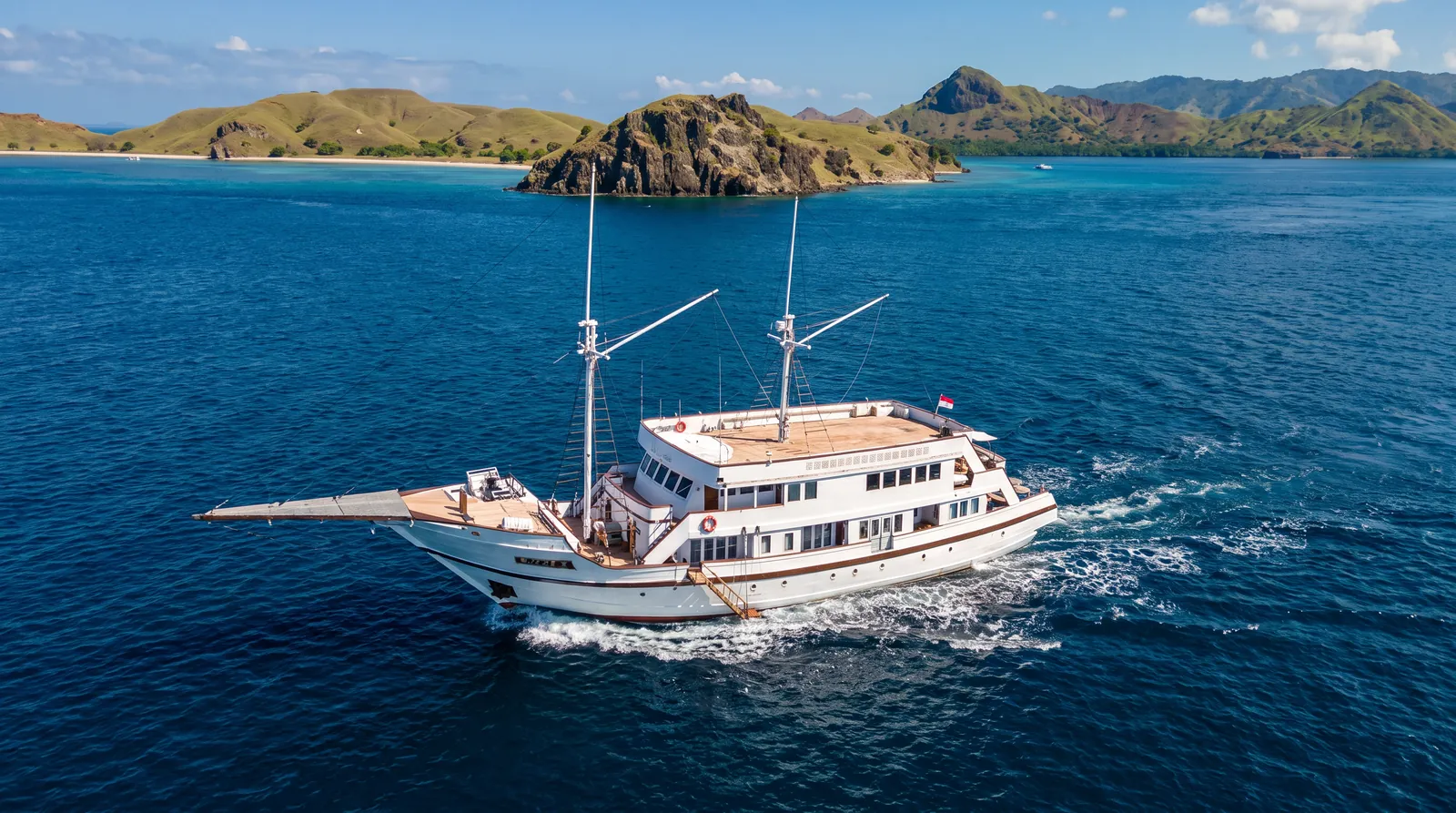
Komodo National Park's cruising grounds are sheltered inter-island waters, not open ocean. Most hops between anchorages take under an hour, and the crossing from Labuan Bajo to Komodo Island runs about 2–2.5 hours by speedboat. Seasickness is uncommon on large liveaboards here; January and February are the only notably windier months.
How calm are Komodo National Park's waters, really?
Look at a chart of the park and the answer is mostly geography. Komodo, Rinca, Padar and dozens of smaller islands sit packed into the strait between Sumbawa and Flores, so wherever the wind blows from, a protected lee shore is a short cruise away. The anchorages liveaboards actually use — Loh Liang, the bays around Padar, the reef flats off Pink Beach — sit inside that shelter, and the hops between them typically take 20 to 60 minutes.
This is what separates Komodo from Indonesia's genuinely demanding routes. A Banda Sea or Raja Ampat season involves long repositioning passages across open water; Komodo cruising is island-to-island work in comparatively enclosed sea. The park's famous currents do run hard through the channels — that is exactly what feeds its reefs — but current is not swell. A channel can be moving at four knots while the surface stays close to glassy. If you have read alarming accounts of rough Indonesian crossings, they almost always describe open-ocean passages, not the waters inside the park.
How long is the crossing from Labuan Bajo, and how rough is it?
Labuan Bajo sits on the western tip of Flores, directly facing the park. Day boats cover the run to Komodo Island in roughly 2 to 2.5 hours at speed; a displacement phinisi takes longer — typically four to five hours at an unhurried cruising pace — which is why overnight itineraries break the distance into stages instead of one long push. On a typical LASHA itinerary, the first afternoon is a short hop to a nearby anchorage such as Kelor or Rinca, with the deeper park reached progressively over the following days.
Crucially, the route threads between islands the whole way. The first stretch out of Labuan Bajo crosses the Molo Strait, a channel only a few kilometres wide, before the islands close in around the course. You are rarely far from a shoreline, and the fetch — the open distance wind needs to build waves — stays short. Afternoon chop happens, especially in the windy months, but it is a different order of experience from a true blue-water passage.
Which months are calm, and when should you expect chop?
Komodo is cruisable year-round from LASHA's home port of Labuan Bajo, but conditions follow a clear seasonal rhythm:
| Months | Season | Typical sea state | Notes for sensitive travellers |
|---|---|---|---|
| April – June | Early dry season | Calm to very calm | Arguably the best all-round window |
| July – September | Peak dry season | Calm mornings, fresh southeast breeze by afternoon | Trade winds; anchorages stay comfortable |
| October – December | Late dry / transition | Mostly calm, variable | Light winds, warm seas |
| January – February | Northwest monsoon | Windiest of the year; choppier crossings | Cruising continues; captains route to lee shores and may resequence stops |
| March | Transition | Settling | Conditions improve week by week |
If you are especially prone to motion sickness, book between April and November and you will most likely spend the trip wondering what you were worried about. If your dates fall in January or February, the park remains entirely workable — this is simply when experienced routing matters most, and when a larger vessel earns its keep.
Does boat size matter for seasickness?
After the weather, it is the single biggest variable. Small open day boats run fast and light, and at speed even modest chop turns into repeated slamming — the motion most likely to trigger nausea. They serve the park well for quick visits, but they are also the boats on which most Komodo seasickness stories begin. A large displacement hull behaves differently: it moves deliberately through the water and answers swell in long, gentle arcs rather than sharp jolts.
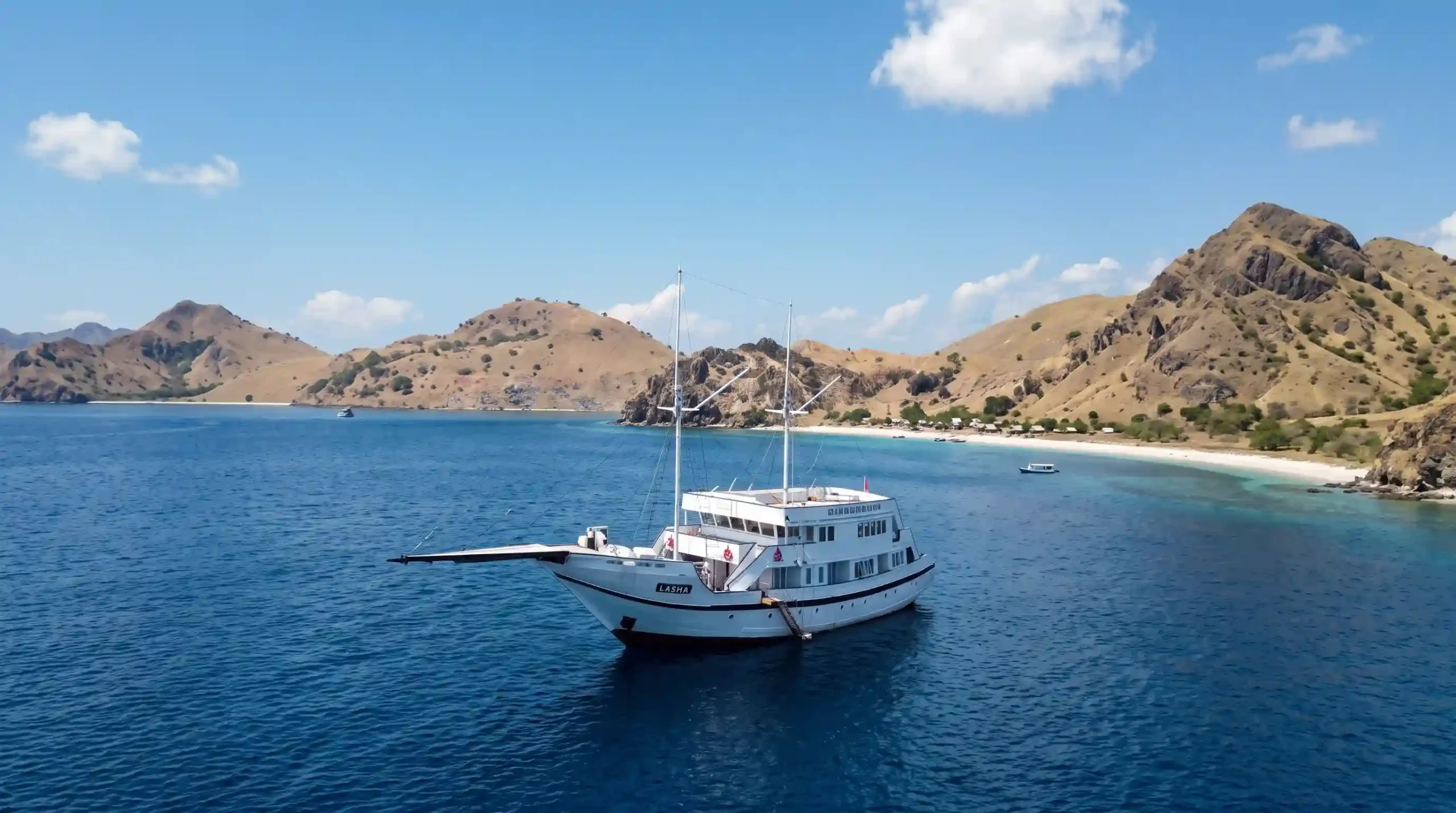
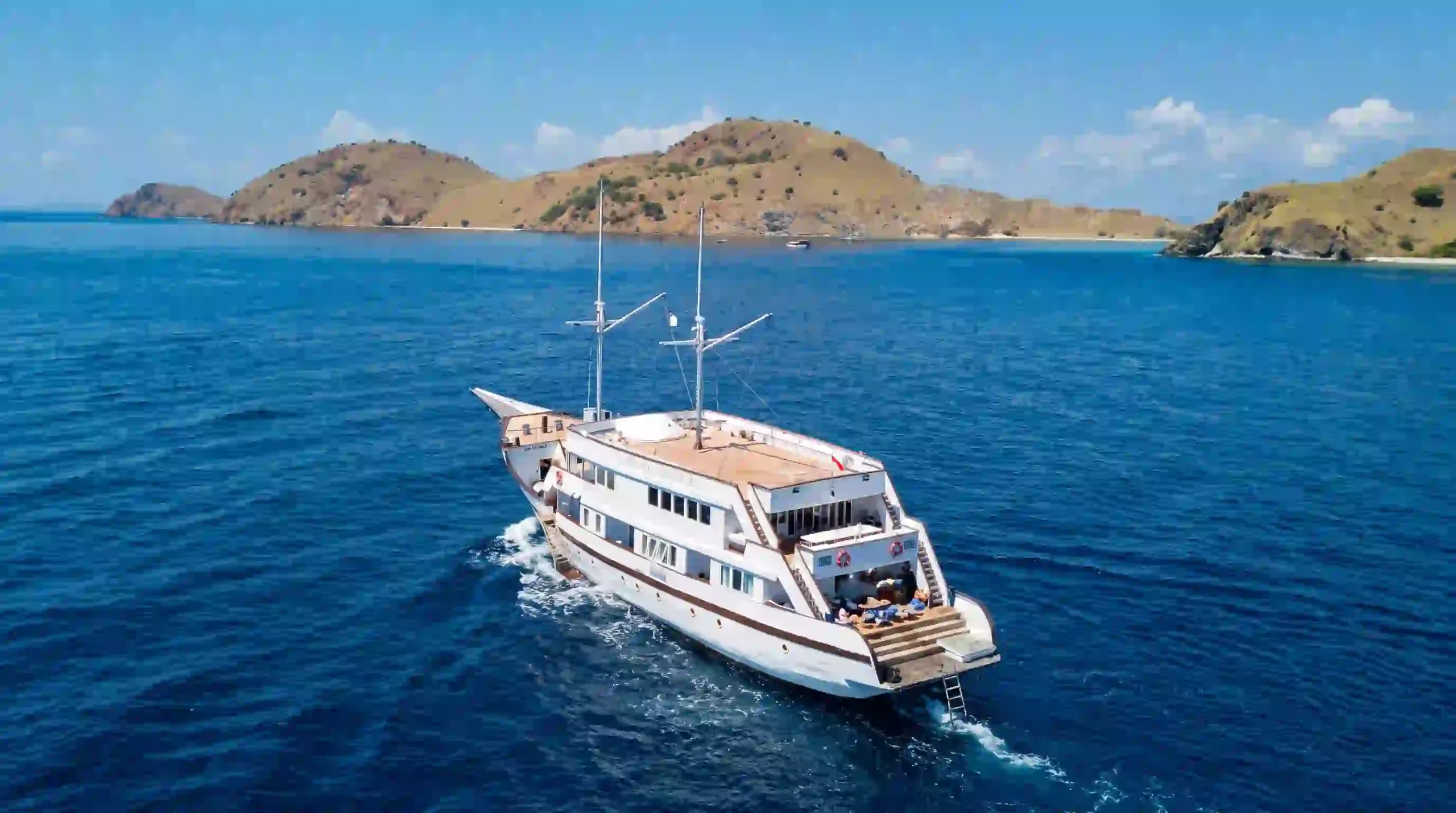
LASHA is a 52.5-metre Buginese phinisi of 466 gross tonnes, built in 2023 from ulin ironwood and teak across four decks and in service from Labuan Bajo since her maiden voyage in August 2026, with a 750 hp Weichai engine holding a steady, unhurried cruising speed. To be straightforward about it: as a traditional wooden sailing vessel she carries no active fin stabilizers. Her steadiness comes from sheer displacement, waterline length, and careful route planning — and in Komodo's short-fetch waters, that combination is what counts. Nights are spent at anchor in protected bays, so you sleep on still water rather than underway.
What actually works against seasickness on a Komodo cruise?
A decade of guest experience across operator Komodo Luxury's fleet, sailing these waters since 2015, distils to a short list:
- Take medication before departure, not after symptoms start. Most tablets (dimenhydrinate, meclizine, or prescription patches) need 30–60 minutes to take effect. Take them before leaving the marina.
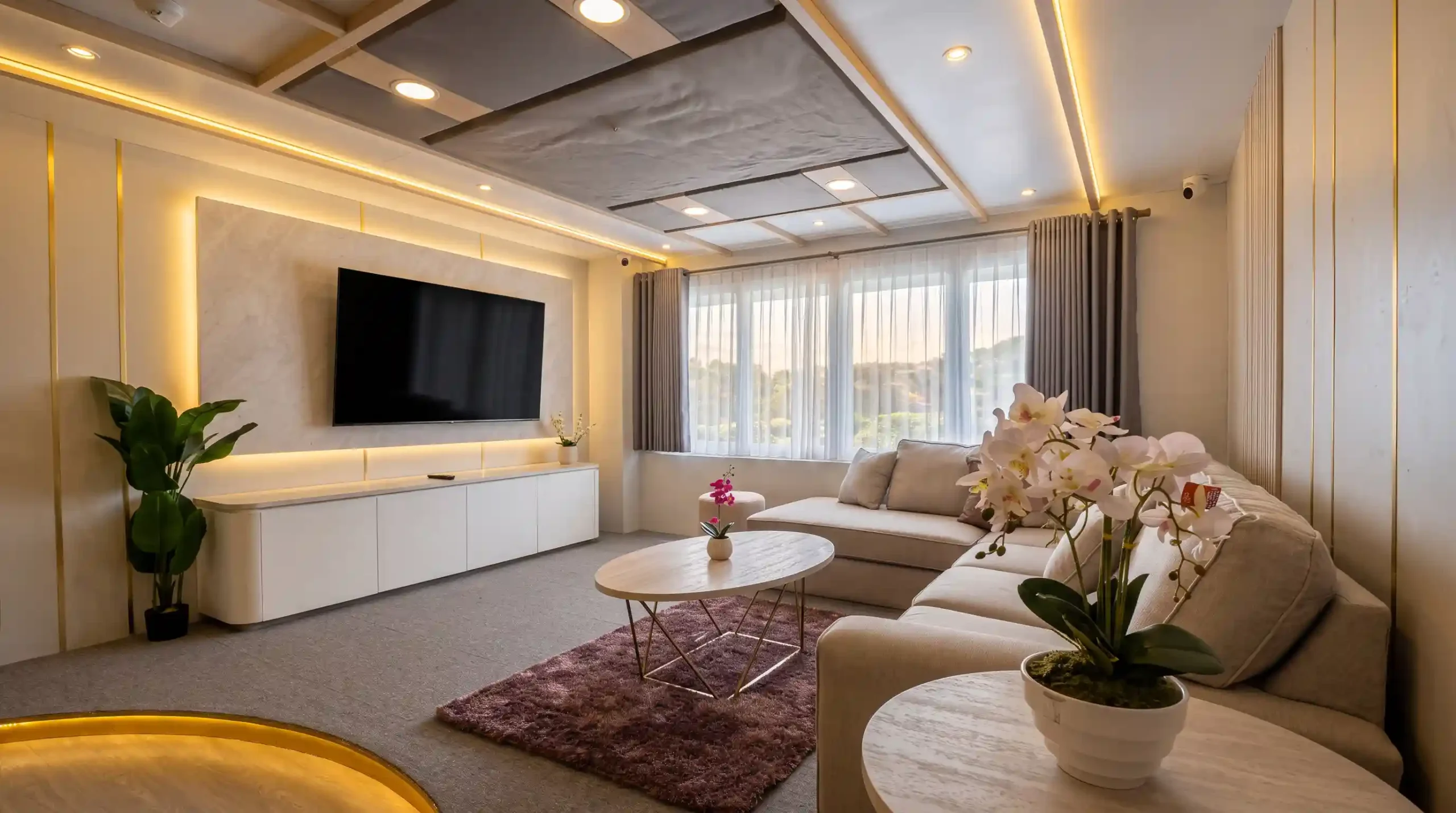
- Choose a mid-to-lower cabin. Motion is smallest near the vessel's centre of gravity. On LASHA, the Grand Deluxe and Deluxe cabins on the lower decks sit closest to that point; the Master Suites trade slightly more motion for private balconies and jacuzzis with constant fresh air.
- Keep your eyes on the horizon. A fixed visual reference lets your inner ear and your eyes agree. The sun deck and the Lounge & Resto's open sightlines beat a closed cabin during crossings.
- Stay on deck in fresh air rather than below in enclosed spaces while underway.
- Eat light, hydrate, and go easy on alcohol the first evening. Ginger — tea, candy, or capsules — has genuine evidence behind it.
- Avoid screens and reading during the crossing itself; save the book for the anchorage.
Is a liveaboard actually gentler than a day trip?
For motion-sensitive travellers, usually yes — which surprises people. A day trip compresses five or six hours of fast, pounding transit into a single day, much of it against the afternoon breeze on the return leg. A liveaboard does the opposite: slow speeds, short hops timed for the calmest hours, and every night at anchor in flat water. Divers, incidentally, tend to worry about the wrong thing — Komodo's diving reputation is built on current, not surface swell, and dive tenders launch inside sheltered sites from LASHA's dedicated dive deck.
A private charter also puts the schedule in your hands: if anyone aboard is feeling delicate, the captain can simply linger in a calm bay. Whole-boat Komodo charters aboard LASHA are priced by trip length and group size, minimum two nights — see the full rates for larger groups and diving programs.
⚓ This guide is part of the journal of LASHA Phinisi — the 52.5-metre luxury phinisi sailing Komodo National Park and Raja Ampat. Official booking only via lashacruise.com · WhatsApp +62 811-3823-875 (Komodo Luxury).