
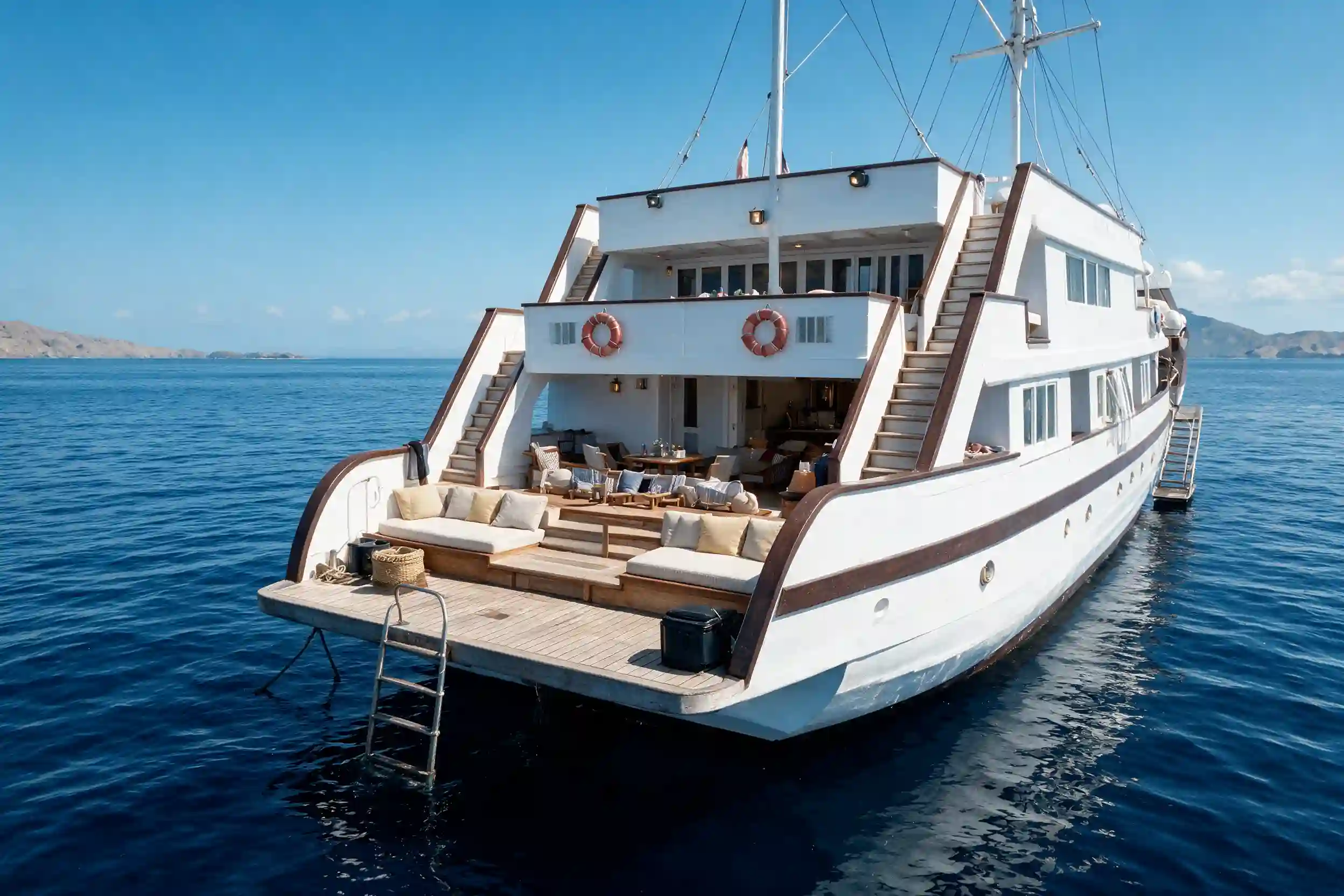
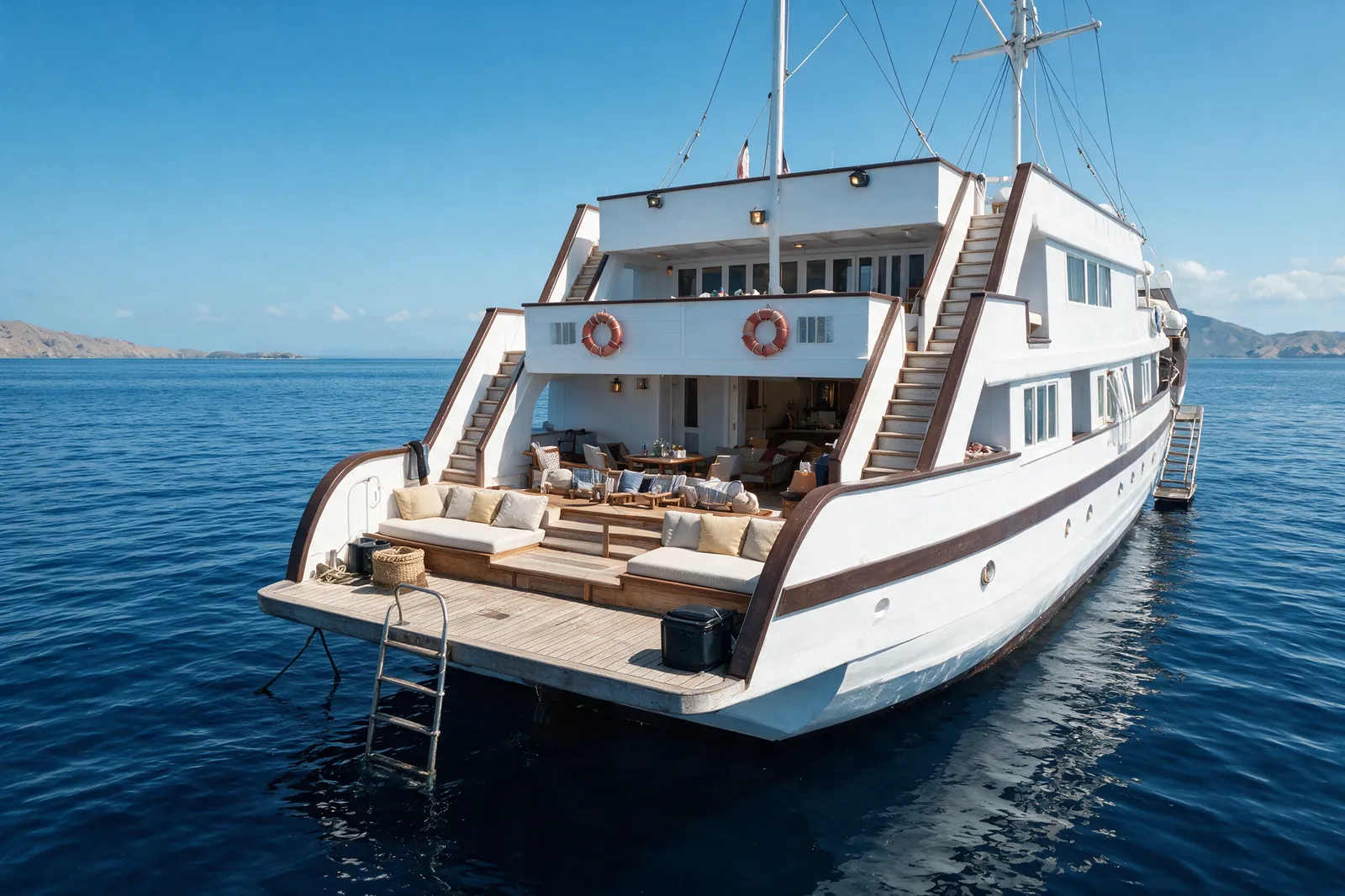
Yes — non-swimmers can fully enjoy a Komodo liveaboard. The Padar viewpoint trek, Komodo dragon walks, the Taka Makassar sandbar, Kalong Island's sunset bat flight, and every meal aboard LASHA happen on land or on deck. Snorkeling stays optional, done in a life vest at calm bays your guide selects, under close supervision.
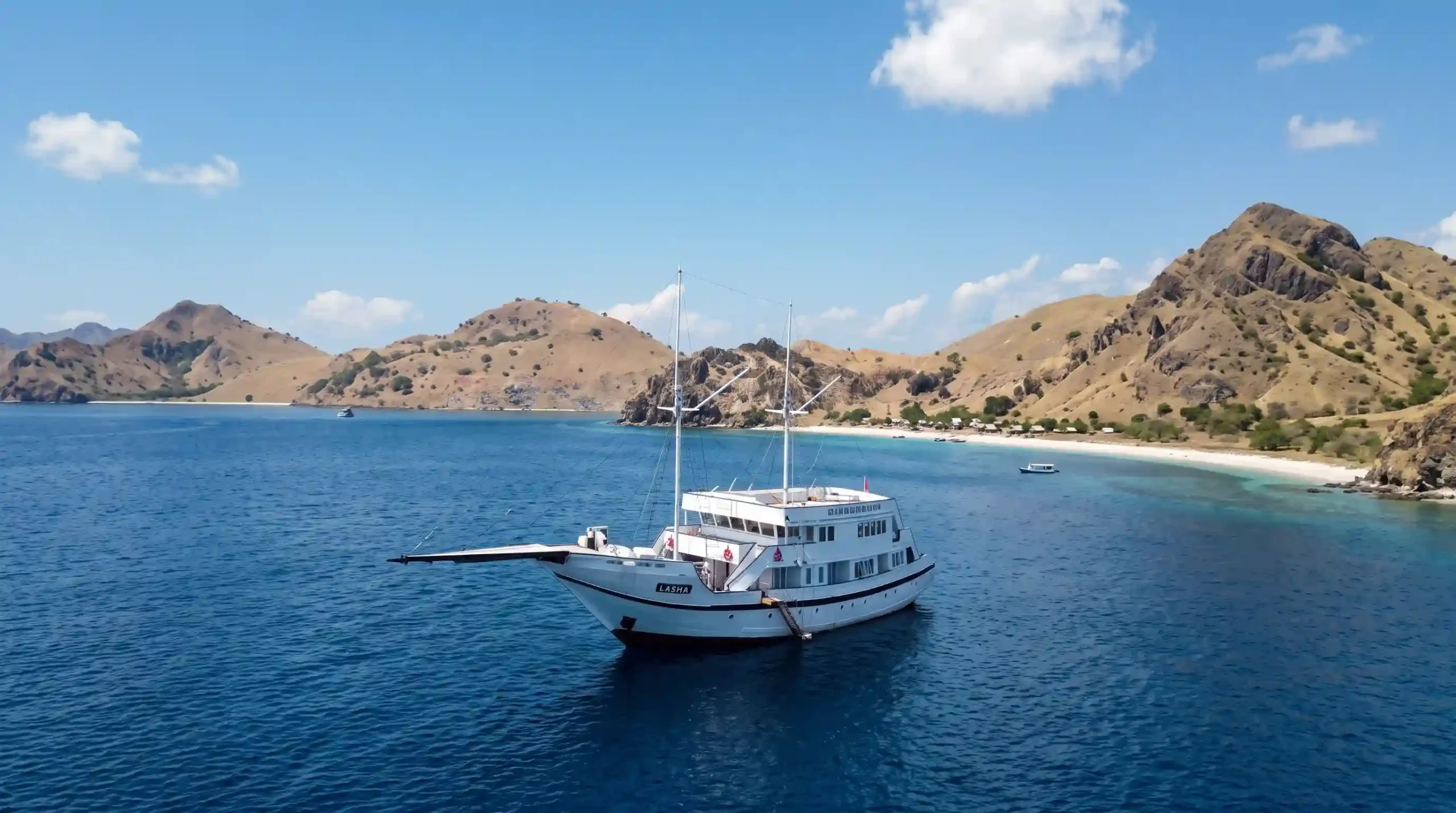
"Do I need to be a strong swimmer?" has become one of the most frequent questions travelers ask before committing to Komodo National Park, and it deserves a precise answer rather than a reassuring shrug. A liveaboard is, at heart, a sailing journey between islands — and most of what made this park world-famous is experienced with your feet on a volcanic ridge, a white sandbar, or teak decking. This guide maps exactly which moments ask for water confidence, which ask for none, and how the crew of LASHA, a 52.5-metre, four-deck phinisi with ten ensuite cabins, hosts guests who cannot swim at all.
Do you need to know how to swim to join a Komodo liveaboard?
No. Swimming ability is not a requirement for any LASHA departure. Every sailing is a private whole-boat charter for up to 26 guests, which means the route is built around your group rather than a fixed schedule. If half your party prefers ridgelines to reefs, the cruise director simply weights the days toward trekking, wildlife, island landings, and deck time. A Komodo charter for non swimmers is not a reduced version of the trip; it is the same itinerary with the in-water stops treated as options instead of obligations.
Which Komodo highlights involve no swimming at all?
The park's signature experiences are, almost without exception, dry ones. Padar's three-bay panorama is reached by a stepped walking trail, not a swim. Komodo dragons are observed on ranger-led walks on Komodo and Rinca islands. Taka Makassar is a crescent of white sand in open sea — the tender beaches directly on it, and you can stand on dry sand or wade to the ankles, as you choose. And the evening spectacle at Kalong Island, when thousands of fruit bats stream out against the sunset, is best watched from LASHA's deck with a drink in hand.
| Highlight | How you experience it | Time in the water |
|---|---|---|
| Padar Island viewpoint | Ridge trek to the three-bay panorama | None |
| Komodo dragon walk | Ranger-guided trail on Komodo or Rinca | None |
| Taka Makassar sandbar | Tender lands you directly on the sand | None, or an ankle-deep wade |
| Kalong Island bat flight | Sunset viewing from LASHA's deck | None |
| Pink Beach | Beach walk; snorkeling optional | None on shore |
| Dining, jacuzzi, sunset sailing | On board, across four decks | None |
Can non-swimmers snorkel safely in Komodo?
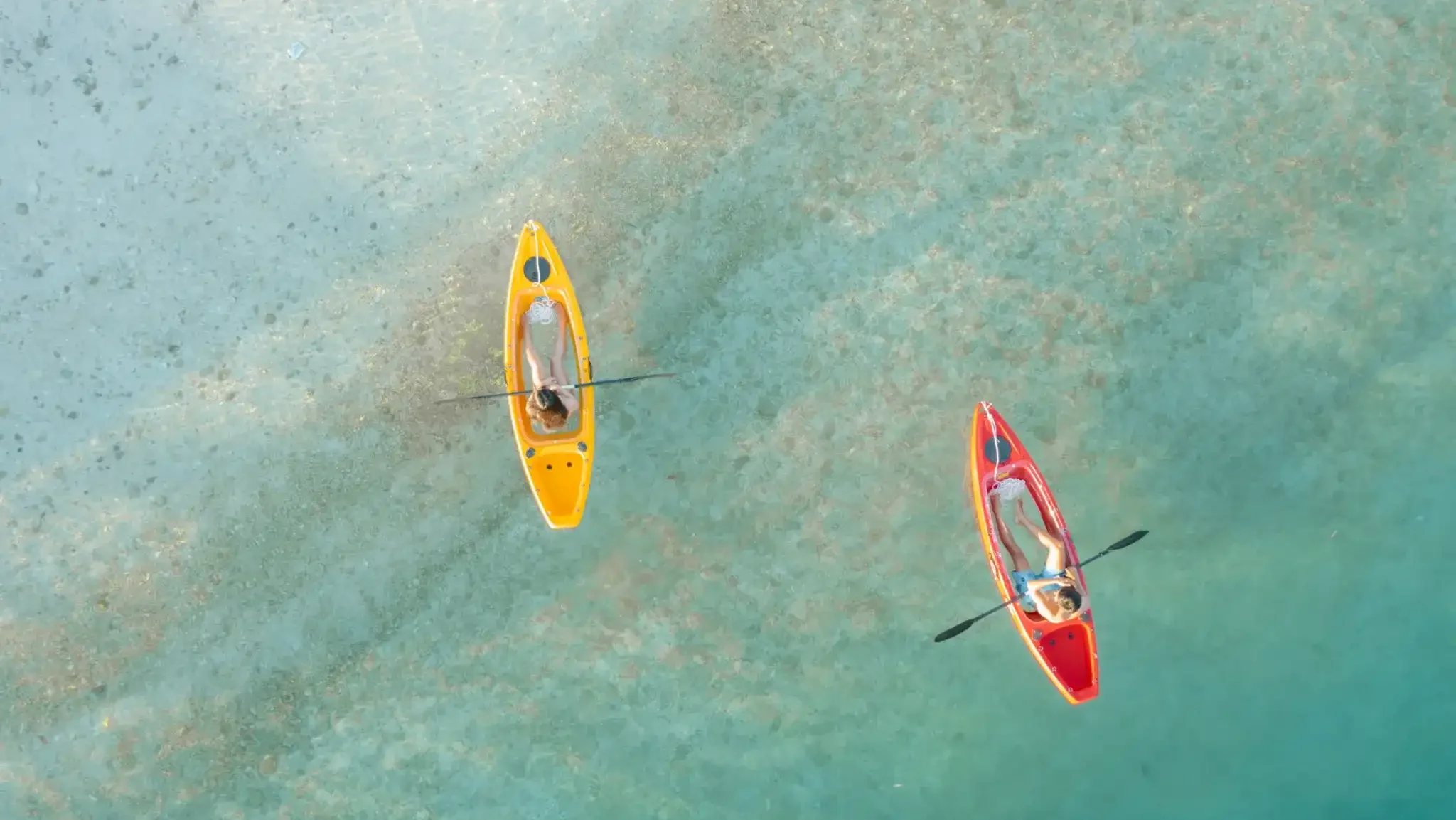
Yes, if you want to — and only if you want to. Snorkeling is always optional aboard LASHA, and when a non-swimmer chooses to try, the crew adjusts three things. First, equipment: buoyancy aids and properly fitted life vests are provided as standard, so you float without effort before your face ever touches the water. Second, location: the guides select calm, sheltered bays — Siaba is the classic example, a gentle slope of shallow reef with little current on the right tide — rather than the park's famous high-voltage channels. Third, ratio: a dedicated guide stays within arm's reach, often towing a float ring you can hold, while the tender idles a few metres away. Many guests who arrive unable to swim spend twenty minutes face-down over Siaba's coral gardens and count it among the best moments of the voyage.
How strong are Komodo's currents — and what are the rules?
This is the part an honest operator must say plainly. Komodo National Park sits in a strait where large volumes of water move between the Pacific and Indian Oceans, funneled between islands. That flow is why the reefs are so alive, and it is also why several well-known sites run strong, fast currents at certain tide states. For non-swimmers, four rules are non-negotiable: enter the water only at sites and tide windows the cruise director has cleared; wear the buoyancy aid provided, every time; stay beside your guide, never beyond; and return to the tender the moment you are signaled. These are not formalities. The crew plans each stop around tide tables precisely so that guests in life vests only ever meet the gentle version of Komodo's water.
Can you see manta rays without getting in the water?
Often, yes. Komodo's reef manta rays feed on plankton concentrated near the surface, and at shallow aggregation areas they cruise with wingtips breaking the water. In the right conditions — the right tide, season, and plankton density — mantas can be watched directly from the surface or from the tender, no submersion required. The crew reads conditions daily and positions the tender where sightings are most likely, though no operator can guarantee wild animals on schedule. Guests who want a closer look can float above them in a life vest with a guide alongside, which is how most non-swimmers experience one of the ocean's great encounters. Certified divers in the same group can explore the deeper sites through LASHA's dedicated dive program while non-swimmers watch from above.
What is daily life aboard LASHA like if you never enter the water?
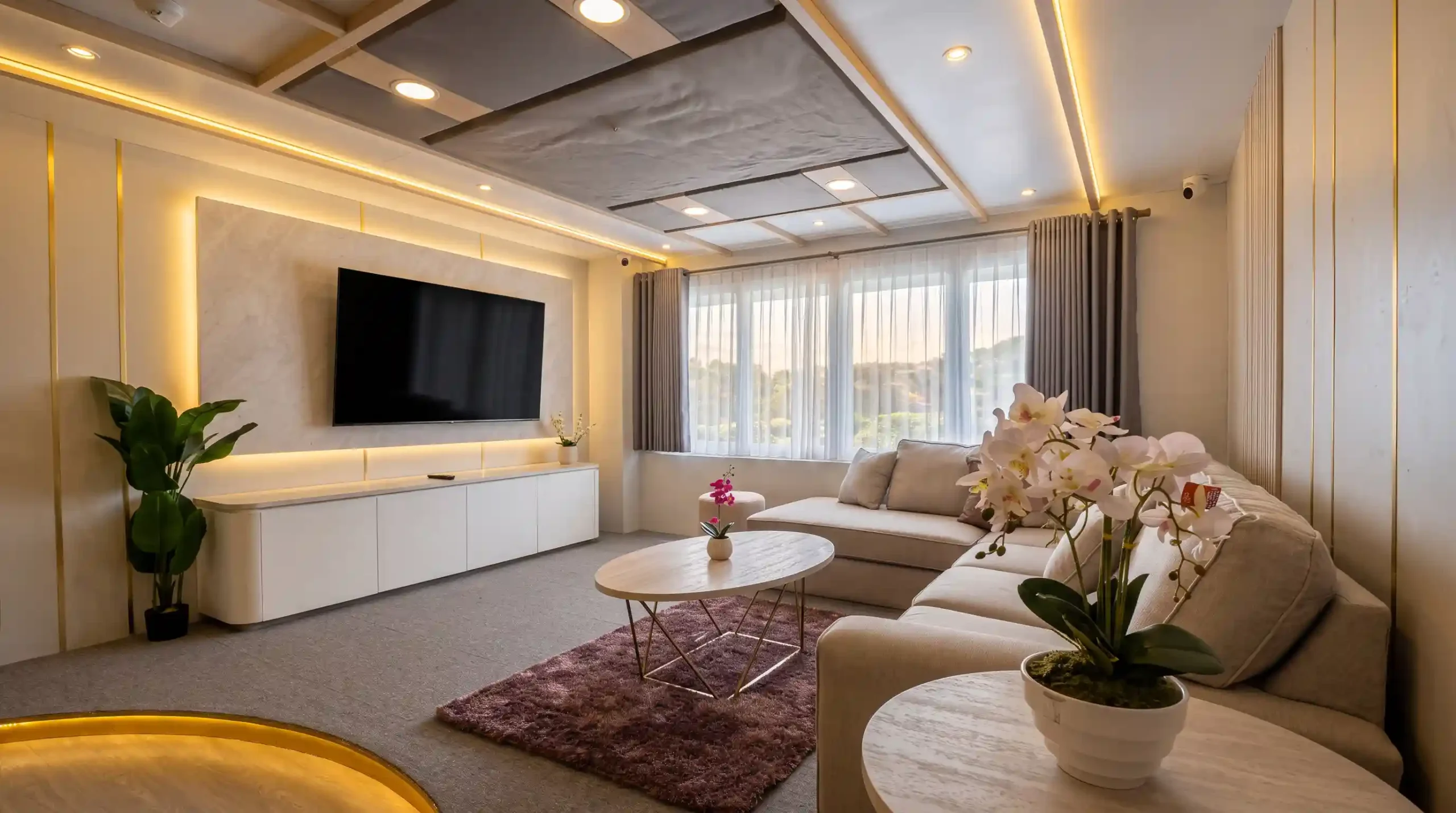
Generous. LASHA is a 466 GT phinisi of ulin ironwood and teak, built in the Buginese tradition and sailing Komodo since her maiden voyage on 17 August 2026. Across her four decks you have a jacuzzi on the sun deck, the Lounge & Resto for meals prepared on board, and ten ensuite cabins — including two Master Suites with private jacuzzi and balcony, and four Junior Suites with balconies — so a sea view never requires getting wet. One honest note on comfort: LASHA is a traditional wooden phinisi and carries no active fin stabilizers. In practice the itineraries favour the park's sheltered anchorages and short hops between islands, and overnight moorings are chosen for calm water — but guests highly sensitive to motion should mention it when booking so the crew can plan the smoothest routing. Home port is Labuan Bajo, and the yacht sails Komodo year-round.
How much does a private Komodo charter cost?
Non-swimmers pay no premium and no reduction — the charter is the whole yacht. Leisure charters are priced by trip length and group size, with a two-night minimum, stepping up for larger groups with complimentary places added up to 26 aboard. Komodo National Park entrance fees are US$25 per guest per night, billed separately. Full tiers for every group size are on the rates page.
| Duration | Leisure (1–14 guests) | Diving (1–14 guests) |
|---|---|---|
| 3D2N | US$21,600 | US$23,200 |
| 4D3N | US$32,400 | US$34,800 |
| 5D4N | US$43,200 | US$46,400 |
| 6D5N | US$54,000 | US$58,000 |
| 7D6N | US$64,800 | US$69,600 |
How do you book — and what should you tell the team?
Book only through official channels: lashacruise.com/booking, WhatsApp +62 811-3823-875, or [email protected]. LASHA is operated by Komodo Luxury (PT Komodo Bahari Nusantara), which has run Komodo voyages since 2015. When you enquire, say how many guests in your party do not swim. That single sentence shapes the charter: the crew loads additional buoyancy aids, the cruise director builds the route around calm bays like Siaba, and the tender team briefs for surface manta viewing — so the non-swimmers aboard get the full park, not a spectator's version of it.
⚓ This guide is part of the journal of the LASHA boat in Komodo — the 52.5-metre luxury phinisi sailing Komodo National Park and Raja Ampat. Official booking only via lashacruise.com · WhatsApp +62 811-3823-875 (Komodo Luxury).