
LASHA runs dedicated dive charters on both route clusters: Komodo · Alor · Sumbawa · Bali (minimum 2 nights) and Raja Ampat · Banda Sea · Wakatobi (minimum 5 nights, from $11,600 per night, with its own dive tier above leisure) — full Komodo rates are on the rates page. Diving is staged from a dive deck on the main deck; dive-tier sailings are for certified divers.
THE SECOND COLUMN ON THE RATE CARD
Most charter boats treat diving as an excursion bolted onto a cruise. Our published rate card says otherwise. Every guest-count band on both of our route clusters carries two prices, leisure and dive, printed side by side — and that second column is the clearest statement of intent we can make. A dive charter on LASHA is not a leisure route with tanks added; it is a different route, sequenced around tide windows and site conditions instead of beach hours. This post is the long version of how that program works: where the diving happens on the ship, which sites each route cluster reaches, what certification we ask you to bring, and exactly what the dive tier costs against leisure in 2026.
Why a Separate Dive Rate Exists
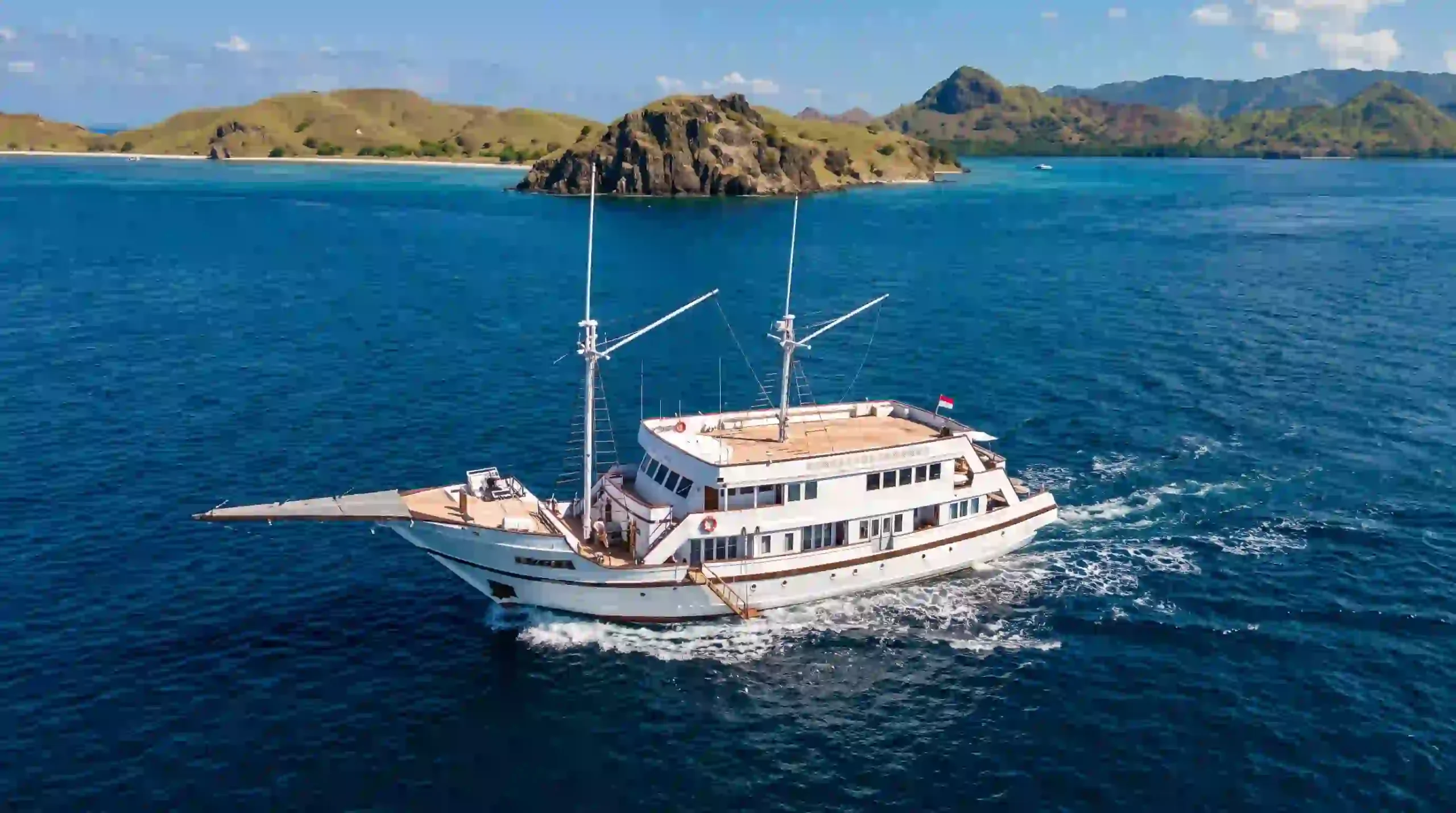
The two columns price two different ways of using the same 52.5-metre hull. On a leisure sailing the captain plans around anchorages — Padar for first light, a slow afternoon at Pink Beach, the ship settled early for dinner at anchor. On a dive-tier sailing the day is rebuilt around the water: sites picked by current and tide, the ship repositioning between dives rather than resting, tenders cycling more often, surface intervals folded into the passage plan. That extra sea time and staging is what the margin between the columns pays for — full leisure and dive figures for every guest count are on the rates page — and with the free-of-charge places layered on top, the ship's full guest capacity is 26.
The condensed program — sites, seasons and the dive-day sequence — lives on the dive charter page. What follows is the detail the desk usually walks through on WhatsApp before quoting.
Dive Support on Board: Where the Program Lives
The working answer is one deck: a dedicated dive deck on the main deck, at water level, positioned so saltwater logistics never cross the guest spaces. Gear-up happens there, the briefing happens there, and the tenders load there — while the sun deck two levels up stays dry for whoever is sitting the dive out. After the dive the same deck takes the rinse-down, and the route back to your cabin runs through a marble bathroom and a rain shower, not across a lounge floor.
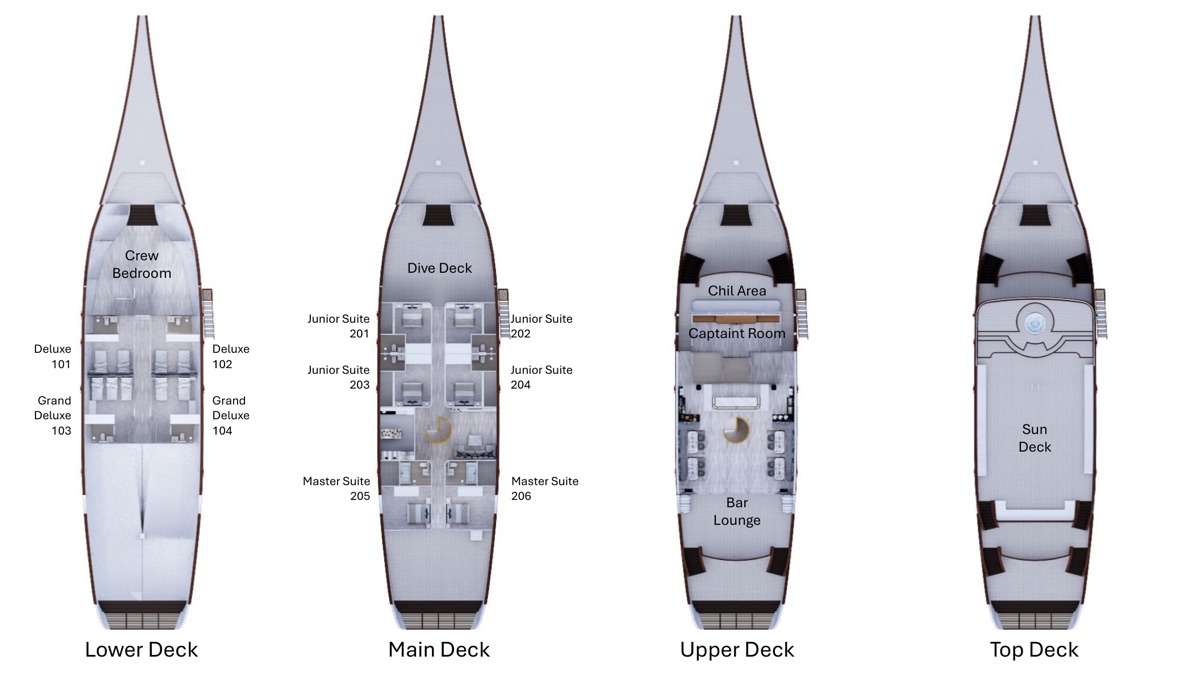
Because every LASHA sailing is a whole-boat private charter, the dive program is set per group rather than per departure. Send your certification levels, logged-dive counts and how many non-divers are aboard with your enquiry; the desk confirms guide and equipment arrangements for your dates in the written quote, and the site plan is built around the least-experienced certified diver in the group. We are a new ship as well as a new program — our maiden public Komodo season opens 17 August 2026 — so every figure in this post comes from the published 2026 rate file, not from a season of hindsight.
Komodo Cluster Sites: Current, Mantas and Two Seasons
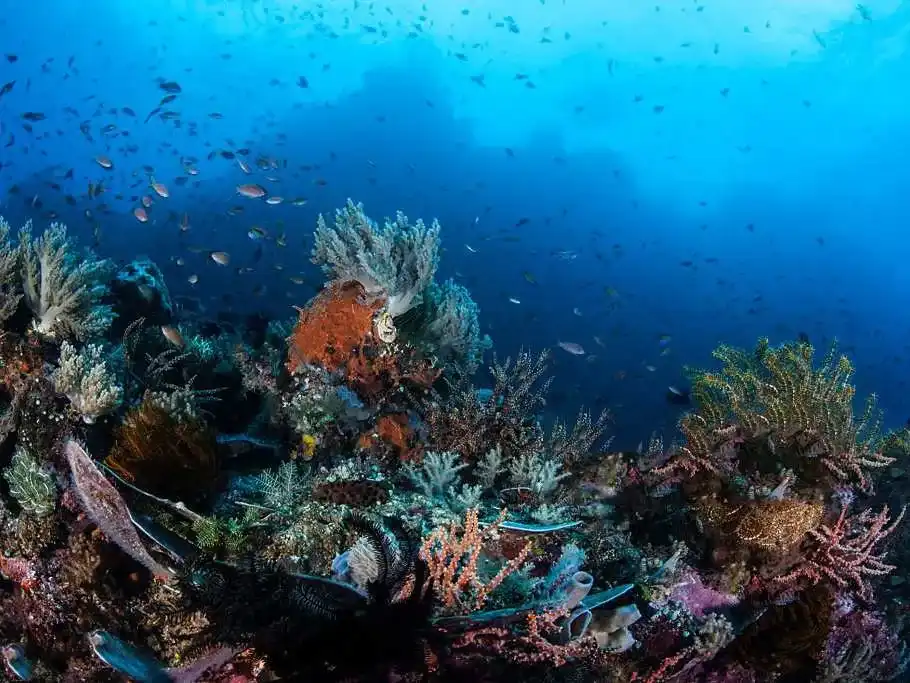
The near cluster — Komodo · Alor · Sumbawa · Bali, minimum 2 nights — centres on Komodo National Park, and the park's dive map splits three ways. The central sites work year-round: Karang Makassar, better known as Manta Point, where reef mantas hold over cleaning stations at 10–20 metres, and Batu Bolong, a current-washed pinnacle that concentrates fish life on whichever face is in the lee. The northern sites are at their best from roughly March or April through October or November; the southern sites around Nusa Kode run the opposite calendar, peaking from October or November to February or March. A multi-night charter simply follows that map — the captain repositions overnight to wherever the season is performing.
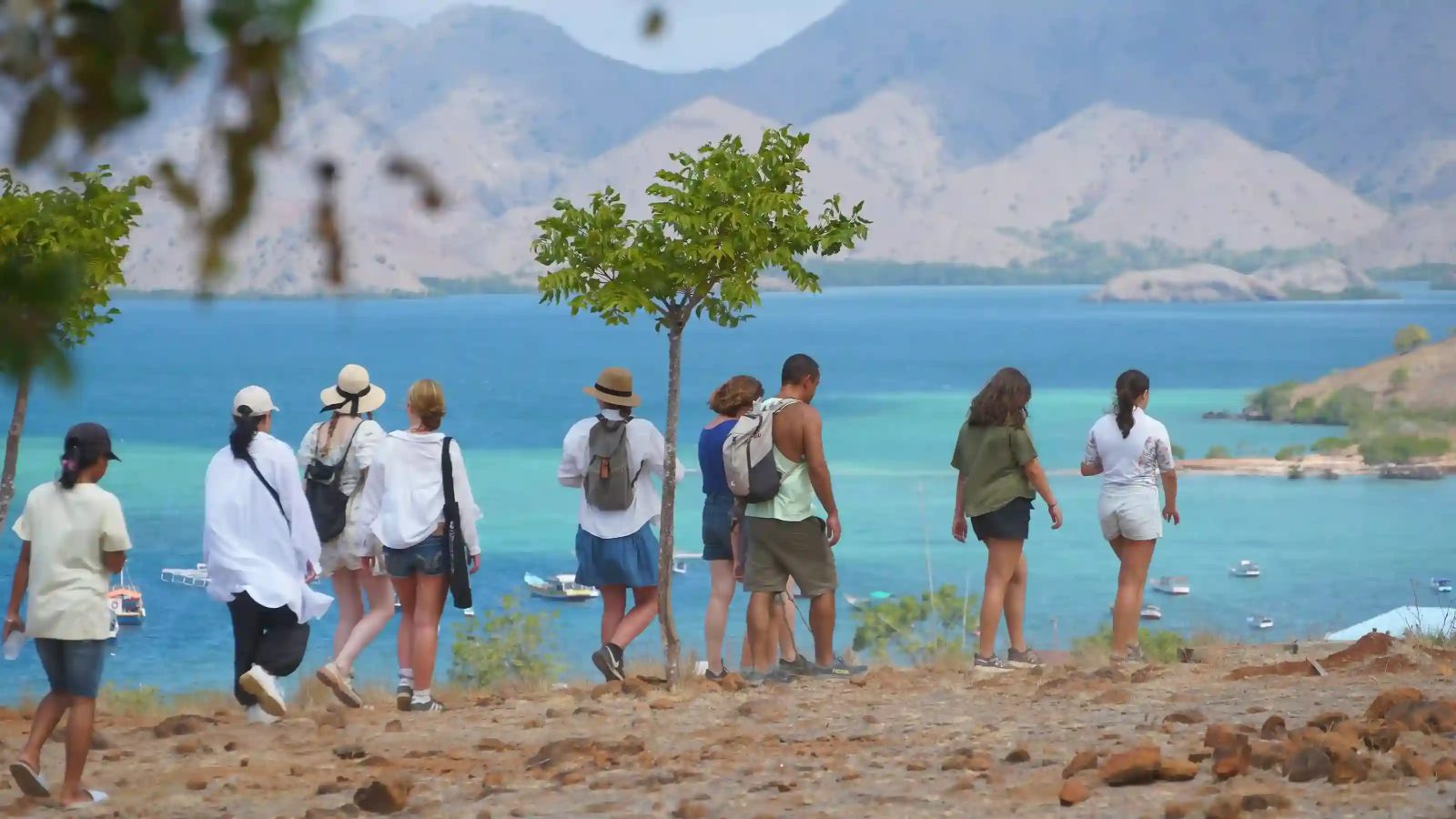
Water clarity favours the dry season: underwater visibility in Komodo runs 30–40 metres from June to September, peaking in July and August. Our first dive charters sail straight into the back half of that window, which is a fortunate accident of the calendar rather than a claim of experience — we will have data of our own soon enough, and until then the tide tables do the planning.
The Eastern Cluster: Raja Ampat, Banda Sea, Wakatobi
From roughly October to April we reposition east with the rest of the Indonesian expedition fleet, and the far cluster — Raja Ampat · Banda Sea · Wakatobi — prices from $11,600 per night with a minimum of 5 nights and its own dive tier above leisure. The minimum follows the geography: the eastern grounds lie well over 1,000 kilometres from our Labuan Bajo home port, and five nights is what that distance demands before the route repays the crossing. Raja Ampat's reef surveys rank among the richest ever recorded; the Banda Sea crossing adds open-water sea mounts; Wakatobi contributes long reef walls in protected water. Seasons, crossing logic and the 2026–2027 eastern calendar are mapped on the Raja Ampat & beyond page.
An expedition of that length is also an engineering question, and here the owner's published sheet answers plainly: 12,000 litres of fuel and 22,000 litres of fresh water — tankage sized so a 5-night eastern route runs without a port call — with two 70 kVA generators keeping ten ensuite cabins air-conditioned and the compressible hours of a dive day, the surface intervals and early nights, genuinely comfortable.
What Certification Do You Need?
Dive-tier sailings are for certified divers: bring your certification card, and tell the desk your level, your logged-dive count and when you last dived. Komodo's marquee sites are drift sites — Batu Bolong and Manta Point both run with current — so comfort in moving water matters more than depth rating; the mantas themselves hold at 10–20 metres, well inside entry-level limits. If your certification has lapsed or your last dive is years back, say so at enquiry rather than at the briefing, and the desk will set the program honestly. LASHA is not a dive school, and we would rather adjust a route than oversell one.
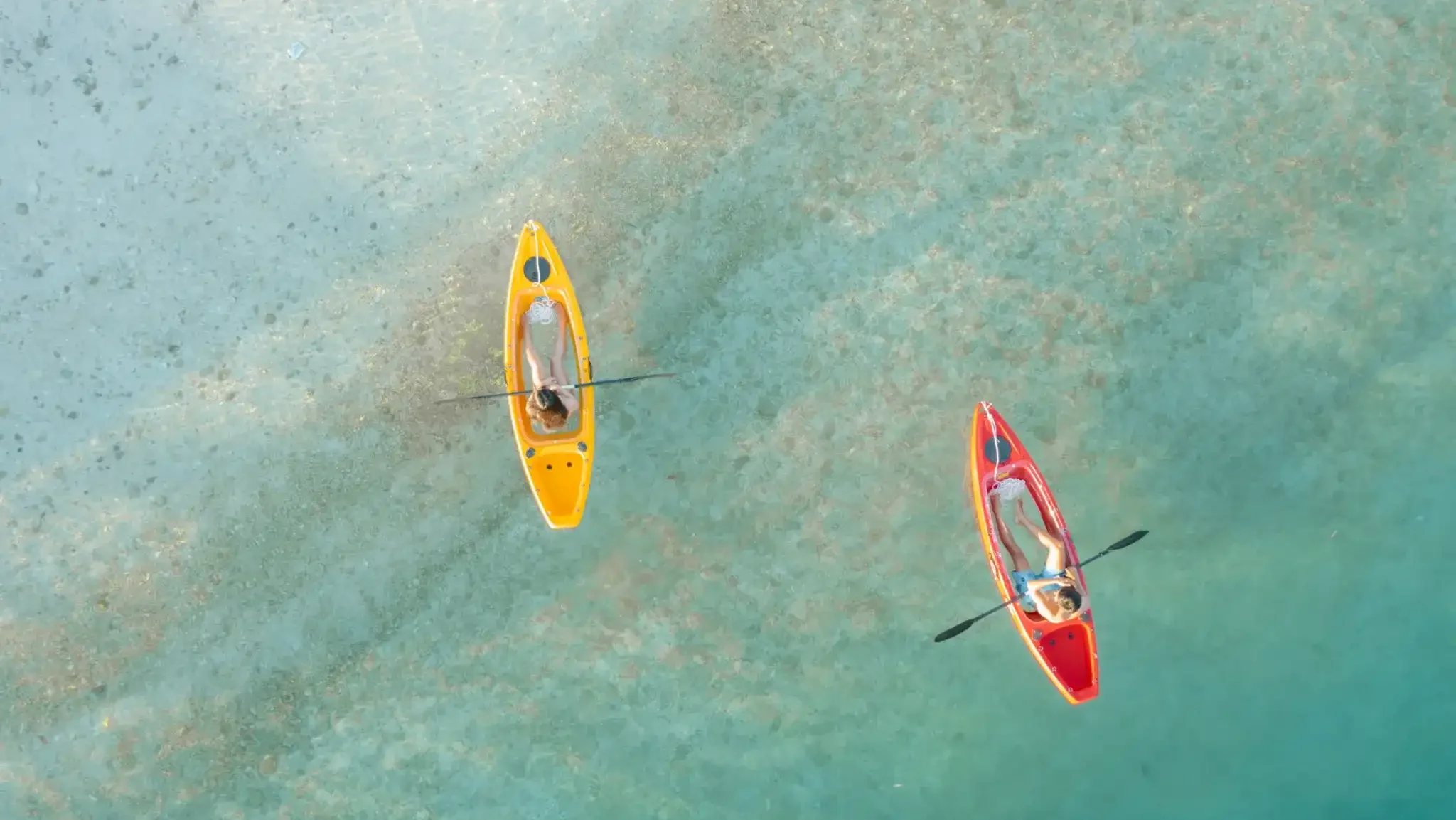
Non-divers are not an afterthought, because the same geography serves both. At Manta Point the rays are shallow enough that snorkellers drifting the surface line see the full silhouette while divers work the cleaning stations below — on a mixed family charter, both come back to the ship with the same story. Snorkelling stays inside the leisure tier; the dive tier applies when the itinerary itself is built around diving.
Dive vs Leisure: The 2026 Numbers Side by Side
Every guest-count band on both route clusters carries two published prices, leisure and dive, with free-of-charge (FOC) places that scale in above 14 paying guests — an 18-guest booking sails 20 people while 18 pay, which is the mechanism instructors and group leaders usually use for their own places. The Raja Ampat · Banda Sea · Wakatobi cluster runs from $11,600 per night at a 5-night minimum; the complete tables for both clusters, every guest count and every route, are on the 2026–2027 rates page.
Every figure above is a published "from" band. Park and marine-reserve entrance fees are additional at US$25–35 per guest per night depending on route, collected by the park authorities and subject to change — the charter desk confirms the exact band, current fees and FOC count in a written quote before anything is paid.
Where the Dive Day Fits in the Charter
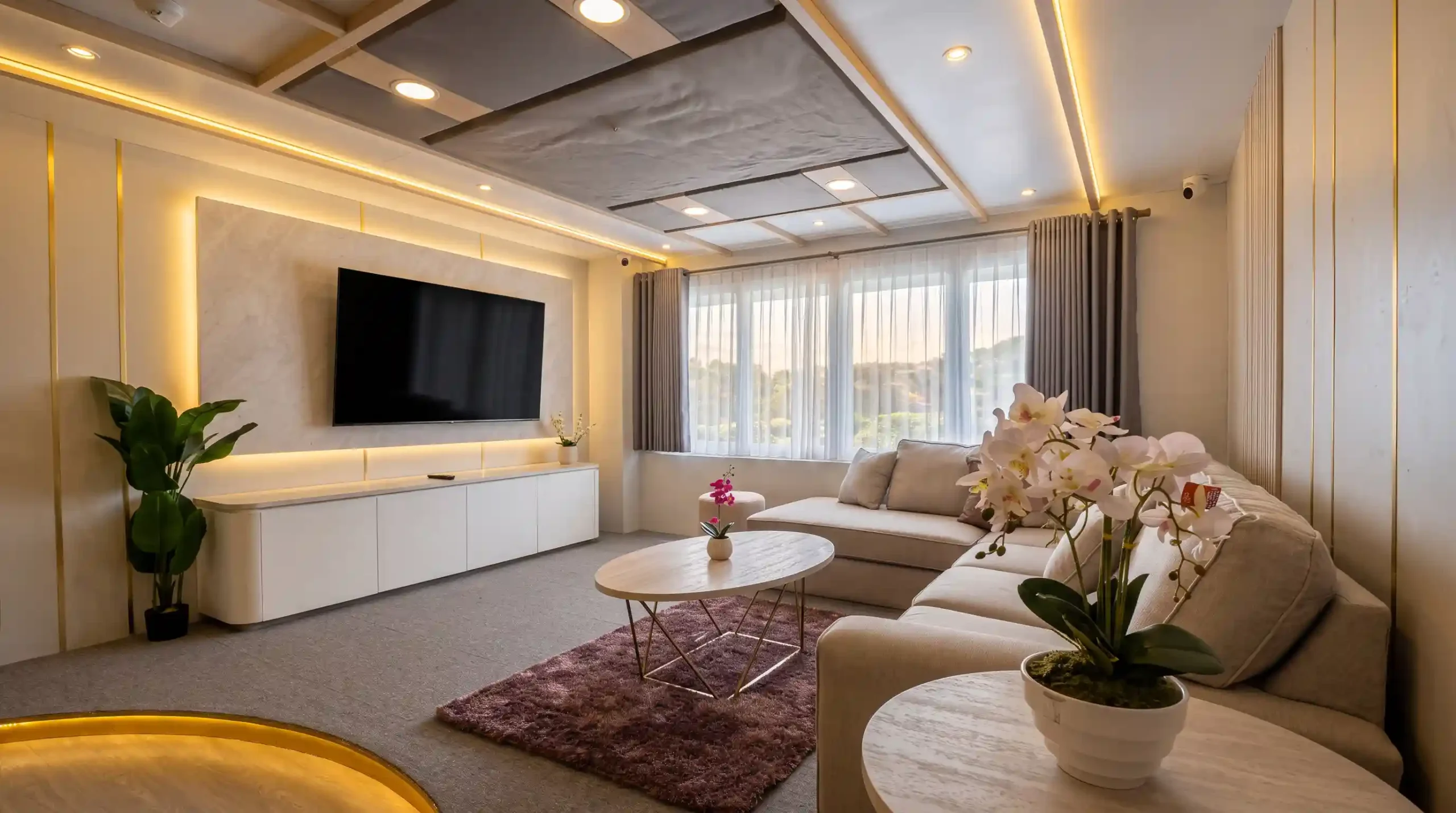
Most dive-tier days carry two to three dives, set by the tide tables rather than a fixed count, and the hours between them belong to the ship: a proper surface interval in an ensuite cabin, lunch at the alfresco table while the crew repositions, the open-air jacuzzi on the sun deck once the last tanks are rinsed. Because you sleep aboard at anchor inside the park, the first dive of the morning starts from the site, not from the harbor — the structural advantage that no day-boat schedule can copy. The full day rhythm, cabin plan and multi-night logic sit on the liveaboard page.
A dive program is ultimately a promise about sequencing — that the boat will be at the right site in the right tide window, with the gear staged and the non-divers just as well looked after. That promise is what the second column on our rate card buys, and it is priced in public so you can hold us to it.
Plan a LASHA dive charter — send the desk your dates, group size, certification levels and how many non-divers are aboard, and the reply comes back with the route cluster, the exact band and a written quote.
Related Reading
Manta Point, Komodo: The Best Time to See Manta Rays
Reef mantas at 10–20 m, month by month — when the plankton peaks, when the water clears, and how we stage the drift for divers and snorkellers together.
The Best Time to Sail Komodo, Month by Month
Two seasons, twelve months, one table — sea state, visibility and site windows across the year, so your charter dates match the diving you want.
A Day Aboard LASHA: Hour by Hour Through a 3D2N Charter
From the 4:45 am Padar start to dinner at anchor — the full timetable of a charter day, and where the water sessions fall inside it.
⚓ This guide is part of the journal of LASHA Phinisi — the 52.5-metre luxury phinisi sailing Komodo National Park and Raja Ampat. Official booking only via lashacruise.com · WhatsApp +62 811-3823-875 (Komodo Luxury).