
Neither is better in the abstract; they solve different problems. A Labuan Bajo hotel keeps you close to the airport, restaurants and land alternatives, but every park day begins and ends with a harbour crossing. A liveaboard has you already at anchor inside the park at first light and at dusk. Diving, sunrise viewpoints and fixed multi-day plans favour the boat; short stays and flexibility favour the hotel.
What is the real difference between a Komodo liveaboard and a hotel in Labuan Bajo?
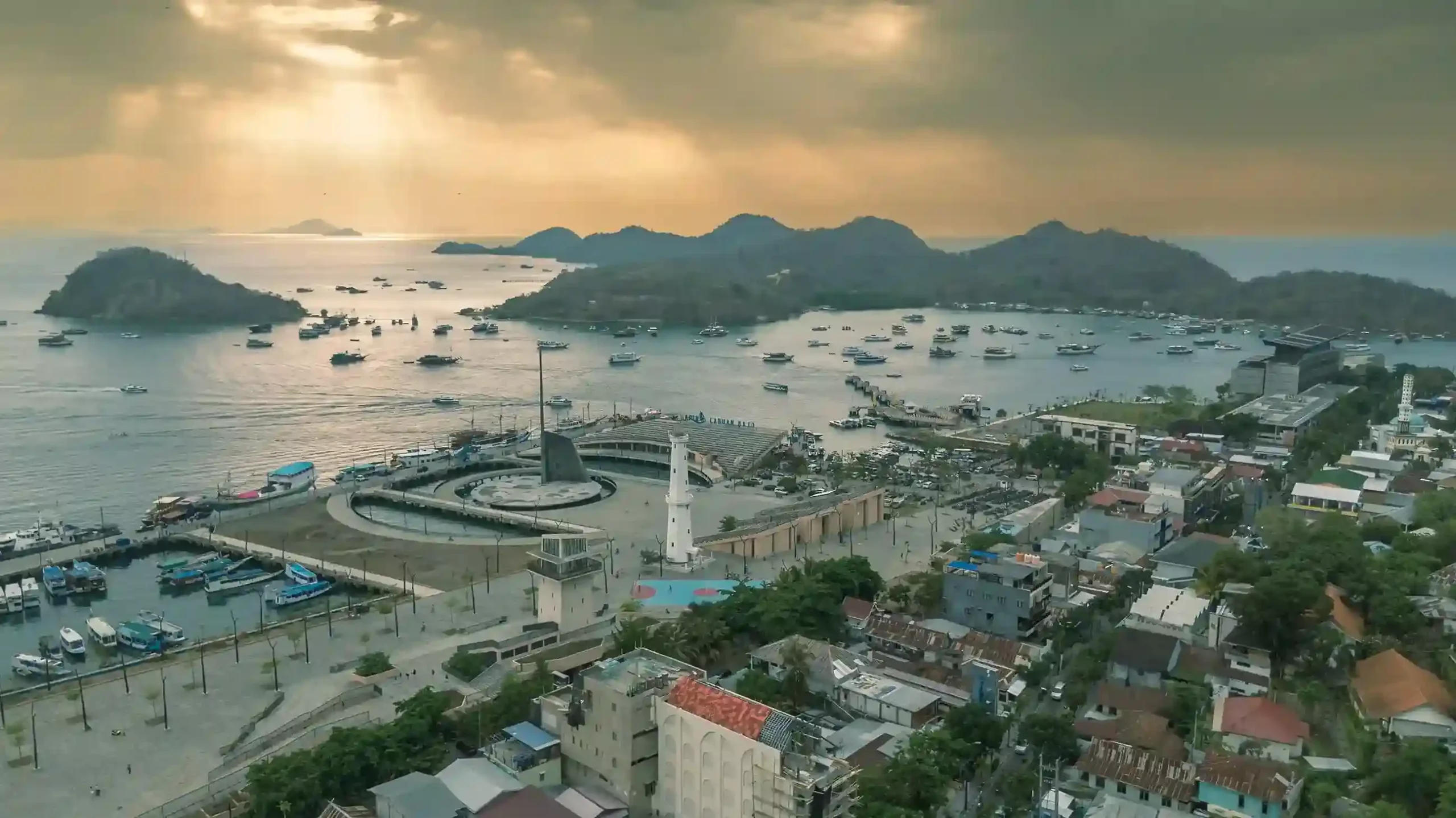
The difference is not comfort; a cabin is a cabin. The difference is where you sleep relative to the park. Komodo National Park is reached by sea, and Labuan Bajo is its main gateway port. A hotel guest crosses that water twice a day; a liveaboard guest crosses it once at the start of the charter and once at the end.
That single fact drives the rest: which hours you can be at a site, how many dive sites are reachable in a day, and how exposed the plan is when conditions change.
How much of your day does a hotel base spend in transit?
Enough to matter. The park authority publishes an opening window for each land site separately — Loh Liang on Komodo Island, Loh Buaya on Rinca, the Padar trail and the others each have their own hours, and they are not identical. Check the current window in the park authority's own announcement before you plan, because a day-trip schedule is built backwards from it.
Working backwards from a harbour departure puts you at the best-known sites in the same hours as everyone else. Sleeping at anchor inverts that: the vessel is already at the viewpoint or the dive site when the day's first window opens, and can stay through the last, with no return crossing hanging over the afternoon.
How do they compare side by side?
| Factor | Liveaboard | Hotel in Labuan Bajo |
|---|---|---|
| Distance to the park each morning | Already at anchor | Harbour crossing, both ways, daily |
| Early and late light | Available | Constrained by the crossing |
| Dive sites per day | Typically more; surface intervals pass under way | Fewer, repeat-site heavy |
| Bad-weather day | Limited to what the harbour authority permits | Land activities, town, rest |
| Booking unit | Whole vessel on LASHA — no cabin sold separately | Per room, per night |
| Best suited to | Diving, groups travelling together, fixed multi-day plans | Short stays, mixed interests, flexibility |
Do the 2026 sailing rules change the comparison?
They do, in a way most guides have not caught up with. Since early 2026 the harbour authority for Labuan Bajo, KSOP Class III, has restricted tourist-vessel movement at night across ten stretches of water identified as hazardous, among them the Padar and Molo straits. The restriction was announced through the harbourmaster's office around the reopening of tourist sailing; the hours of enforcement were never published as a separate figure.
Two consequences follow. A liveaboard has to be in position and sheltered before dark, so an itinerary is planned around anchorages rather than distance covered. And — the part usually missed — a pre-dawn speedboat run from Labuan Bajo answers to the same authority. Whether a given departure time falls inside the restriction is a question for the harbourmaster on the day. Ask your operator to confirm it rather than assuming a sunrise transfer is automatic.
What happens when the weather closes the water?
Both options lose, but differently. Sailing to the park has been suspended repeatedly on weather grounds: Indonesian media recorded roughly eight consecutive closure orders between late December 2025 and the end of January 2026, and the park authority extended a tourism closure to 1 February 2026. Closures are not confined to the wet months — in August 2026, in the middle of the dry season, sailing to Padar and Komodo was suspended for several days while Rinca continued to operate.
That last detail is the useful one: closures are often partial. A vessel already at sea with a flexible route can be redirected to whatever remains open; a hotel guest loses the day but keeps a town, a restaurant and a bed. Neither model beats the weather, and status changes at short notice — verify with the harbour authority and your operator before departure.
What does each option actually cost?
They are not priced in the same unit, which is why per-person comparisons mislead. LASHA charters whole-boat only; there is no per-cabin price to divide. From her published rate tables, the Komodo day charter runs to a maximum of sixteen hours at USD 10,000 flat for one to twenty guests, plus USD 500 per additional guest, with a USD 35 per guest per day entrance-fee line. The two-day, one-night format is USD 13,900 whole boat for one to fourteen guests, rising to USD 21,800 at twenty-two guests, with the same USD 35 per guest per night line. The multi-night Komodo band is priced by trip length and group size, published in full on the rates page, and the charter desk confirms the exact number in the written quotation.
Park entry is separate again. It is set under Government Regulation PP 36/2024, at different rates for Indonesian and foreign visitors, and handled through the park's official reservation and e-ticketing platform. Confirm the current figure there rather than from a third-party guide.
Which one should you choose?
- Choose the boat if diving is the point, if you want first and last light at the viewpoints, or if you would take the whole vessel anyway as one group.
- Choose the hotel if you have two or three days, if your group's interests differ widely, or if you want to write off a bad-weather day without losing the trip.
- Choose both if the schedule allows: a night ashore before boarding removes flight-delay risk from day one.
What this means for your trip
Decide by what you are optimising. Time inside the park, and the hours when the light and the water are best, point to a liveaboard. Resilience — absorbing a closure, a delayed flight, or a group that wants different things — points to a hotel base. Both answer to the same harbour authority and the same official park reservation system, so neither buys certainty. A charter buys position; a hotel buys optionality.
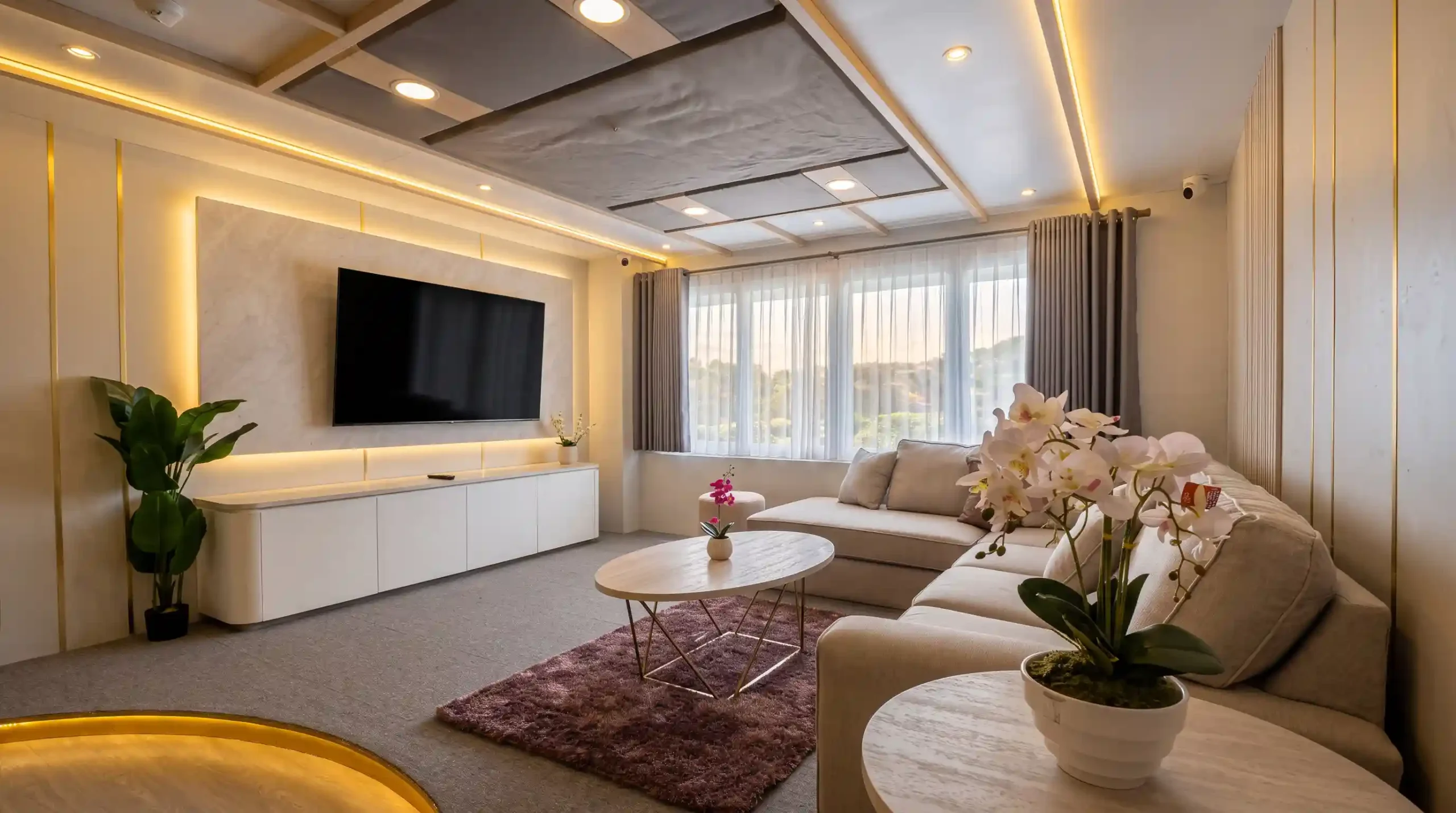
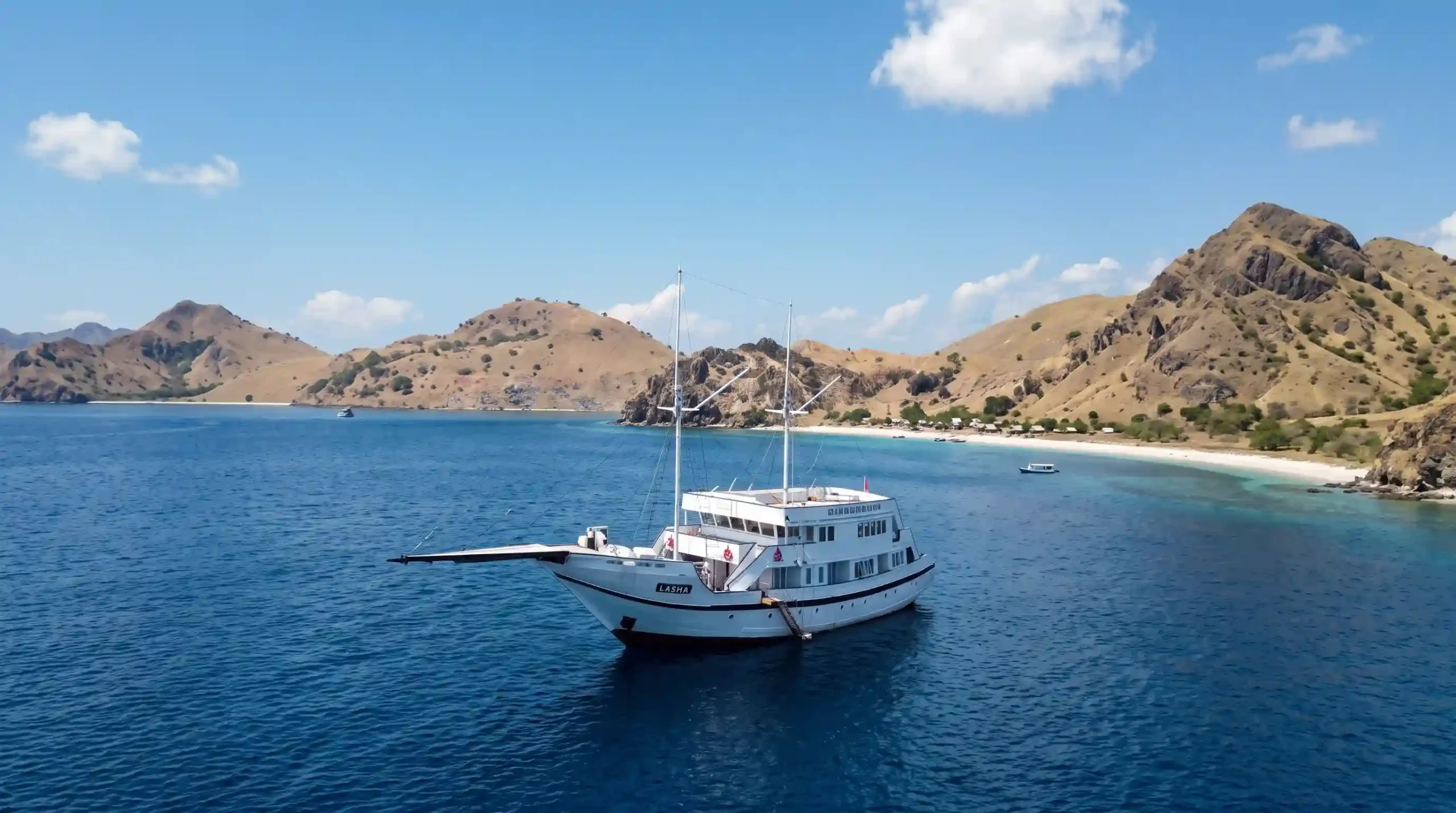
LASHA is a 52.5-metre, 466 GT wooden phinisi built in 2023, home-ported in Labuan Bajo, with ten ensuite cabins across four decks for up to twenty-six guests. Her maiden public Komodo season opens with a first sailing on 17 August 2026. She is operated and booked by Komodo Luxury — WhatsApp +62 811 3823 875, [email protected].
Frequently Asked Questions
Can you visit Komodo National Park without a liveaboard?
Yes. The park is regularly visited on day trips by boat from Labuan Bajo. Entry runs through the park's official reservation and e-ticketing platform, and each land site has its own opening window published separately by the park authority, so check the current one before planning a day.
Is a liveaboard better for diving in Komodo?
Often, because surface intervals pass while the vessel is under way, which puts more sites within a single day and removes the return crossing. On LASHA a diving programme is charged as a supplement of USD 55 per guest per night over the leisure rate.
Can I book one cabin on LASHA instead of the whole boat?
No. LASHA charters whole-boat only and no cabin is sold separately, so a per-cabin price does not exist. The vessel has ten ensuite cabins across four decks for up to twenty-six guests, and the charter desk issues the rate in a written quotation.
Planning your own charter? Start with the published LASHA rates 2026–2027, see life on board in the LASHA liveaboard guide, or go straight to the official booking page.
⚓ This guide is part of the journal of the LASHA Liveaboard — the 52.5-metre luxury phinisi sailing Komodo National Park and Raja Ampat. Official booking only via lashacruise.com · WhatsApp +62 811-3823-875 (Komodo Luxury).
Can you visit Komodo National Park without a liveaboard?
Yes. The park is regularly visited on day trips by boat from Labuan Bajo. Entry runs through the park's official reservation and e-ticketing platform, and each land site has its own opening window published separately by the park authority, so check the current one before planning a day.
Is a liveaboard better for diving in Komodo?
Often, because surface intervals pass while the vessel is under way, which puts more sites within a single day and removes the return crossing. On LASHA a diving programme is charged as a supplement of USD 55 per guest per night over the leisure rate.
Can I book one cabin on LASHA instead of the whole boat?
No. LASHA charters whole-boat only and no cabin is sold separately, so a per-cabin price does not exist. The vessel has ten ensuite cabins across four decks for up to twenty-six guests, and the charter desk issues the rate in a written quotation.
Planning your own charter? Start with the published LASHA rates 2026–2027, see life on board in the LASHA liveaboard guide, or go straight to the official booking page.
⚓ This guide is part of the journal of the LASHA Liveaboard — the 52.5-metre luxury phinisi sailing Komodo National Park and Raja Ampat. Official booking only via lashacruise.com · WhatsApp +62 811-3823-875 (Komodo Luxury).