
Expect strong 4G in Labuan Bajo, patchy signal at the edges of Komodo National Park, and long stretches with no coverage at all. Most liveaboards, LASHA included, cannot promise stable Wi-Fi at anchor. Bring a Telkomsel SIM, upload before you sail, and treat the crossing as an elegant digital detox.
Connectivity is the question almost every guest asks before a Komodo charter, and it deserves a straight answer rather than a vague reassurance. This guide maps exactly where your phone will work, where it will not, which Indonesian SIM to buy, and when your last realistic upload window closes — so you can plan your work, your family check-ins, and your photo backups around the sea instead of against it.
How strong is the phone signal in Labuan Bajo before you board?
Very strong. Labuan Bajo is the gateway town for Komodo National Park and LASHA's home port, and Telkomsel 4G runs at full strength across the harbour, the airport, and the waterfront hotels and cafés. Video calls, cloud backups, and large uploads all work comfortably here. Use this window deliberately: download offline maps, playlists, films, and reading material, sync your messaging apps, and send anything time-sensitive before you step onto the tender. Boarding day in the harbour is the one moment of your charter when connectivity is genuinely guaranteed.
What happens to your phone signal inside Komodo National Park?
It fades quickly. Cellular towers in this part of Flores exist only in towns and on inhabited islands, so once LASHA crosses open water toward the park, coverage becomes a matter of geography. Signal returns briefly when the yacht passes near a settlement — the ranger station side of Rinca, or the village on Komodo Island — then disappears again at the anchorages, beaches, and dive sites that fill most of your itinerary.
| Location | Typical Telkomsel signal | What you can realistically do |
|---|---|---|
| Labuan Bajo town & harbour | Strong 4G | Everything: uploads, video calls, cloud backups |
| Approach to Rinca (Loh Buaya) | One to three bars, intermittent | WhatsApp texts, light browsing |
| Near Komodo Village | Brief pockets close to the village | Short messages may trickle through |
| Padar Island | Usually none; an occasional flicker on the ridge | Assume offline |
| Pink Beach, Manta Point, northern sites | None | Fully offline |
| Open crossings between islands | None | Fully offline |
Treat this table as a planning guide, not a promise. Weather, anchorage position, and network maintenance all move the line, and the honest rule for the park is simple: any bar of signal is a bonus, never a plan.
Do Komodo liveaboards have reliable Wi-Fi?
As a category, no — not in the way a hotel does. Most liveaboards in Komodo, from budget boats to luxury phinisi, provide "Wi-Fi" through a router fed by the same cellular networks your own phone uses, which means the router goes dark in exactly the same dead zones. Satellite systems exist on some vessels, but bandwidth at sea is shared, weather-sensitive, and far from streaming-grade. LASHA takes the position that guests are better served by honesty than by a login page that works in the harbour and dies at Padar: we plan the charter around real connectivity windows rather than promising a stable connection the geography cannot support.
Which SIM card should you buy — Telkomsel or Indosat?
Telkomsel first, without hesitation. It has the deepest coverage in eastern Indonesia and is the network behind almost every bar of signal you will see inside the park. Buy a physical SIM or eSIM on arrival — counters at Komodo Airport and official stores in Labuan Bajo sell tourist packages in minutes — and load a generous data package before departure. Indosat Ooredoo works well enough in Labuan Bajo town and serves as a reasonable backup, but it thins out faster once you leave the harbour. If your phone takes two SIMs, keep your home number active for banking codes and use Telkomsel purely for data.
When is your last chance to upload photos or take a call?
Your last guaranteed window is the harbour on boarding day, before LASHA weighs anchor. On many routes there is one more realistic chance as the yacht passes the inhabited side of Rinca early in the cruise — enough for messages, rarely enough for a video call. After that, plan on being offline until the return leg to Labuan Bajo. On longer routes such as a 3D2N to 5D4N cruise — see the full LASHA itineraries — the yacht may pass within reach of a village tower mid-trip, and the crew will gladly tell you when a window is coming so you can queue your messages.
| Moment | Connectivity | What to do |
|---|---|---|
| Boarding day, Labuan Bajo harbour | Full 4G | Final uploads, calls, out-of-office on |
| Day 1, passing Rinca | Intermittent | Send queued texts; keep it short |
| Mid-cruise anchorages & dive sites | Offline | Shoot, dive, rest; draft posts offline |
| Return approach to Labuan Bajo | Signal returns | Everything sends; back up photos |
A useful habit: write messages and caption your photos offline as the trip unfolds. The moment coverage returns, everything sends itself. Staying powered, incidentally, is far easier than staying connected — sockets are available throughout the yacht, and our separate guide to charging camera gear aboard LASHA covers plugs, voltages, and battery strategy in detail.
How does LASHA turn being offline into the best part of the trip?
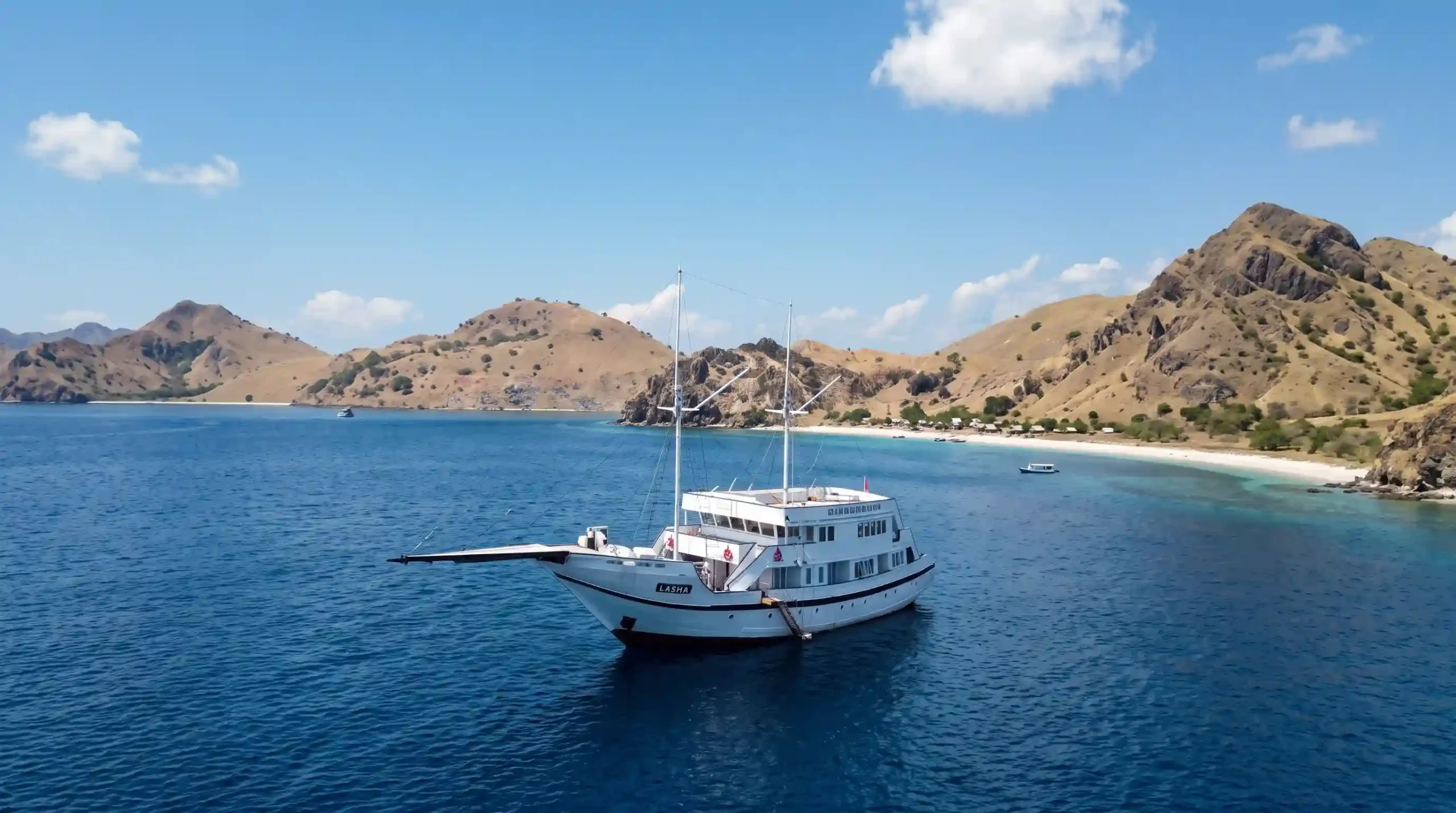
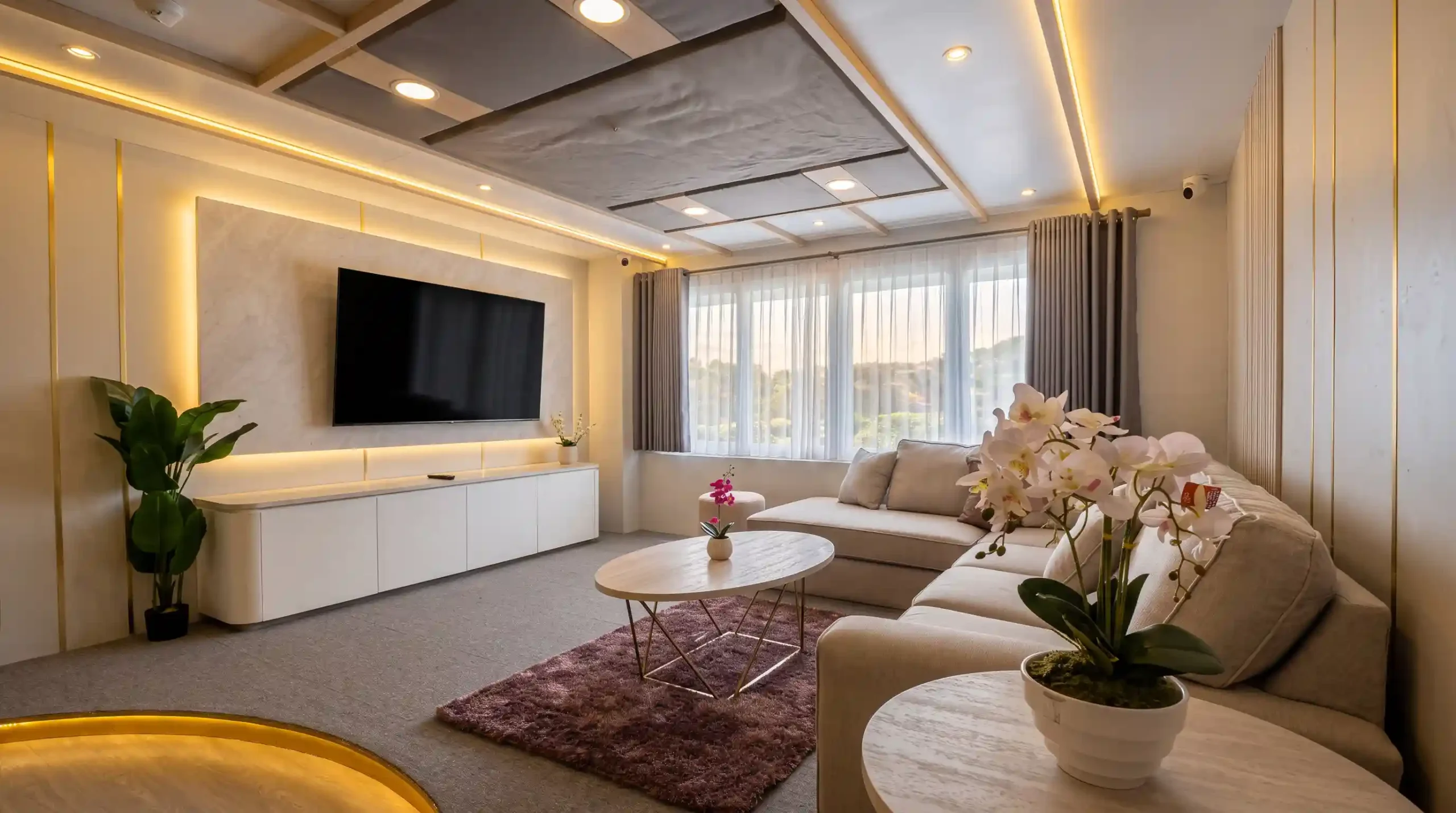
By building days that make the phone irrelevant. LASHA is a 52.5-metre, four-deck Buginese phinisi with ten ensuite cabins for up to 26 guests, and life aboard is arranged around the park, not around a router: dragons on Rinca in the morning, the Padar ridge at golden hour, mantas on the reef with the dedicated dive deck — explore the diving programme — and evenings that drift from the Lounge & Resto to the jacuzzi on the sun deck under a sky with zero light pollution. The Master Suites carry private jacuzzis and balconies for the moments you want the silence entirely to yourself. Guests consistently report the same arc: mild withdrawal on day one, then the quiet realisation at dinner that everyone at the table is actually present. On a private whole-boat charter, that shared disconnection becomes the point — the rarest amenity in modern travel.
How should you plan a charter around limited connectivity?
Three moves cover almost everything. First, set expectations ashore: an out-of-office note and a word to family that you will be reachable on boarding day, possibly mid-cruise, and again on return. Second, front-load your digital life in Labuan Bajo — downloads, backups, and any call that matters. Third, let the crew carry the logistics; the yacht operates standard marine communications throughout the voyage, so the operational side of your trip never depends on your phone. Whole-boat leisure charters are priced by trip length and group size, minimum two nights — current numbers are always on the rates page — and the team can shape any itinerary around a mid-cruise signal window if staying reachable is essential for you. When you are ready, review the yacht in full and reserve your dates.
⚓ This guide is part of the journal of the LASHA Liveaboard — the 52.5-metre luxury phinisi sailing Komodo National Park and Raja Ampat. Official booking only via lashacruise.com · WhatsApp +62 811-3823-875 (Komodo Luxury).