
The most useful Bahasa Indonesia phrases for a Komodo trip are terima kasih (thank you), selamat pagi (good morning), permisi (excuse me), berapa harganya? (how much is it?), and enak sekali (very delicious). Learn the twenty expressions below and every exchange — from the Labuan Bajo pier to your phinisi crew — becomes noticeably warmer.
English is spoken throughout the Komodo tourism corridor, and aboard a professionally crewed vessel you will never need a dictionary. Yet a handful of Indonesian words changes the temperature of a voyage entirely. Indonesian culture places enormous value on courtesy, and a guest who says terima kasih after dinner or greets the captain with a bright selamat pagi is received differently — not merely as a client, but as a guest in the truest sense of the word. This guide covers the twenty phrases genuinely worth knowing, how to greet the crew of a Komodo liveaboard correctly, and the light etiquette that makes each phrase land the way you intend.
What Are the 20 Most Useful Bahasa Indonesia Phrases for a Komodo Trip?
Indonesian is among the most approachable languages in Asia for English speakers: it uses the Latin alphabet, carries no tones, and is pronounced almost exactly as written. Every vowel is clean — a as in "father", e as in "let", i as in "machine", u as in "flute". Stressed syllables in the pronunciation column below are capitalised.
| Phrase | Meaning | Pronunciation |
|---|---|---|
| Terima kasih | Thank you | tuh-REE-mah KAH-see |
| Sama-sama | You're welcome | SAH-mah SAH-mah |
| Selamat pagi | Good morning | suh-LAH-mat PAH-gee |
| Selamat siang | Good day (midday) | suh-LAH-mat see-AHNG |
| Selamat sore | Good afternoon | suh-LAH-mat SOH-ray |
| Selamat malam | Good evening | suh-LAH-mat MAH-lam |
| Permisi | Excuse me | pur-MEE-see |
| Maaf | Sorry | mah-AHF |
| Tolong | Please / help | TOH-long |
| Berapa harganya? | How much is it? | buh-RAH-pah har-GAH-nyah |
| Enak sekali | Very delicious | EH-nak suh-KAH-lee |
| Hati-hati | Be careful / take care | HAH-tee HAH-tee |
| Ya / Tidak | Yes / No | YAH / TEE-dak |
| Apa kabar? | How are you? | AH-pah KAH-bar |
| Baik | Good, I'm well | BAH-eek |
| Bagus sekali | Very beautiful / wonderful | BAH-goos suh-KAH-lee |
| Saya mau… | I would like… | SAH-yah MOW |
| Di mana kamar mandi? | Where is the bathroom? | dee MAH-nah KAH-mar MAN-dee |
| Boleh foto? | May I take a photo? | BOH-leh FOH-toh |
| Sampai jumpa | See you again | SAM-pie JOOM-pah |
If you memorise only three, choose terima kasih, permisi, and enak sekali. The first two carry you through every polite situation; the third, delivered after a meal on deck, is the fastest way to make a chef's day anywhere in Indonesia.
How Do You Greet the Crew on Board?
Indonesian greetings follow the sun. Selamat pagi serves from dawn until around 11 a.m. — the window when you will surface for coffee before a morning trek or first dive. Selamat siang covers midday, selamat sore the golden hours from mid-afternoon to sunset, and selamat malam once darkness settles over the anchorage. Crew greet guests at every transition of the day, and returning the greeting in Indonesian — even imperfectly — is always noticed. A warm nod and a smile complete it; handshakes are gentle rather than firm.
Should You Use Pak, Ibu, Mas, or Mbak?
Indonesians rarely address people by bare names in polite settings. Pak (sir) is the respectful form for men, Ibu or Bu (ma'am) for women, while Mas and Mbak are friendly forms for younger men and women. The ship's master is simply Kapten. So "good morning, Captain" becomes selamat pagi, Kapten, and thanking your dive guide named Arif becomes terima kasih, Pak Arif. Once the crew shares their names on day one, pairing the honorific with the name is the sweet spot: respectful, but personal.
What Light Etiquette Should Guests Know?
None of this is examined, and no crew will ever correct a guest. But three small habits signal cultural fluency instantly.
Why Does the Right Hand Matter?
Across Indonesia, items are given and received with the right hand — a plate, a towel, a payment at a Labuan Bajo market stall. Using the right hand (or both hands together, which is even more courteous) is the single most visible piece of everyday etiquette in the country.
Is Smiling Really Part of the Language?
Genuinely, yes. Indonesia's social rhythm runs on warmth and low volume: voices stay soft, frustration stays private, and a smile accompanies almost every exchange. Saying permisi with a slight nod when passing someone in a passageway, or pointing with a full open hand rather than one finger, are small courtesies that fit this rhythm perfectly.
Why Do Crew Appreciate the Effort So Much?
The crews of Komodo's phinisi fleet largely hail from Flores and from the seafaring communities of South Sulawesi — the heartland of traditional phinisi shipbuilding — where hospitality is a point of deep personal pride. A guest who attempts even two words of Indonesian sends an unmistakable message: I see you, and I respect your home waters. The response is disproportionate. Service on a well-run charter is already attentive; add a few phrases and it becomes personal — the chef remembers that you loved the grilled snapper because you told him enak sekali in his own language, and the tender driver's hati-hati as you step ashore at Padar comes with a grin. Language, even thirty seconds of it, converts a transaction into a relationship.
Where Will You Practice These Phrases on a LASHA Voyage?
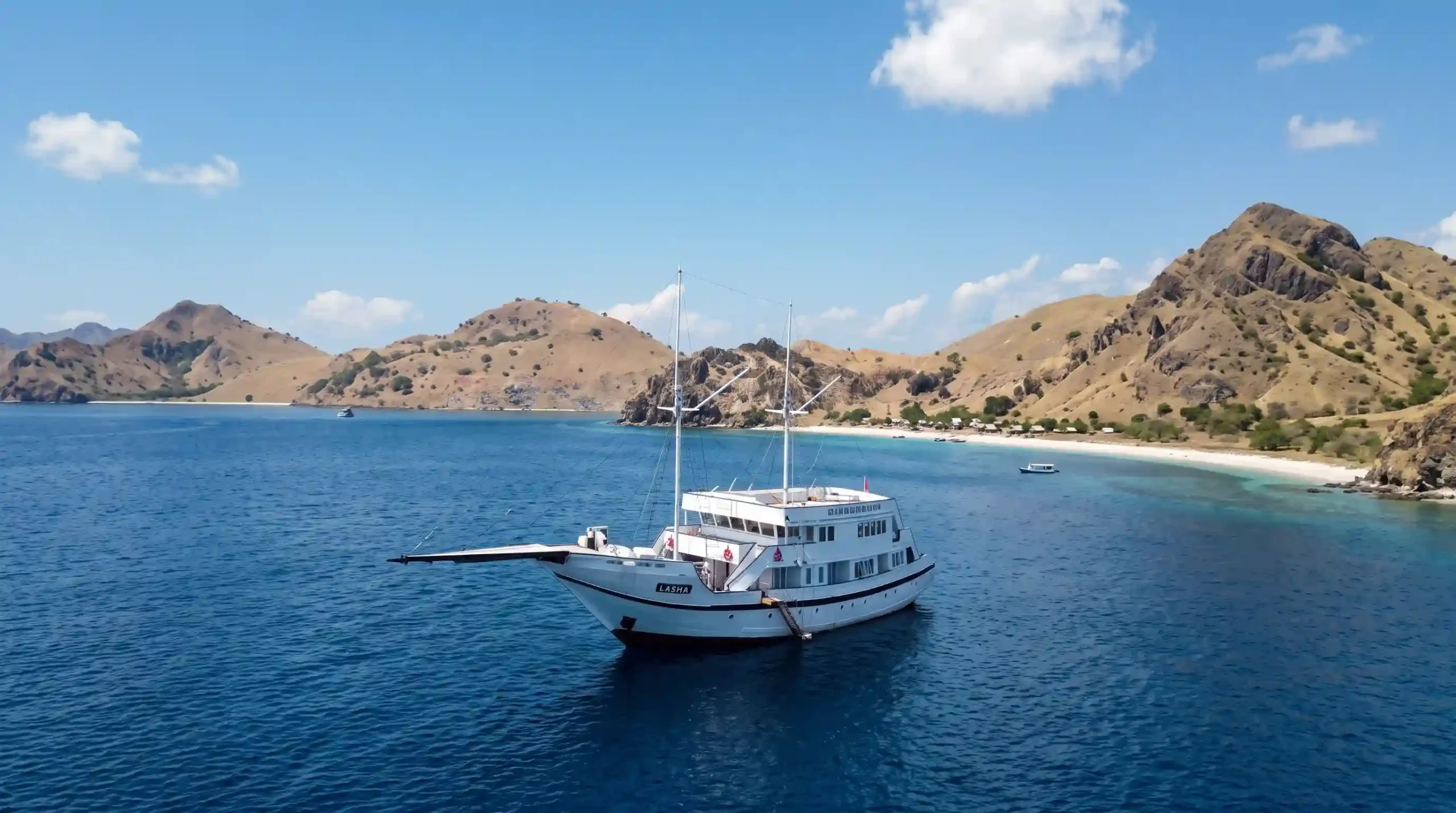
Constantly — and pleasantly. LASHA is a 52.5-metre, 466 GT phinisi based in Labuan Bajo, the newest vessel in the Komodo fleet with her maiden season opening 17 August 2026. Up to 26 guests sail across four decks in ten ensuite cabins, including two Master Suites with private jacuzzis and balconies. Days aboard follow a natural rhythm of greetings: selamat pagi over breakfast before a Padar sunrise trek, terima kasih to the dive team at the dive deck after a manta drift, enak sekali at the Lounge & Resto, and selamat malam from the sun-deck jacuzzi under the stars. One honest note: Wi-Fi at sea is limited by geography, which most guests come to treasure — evenings drift toward conversation, and the crew are delighted teachers. Browse full itineraries, compare charter rates, or plan a longer expedition toward Raja Ampat where those same phrases carry you across eastern Indonesia.
A private Komodo charter is, in the end, a floating immersion course with exceptional catering. Arrive with twenty phrases; you will leave with forty — and with a crew who wave sampai jumpa from the deck and mean it.
⚓ This guide is part of the journal of the LASHA boat in Komodo — the 52.5-metre luxury phinisi sailing Komodo National Park and Raja Ampat. Official booking only via lashacruise.com · WhatsApp +62 811-3823-875 (Komodo Luxury).