
In short: LASHA's Komodo charters put divers on the park's benchmark sites — Castle Rock, Crystal Rock, Batu Bolong, Makassar Reef and, in season, the southern manta grounds — with the calmest window in the north running roughly April to November and the south fishing best from around November to March. The 52.5 m phinisi carries up to 26 guests in 10 ensuite cabins, and dive arrangements follow the published dive policy on the rates page.
Komodo National Park is one of the few places on earth where a single charter can cover current-swept pinnacles, manta cleaning stations and calm macro bays inside the same week. The catch is that the best sites sit far apart, tides dictate entry windows, and day boats out of Labuan Bajo simply cannot hold position for the right slack. That is the case for diving from a liveaboard, and it is the way the LASHA phinisi was set up to operate: anchor near the site the night before, brief over breakfast, drop at the exact tide state the site demands.
Why Komodo rewards divers who arrive by boat
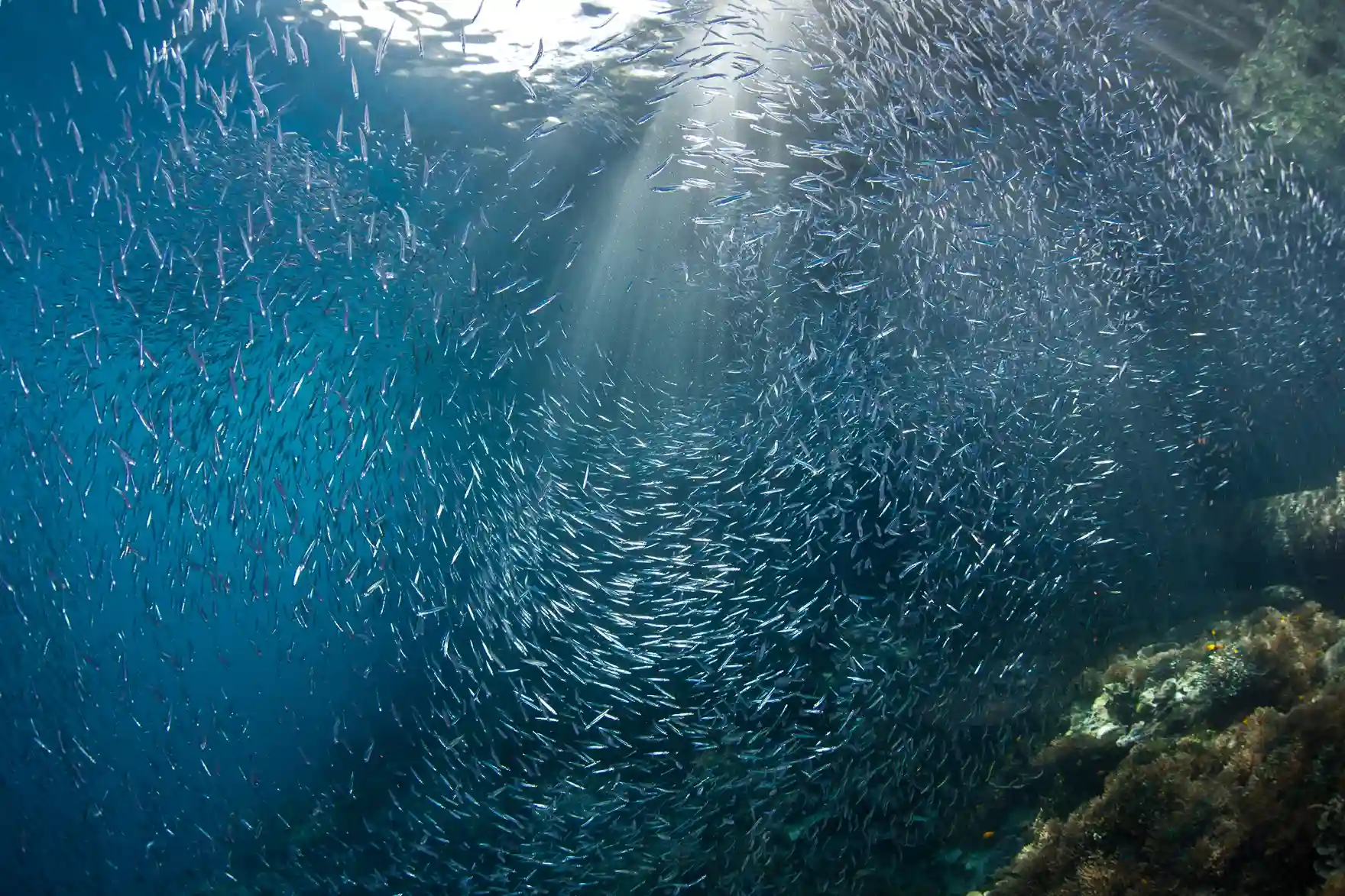
The park's marine life runs on current. Nutrient-rich water pushes through the straits between Komodo and Rinca on every tide change, and the sites that sit in that flow — the pinnacles of the north, the channels of the centre — are the ones that deliver schooling trevally, dogtooth tuna, reef sharks and the manta traffic Komodo is known for. Hitting them well is a timing exercise. A vessel that sleeps on site can wait for slack water instead of racing a schedule, and that single advantage changes what you see underwater more than any other factor.
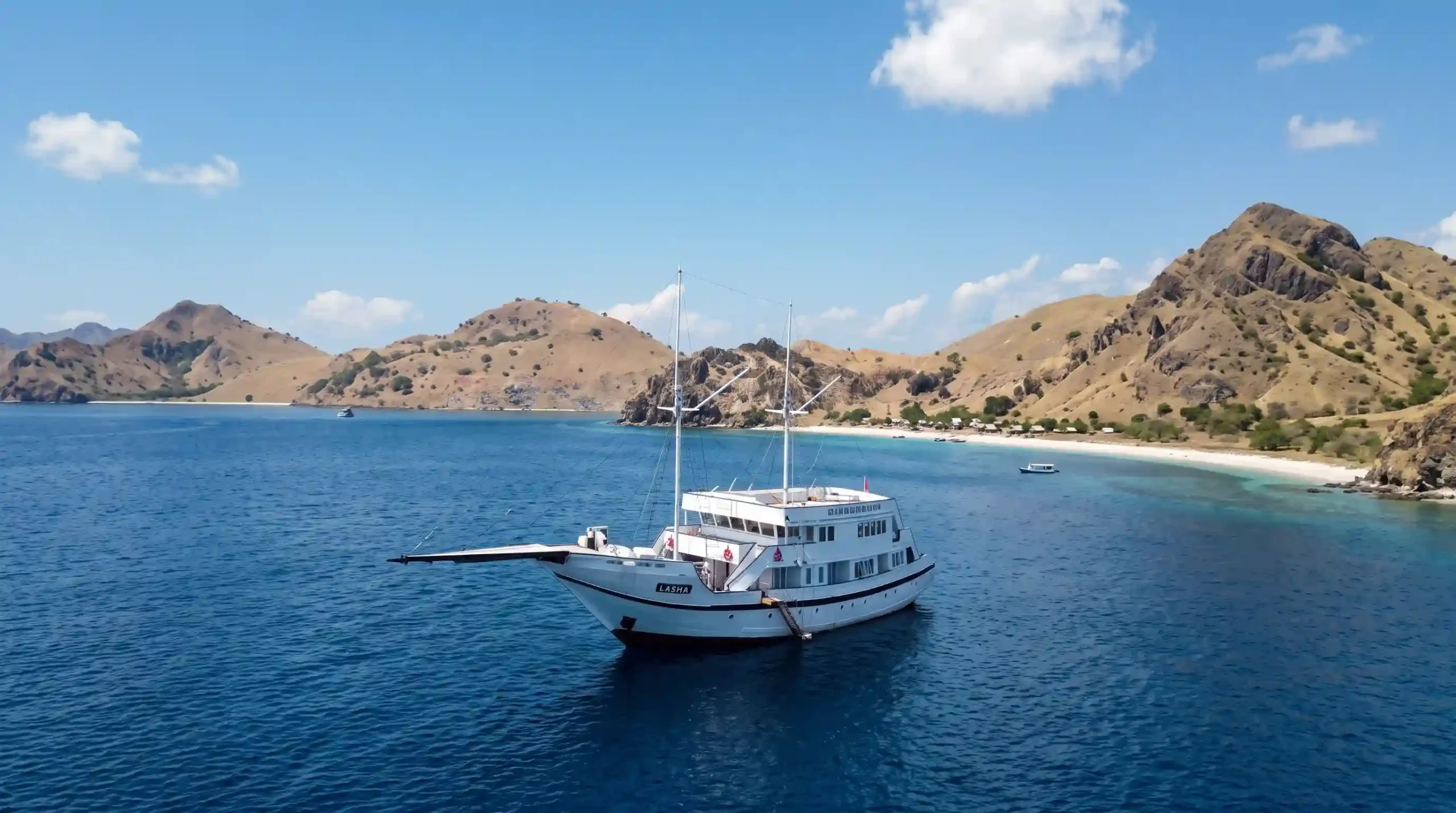
LASHA covers the ground comfortably. At 52.5 m length overall with a 10.3 m beam and a Weichai X6170 main engine rated at 750 Hp, she repositions between the northern and central sectors overnight without cutting into dive time. Guests spread across four decks, so a full dive day still leaves quiet corners of the boat for logbooks, camera work or sleep.
The dive sites on LASHA's Komodo route
The park's roster is deep, but a well-run Komodo itinerary is built around a core of proven sites. The current, vessel-specific site list is maintained on the LASHA dive sites Komodo page; the profiles below cover the names that anchor most weeks in the park.
North Komodo: the pinnacles
Castle Rock and Crystal Rock are the park's signature drops — submerged seamounts north of Gili Lawa Laut where giant trevally, white-tip and grey reef sharks work bait balls in open blue water. Both are negative-entry, current-managed dives that reward experience. The Cauldron (often called Shotgun) sits between Gili Lawa Laut and Gili Lawa Darat: a drift through a bowl and out a channel that accelerates like its nickname suggests, with mantas and sharks holding in the flow.
Central Komodo: channels and reefs
Batu Bolong is a tiny rock in the Lintah Strait hiding one of the healthiest reef walls in Indonesia — dived correctly on the protected lee side, it stacks turtles, snapper, anthias clouds and passing pelagics into a single tower. Tatawa Besar offers an easier drift over hard-coral gardens, and Siaba Besar is the park's reliable turtle bay and a favourite for relaxed morning or check dives.
The manta grounds
Makassar Reef (Manta Point) is a long rubble drift in the central strait where reef mantas queue at cleaning stations, most dependably from around December through February, though sightings occur across the year. In the southern sector, Manta Alley off south Komodo delivers aggregations in the second half of the year when conditions allow the crossing — a genuine expedition dive that only liveaboards reach in comfort.
| Site | Sector | Signature sighting | Character | Best window |
|---|---|---|---|---|
| Castle Rock | North | Sharks, giant trevally, tuna | Current pinnacle, advanced | Apr–Nov |
| Crystal Rock | North | Reef sharks, schooling fusiliers | Current pinnacle, advanced | Apr–Nov |
| The Cauldron | North | Mantas, sharks in the channel | Fast drift | Apr–Nov |
| Batu Bolong | Central | Dense reef life, turtles | Wall, tide-dependent | Year-round |
| Siaba Besar | Central | Turtles, macro | Easy bay | Year-round |
| Makassar Reef | Central | Reef mantas | Long shallow drift | Dec–Feb peak |
| Manta Alley | South | Manta aggregations | Expedition, swell-exposed | Roughly Nov–Mar |
Seasons and conditions in Komodo
Komodo dives year-round, but the park effectively has two weather systems. The dry season from roughly April to November brings the calmest seas to the northern and central sites, with water in the 26–29°C range and visibility frequently past 20 m. From around November to March the pattern flips: the north picks up wind while the south — cooled by upwelling into the 22–26°C band — comes into its own for mantas and plankton-rich water. A 3 mm wetsuit covers the north; divers heading south in season will want 5 mm.
Currents are the constant. Most marquee sites are dived at or near slack, and the difference between a world-class dive and a washing machine is often thirty minutes of tide. This is exactly the planning problem a liveaboard solves, and it is why the LASHA itineraries are sequenced around tide tables rather than fixed clock times.
How diving works on board
LASHA runs as a private charter platform, which means the dive program bends to the group rather than the other way around. Certified divers, mixed snorkel-and-dive families and dedicated dive groups are all workable briefs — the program, guide arrangements and equipment needs are confirmed with the sales desk before departure so the boat is set up correctly on day one.
Dive costs sit alongside the charter rate rather than inside it; the current dive rate policy and every inclusion line is published on the rates page, which is the single source worth trusting on pricing. For orientation, long-haul expedition routes (Raja Ampat, Banda Sea, Wakatobi, Maratua) start from USD 11,600 per night whole-boat with a 5-night minimum — about USD 825 per guest per night with 14 aboard — while Komodo charters run from the lower Komodo rate band listed on the same page.
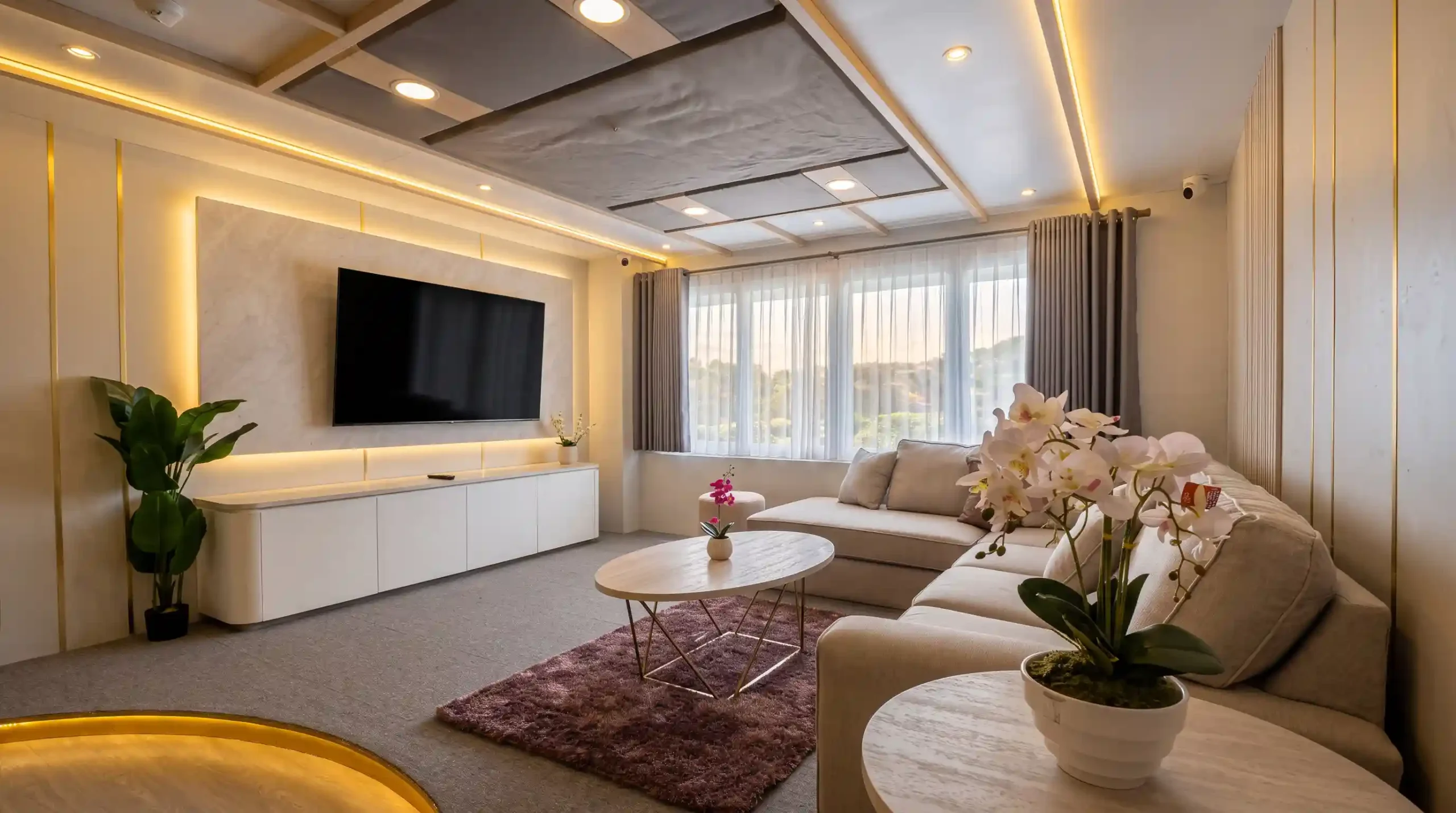
Between dives, the boat itself does the recovery work: 10 ensuite cabins from Deluxe up to the Master Suite with jacuzzi, detailed on the cabins page, and four decks of teak to spread out on. With 22,000 litres of fresh water aboard, post-dive rinses and hot showers are never rationed.
Safety and navigation: the systems behind the dive day
Remote-area diving is only as good as the vessel running it. LASHA is a registered sailing vessel, launched in 2023 with an ulin (ironwood) and teak hull built in the Buginese tradition, and her bridge is fitted accordingly: Garmin GPS, Samyung AIS, radar with SART, and iCom radio communications. In practical terms that means precise positioning on submerged pinnacles, the vessel visible to commercial traffic through the straits, and reliable comms between bridge and tenders on every dive rotation. Twin Mitsubishi 6D22 gensets (70 kVA) keep power redundant, and a 12,000-litre fuel capacity gives her range far beyond the park — the reason the same platform runs Raja Ampat and Banda Sea expeditions in the 2027 season. Full specifications are on the yacht page.
Planning a Komodo dive charter
The maiden Komodo season opens with the first sailing on 17 August 2026, with the 2027 calendar pairing Komodo and the eastern expedition routes. Most dive-focused groups take 5 to 7 nights: enough to cover the north pinnacles, the central manta drifts and the reef days without ever rushing a tide. Practical questions — certification requirements, park fees, non-diver activities — are covered on the FAQ.
To lock dates or shape a dive-heavy route, contact the operator, Komodo Luxury, directly: WhatsApp +62 811-3823-875 or [email protected]. Share your group size, certification levels and preferred month, and the desk will map the sites above onto real tide windows for your dates.
Frequently asked questions
Which dive sites does LASHA visit in Komodo?
Charters are built around the park's proven core: Castle Rock, Crystal Rock and the Cauldron in the north; Batu Bolong, Siaba Besar and Tatawa in the centre; Makassar Reef for mantas, and Manta Alley in the south when season and sea state allow. The current site list and dive policy are kept on the diving and rates pages.
When is the best season to dive Komodo with LASHA?
April to November is the prime window for the northern and central sites, with calm seas and 26–29°C water. From around November to March the southern sector peaks — cooler, plankton-rich water and stronger manta activity. Komodo dives year-round; the itinerary simply shifts sectors with the season, which a liveaboard handles naturally.
Do I need advanced certification for Komodo's currents?
Not for every site, but it helps. The north pinnacles are genuine current dives best suited to experienced divers, while sites like Siaba Besar and Tatawa Besar suit newer certifications. Because LASHA is a private charter, the daily plan is matched to the group's levels — flag certifications when booking and the route is built accordingly.
Is diving included in the LASHA charter rate?
Dive arrangements are priced under the dive rate policy published on the rates page, alongside the charter rate itself. Long-haul routes start from USD 11,600 per night whole-boat (5-night minimum); Komodo sails from the lower Komodo rate band. Confirm dive numbers and equipment needs with the sales desk when booking.
Can non-divers join a dive-focused charter?
Yes — this is where a 52.5 m private phinisi earns its keep. While divers work the pinnacles, non-divers snorkel Makassar's manta lanes, walk Padar, or simply hold the top deck. With 10 ensuite cabins and four decks, mixed groups of up to 26 guests coexist without compromise on either program.
Ready to dive Komodo properly? Message Komodo Luxury on WhatsApp at +62 811-3823-875 or email [email protected] to build your dive charter.
⚓ This guide is part of the journal of the LASHA Liveaboard — the 52.5-metre luxury phinisi sailing Komodo National Park and Raja Ampat. Official booking only via lashacruise.com · WhatsApp +62 811-3823-875 (Komodo Luxury).
Planning your own charter? Start with the published LASHA rates 2026–2027, see life on board in the LASHA liveaboard guide, or go straight to the official booking page.